All S.T. Dupont Lighter Models: The Collector’s Guide (1941 to Today)
From the petrol Essence of 1941 to the Ligne 1, Ligne 2, Gatsby and today's jet lighters: every S.T. Dupont model side by side, and how to tell which one you have.
By Max Meijster Updated 14 October 2026 8 min read

S.T. Dupont made its first lighter in 1941, and since then the house from Faverges has produced a long line of models: from the petrol Essence to the Ligne 1, the Ligne 2 with its famous cling, the ribbed Gatsby and the jet lighters of today. On the outside many look alike. On the inside they differ in flame system, gas, size and age.
This guide puts every model side by side, shows you how to tell which one you have, and gives the key facts per model. We service and sell vintage S.T. Dupont lighters every week, so the photos are pieces that passed through our workshop.
Every S.T. Dupont lighter model at a glance
| Model | Made | Ignition | Gas refill | Reference starts with |
|---|---|---|---|---|
| Essence | 1941 to 1952 | Wick, flint | Lighter fluid | |
| D57 | 1952 to 1960 | Flame, flint | red | |
| Ligne 1 BS | 1959 to 1973 | Flame, flint | yellow (small), red (large) | 011 / 012 |
| Ligne 1 BR | 1965 to 2013 | Flame, flint | yellow (small), red (large) | 013 / 014 |
| Ligne 2 | 1977 to today | Flame, flint | green (small), yellow (large) | 015 / 016 |
| Line D | 1989 to 2012 | Flame, flint | blue | 017 |
| Gatsby | 1989 to today | Flame, flint | green | 018 |
| Soubreny | 1994 to 2004 | Flame, flint | blue | 019 |
| Maharadjah | 1996 to 1998 | Flame, flint | yellow | |
| Urban | 1999 to 2005 | Flame, flint | blue | |
| Jet and torch models | 2000 to today | Jet, piezo | see below |

How to tell which S.T. Dupont you have
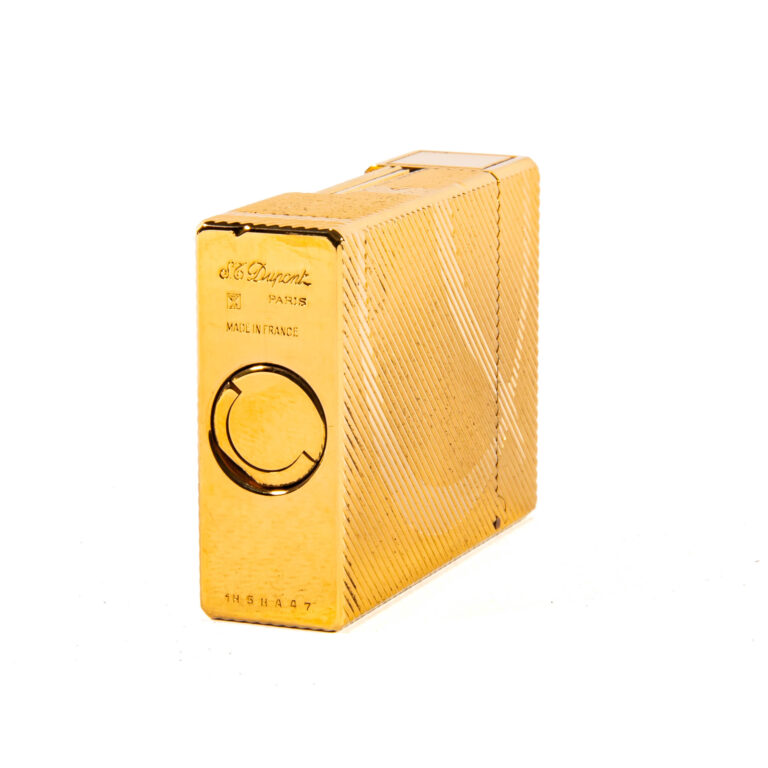
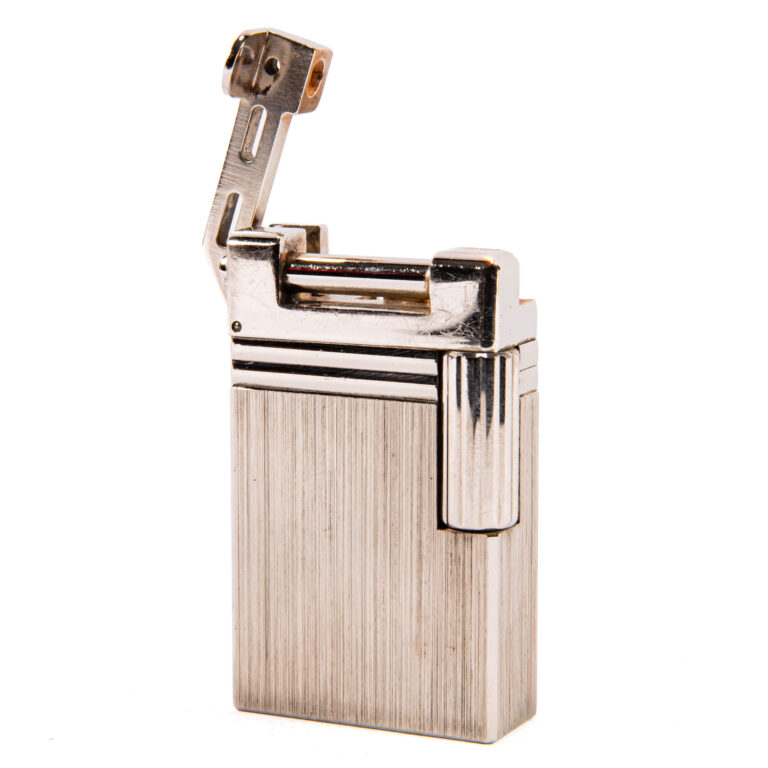
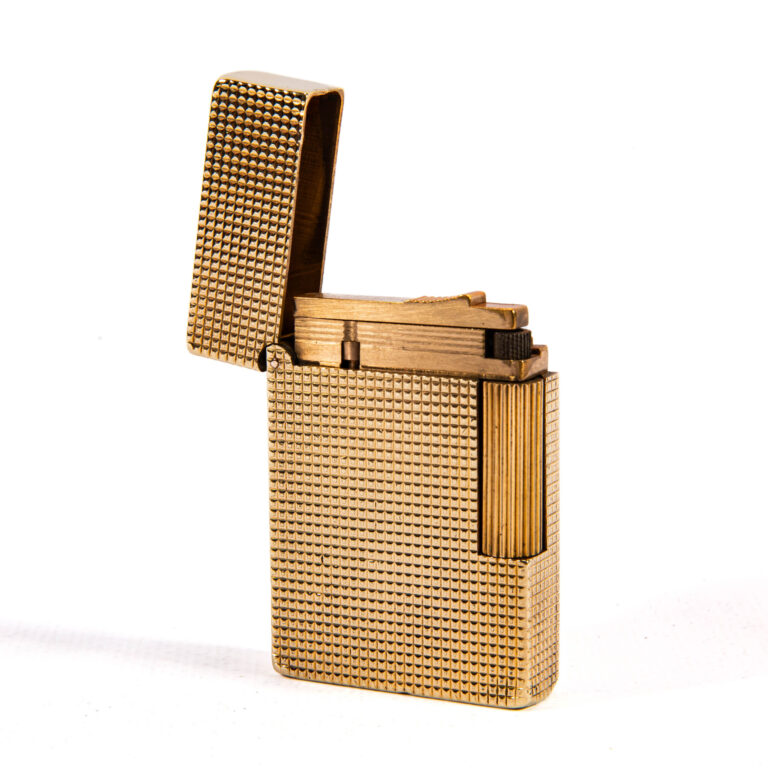
- Compare it with the photos below. Most models are easy to tell apart by their shape: ribs on both sides point to a Gatsby, rounded corners to a Soubreny, a very narrow body to a Line D.
- Look at the box. If you have it, the reference on the box or guarantee card starts with the model code (see below).
- Look at the size. The Ligne 1 and Ligne 2 each came in a small and a large size: the large Ligne 1 is 58 mm tall, the small one 47 mm.
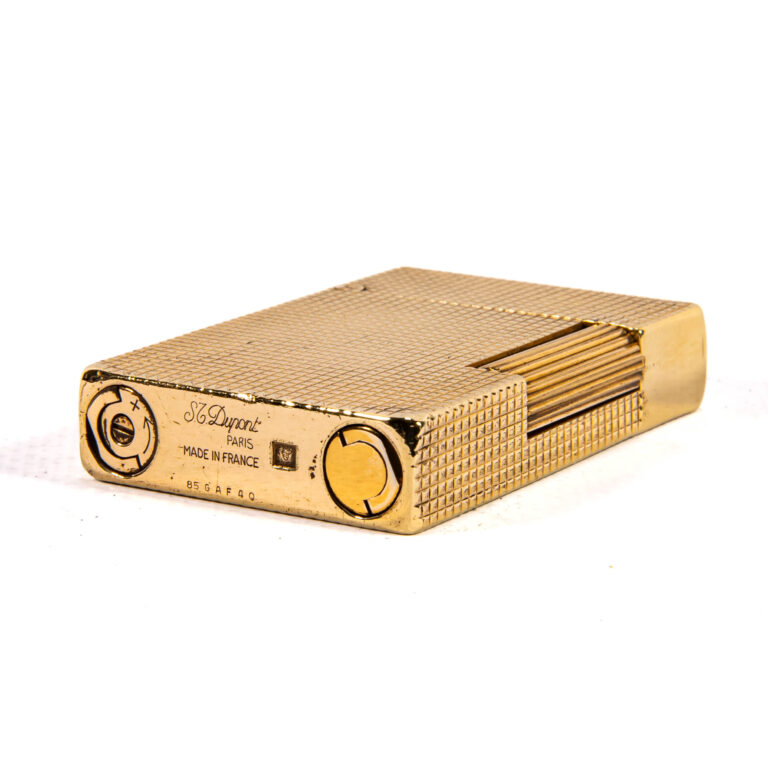
- Open the cap. A flame adjustment wheel or a gas cutoff wheel under the cap means a Ligne 1 (BS or BR) or a Soubreny. A screw under the base, next to the refill valve, means a Ligne 2, Gatsby or Line D.
Serial number and reference code
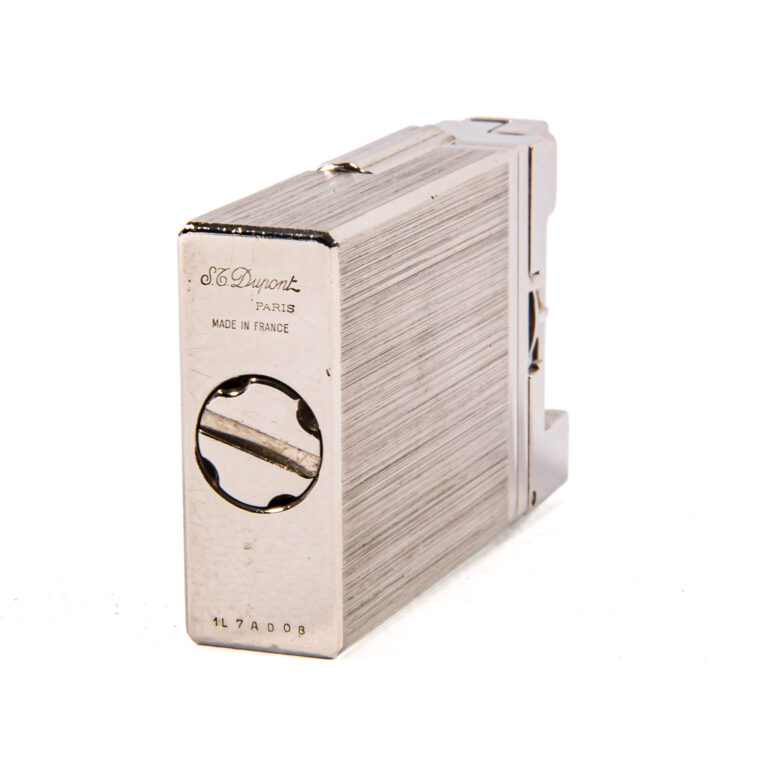
An S.T. Dupont carries two numbers, and they are easily mixed up. The serial number is engraved on the lighter itself and is unique to that piece. The reference code is printed on the box and guarantee card. It starts with the code of the model, followed by digits for the finish: 011 and 012 for the Ligne 1 BS, 013 and 014 for the Ligne 1 BR, 015 and 016 for the Ligne 2, 017 for the Line D, 018 for the Gatsby and 019 for the Soubreny. So two Ligne 2 lighters in different lacquers share the start of their reference, and differ in the rest. A guide to the known finishes and their references is on our list.
The colour dot inside the refill cap shows which gas a lighter needs, see our S.T. Dupont gas refill guide. And if you are about to buy one, check it with our guide on how to spot a fake S.T. Dupont.
Essence (1941 to 1952)
Before gas there was the Essence, the original S.T. Dupont petrol lighter. It burns lighter fluid on a wick, lit by a flint, and is filled through a single port in the base. There is no flame adjustment, and inside it is much simpler than every later model. In 1991 S.T. Dupont made a limited Jubilé edition on the same pattern.

- Fuel
- Lighter fluid and flint
- Sizes
- Small 35 × 14 × 47 mm, large 35 × 14 × 58 mm
- Made
- About 1941 to 1952; Jubilé edition 1991
- Known for
- Wick, classic rectangular shape, the start of it all
D57 (1952 to 1960)
The D57 is S.T. Dupont’s first real gas lighter and the bridge between the Essence and the Ligne 1. It already looks like the later models, but you recognise it by the solid ring on top of the flint wheel, an outside flame lever and the lack of a switch to cut the flame. It came in one size only, the size of the large Ligne 1, with the same turning valve, and it takes the same red refill.

- Fuel
- Butane (red) and flint
- Size
- 35 × 14 × 58 mm, as the large Ligne 1
- Made
- About 1952 to 1960
- Known for
- First gas model, solid ring on the flint wheel, outside flame lever
- In stock
- D57 lighters
Ligne 1 BS (1959 to 1973)
The BS was the first S.T. Dupont with a gas shutoff built into the latch, and it brought standard refills and better flame control. It is the model that turned into the Ligne 1 as collectors know it. The small version is the BSP, the large one the BSG.

- Fuel
- Butane: small yellow, large red; flint
- Sizes
- Small (BSP) 35 × 14 × 47 mm, large (BSG) 35 × 14 × 58 mm
- Made
- 1959 to 1973
- Reference
- 011xxx (small), 012xxx (large)
- In stock
- Ligne 1 BS
Ligne 1 BR (1965 to 2013)
With the BR the Ligne 1 got its flame adjustment wheel under the cap, the layout that set it apart from everything before it. Its proportions and flint ignition became the blueprint for the Ligne 1 and Ligne 2 that followed. The small version is the BRP, the large one the BRG. Read the whole story in the history of the Ligne 1.

- Fuel
- Butane: small yellow, large red; flint
- Sizes
- Small (BRP) 35 × 14 × 47 mm, large (BRG) 35 × 14 × 58 mm
- Made
- 1965 to 2013
- Reference
- 013xxx (small), 014xxx (large)
- In stock
- Ligne 1 BR
Ligne 2 (1977 to today)
The Ligne 2 became the S.T. Dupont flagship and is still made today. It is taller and slimmer than the Ligne 1 and opens with the unmistakable cling. The flame is set with a screw under the base, so the bottom has two openings: one to refill, one to adjust. The small version is the PNP, the large one the PNG.

- Fuel
- Butane: small green, large yellow; flint
- Sizes
- Small (PNP) 37 × 11 × 56 mm, large (PNG) 37 × 11 × 62 mm
- Made
- 1977 to today
- Reference
- 015xxx (small), 016xxx (large)
- In stock
- Ligne 2
Comparing it with its great rival? Read Dunhill Rollagas vs S.T. Dupont Ligne 2.
Gatsby (1989 to today)
The Gatsby is a Ligne 2 with character: same mechanism and the size of the small Ligne 2, but with a double gadroon, raised ribs running down both sides. The cap also looks a little heavier against the body.

- Fuel
- Butane (green) and flint
- Size
- 37 × 11 × 56 mm
- Made
- 1989 to today
- Reference
- 018xxx
- In stock
- Gatsby lighters
Line D (1989 to 2012)
The Line D, sometimes called the Lady, is the smallest gas lighter S.T. Dupont ever made. It has the same two openings in the base as the Ligne 2 and Gatsby, in a slim, compact body. Early examples have an oval refill cap, which makes them easy to spot.

- Fuel
- Butane (blue) and flint
- Size
- 32 × 9 × 54 mm
- Made
- 1989 to 2012
- Reference
- 017xxx
- In stock
- Line D lighters
Soubreny (1994 to 2004)
The Soubreny has rounded edges and a softer, more modern silhouette. Inside it keeps the Ligne 1 layout, with the flame wheel under the cap and a single cap in the base. It was made for ten years.

- Fuel
- Butane (blue) and flint
- Size
- 38 × 14 × 47 mm
- Made
- 1994 to 2004
- Reference
- 019xxx
- In stock
- Soubreny lighters
Maharadjah (1996 to 1998)
The Maharadjah is a rare, bold lighter with a mechanism of its own: a sculpted flint wheel, a purpose made latch and a flame slider built into the lock. S.T. Dupont used this mechanism, known to collectors as the Superhammer, for only four limited editions, about 8,500 pieces in all: the Maharadjah of 1996 (numbered out of 2,000), the Teatro of 1997 in two colours, and in 1999 the Black Maharadjah in black Chinese lacquer with palladium, 1,500 numbered pieces. Without the familiar cling it never caught on, and the Urban took its place.

- Fuel
- Butane (yellow) and flint
- Size
- 35 × 15 × 58 mm
- Made
- 1996 to 1998; Black Maharadjah 1999
- Known for
- Limited editions only, sculpted flint wheel, flame slider in the lock
- In stock
- Maharadjah lighters
More rare pieces in our guide to S.T. Dupont limited editions.
Urban (1999 to 2005)
The Urban is modernist and heavy, with asymmetrical lines and a locking system of its own. The flame is set with a slider at the back instead of a wheel or a screw in the base.

- Fuel
- Butane (blue) and flint
- Size
- 35 × 15 × 58 mm
- Made
- 1999 to 2005
- Known for
- Own lock design, flame slider at the back
- In stock
- Urban lighters
Fantaisies (late 1990s)
The Fantaisies are among S.T. Dupont’s most playful lighters: built on the Line D format, with bright designs such as poppies, pandas and abstract patterns, and a small flint wheel. They were never widely advertised and are now sought after. Have you got one, or know more about it? Let us know, we are still completing this entry.
Modern jet and torch lighters (2000 to today)
From 2000 S.T. Dupont added lighters with a jet flame and piezo ignition: no flint, a blue wind resistant flame, aimed at cigar smokers. We focus on vintage flint models, but for completeness:
| Model | Made | What sets it apart | Gas refill |
|---|---|---|---|
| X.Tend, Minijet, Maxijet | X.Tend 2000 to 2005, Jet from 2005 | The first S.T. Dupont torch lighters; the Jet has a gas window | black |
| D Light | 2004 to 2006 | Very slim and angular, flame slider behind the latch, refill under a base plate | blue |
| Ligne 2 Liberté and Ligne 2 Torch | from 2008 | The Ligne 2 shape with a jet flame and no flint wheel | black |
| Ligne 8 | from 2010 | A more accessible everyday lighter, later also with a double cigar flame | blue |
| Mon Dupont | from 2011 | Designed with Karl Lagerfeld: triangular body, large D on the cap | blue |
| Liberté | from 2012 | Round, slim and tall, like a lipstick | black |
| Défi Extrême and XXtrême | from 2012 and 2017 | Rugged body with protective armour for wind, cold and altitude; the XXtrême has a double flame | tall red (000436) |
| Slim 7 | from 2015 | Only 7 mm thick and about 45 grams, with a torch flame and a cling | black |
Ligne 1, Ligne 2 or Gatsby?
The three models collectors ask us about most, in short:
- Ligne 1: squarer and thicker, flame wheel under the cap. The classic of the 1960s and 1970s.
- Ligne 2: taller and slimmer, flame screw under the base, the loud cling. Made since 1977, so there is a wide choice of finishes and ages.
- Gatsby: the size of a small Ligne 2 with ribbed sides. The same mechanism and cling.
Keep yours working well with our S.T. Dupont maintenance guide, or look for one in our S.T. Dupont collection, all serviced in our workshop.
S.T. Dupont lighters available now
See all S.T. Dupont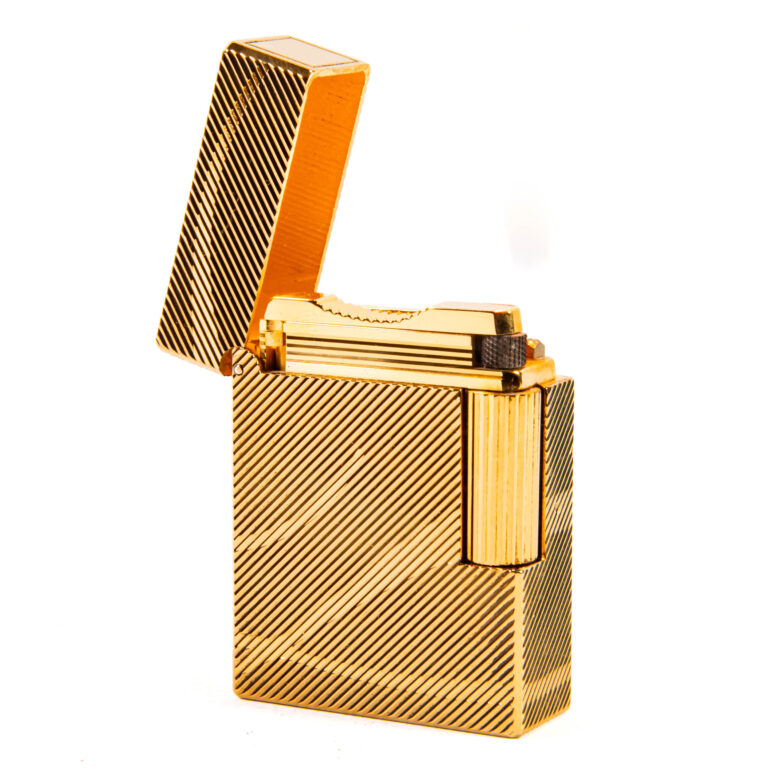
Questions collectors ask
What is the difference between the S.T. Dupont Ligne 1 and Ligne 2?
The Ligne 1 is squarer and thicker, with the flame wheel under the cap. The Ligne 2 is taller and slimmer, has the flame screw under the base and opens with the famous cling.
How do I find out which S.T. Dupont model I have?
Compare its shape with the photos in this guide, then check the size and open the cap: a flame or cutoff wheel under the cap means a Ligne 1 or Soubreny, a screw under the base a Ligne 2, Gatsby or Line D. If you have the box, the reference code on it starts with the model code, such as 016 for a large Ligne 2.
What is the difference between a Gatsby and a Ligne 2?
The Gatsby has the mechanism and size of the small Ligne 2, but with raised ribs (gadroons) down both sides. Both take green gas.
What was the first S.T. Dupont lighter?
The Essence petrol lighter, made from about 1941. The first gas lighter was the D57, from about 1952.
Which S.T. Dupont lighters make the cling sound?
The Ligne 2 is the lighter famous for it, and the Gatsby, built on the same mechanism, has it too; the modern Slim 7 was also given a cling. It is not a reliable way to identify a model, though: now and then a Ligne 2 is silent and a Ligne 1 rings.
Which S.T. Dupont models are the most collectable?
Vintage flint models: early Ligne 1 BS and BR pieces, the Ligne 2 and Gatsby in lacquer or precious metal, limited editions and rare models like the Maharadjah.
Sources and further reading
- S.T. Dupont: lighter refills and flints official gas colour per model
- Wikipedia: S.T. Dupont company history, first lighter in 1941
- Artbrown: the heritage behind S.T. Dupont lighters dealer history of the house and its lighters