How to Spot a Fake S.T. Dupont Lighter: 7 Checks Collectors Use
Serial number, engraving, weight, refill cap, the cling and the lacquer: the checks we use in our workshop to tell a genuine S.T. Dupont from a fake, with the list of known fake serial numbers.
By Max Meijster Updated 15 October 2026 6 min read
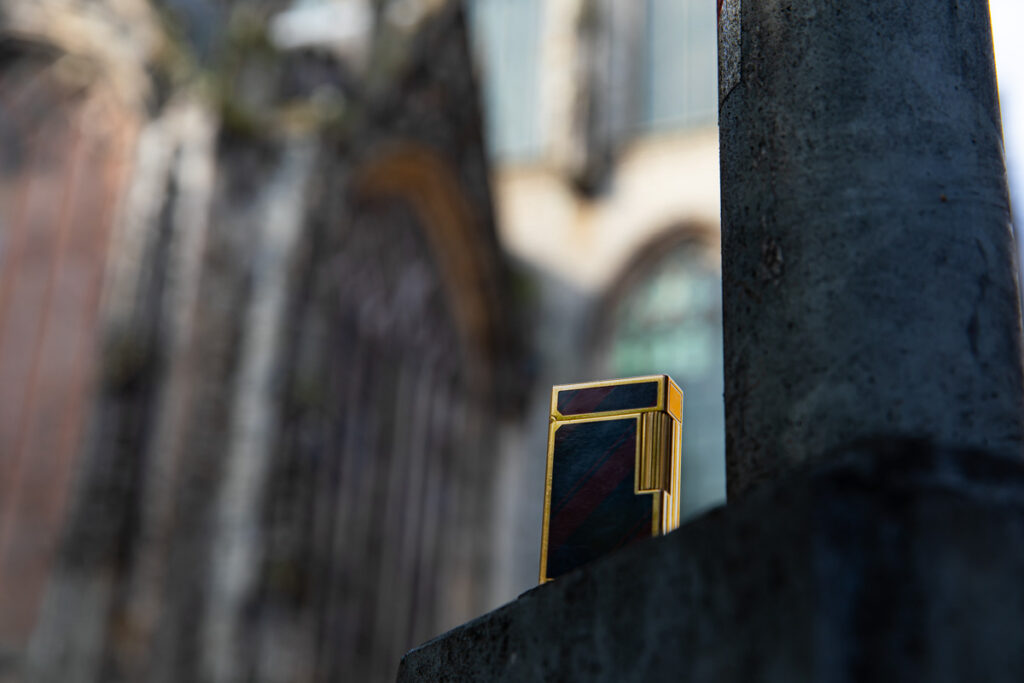
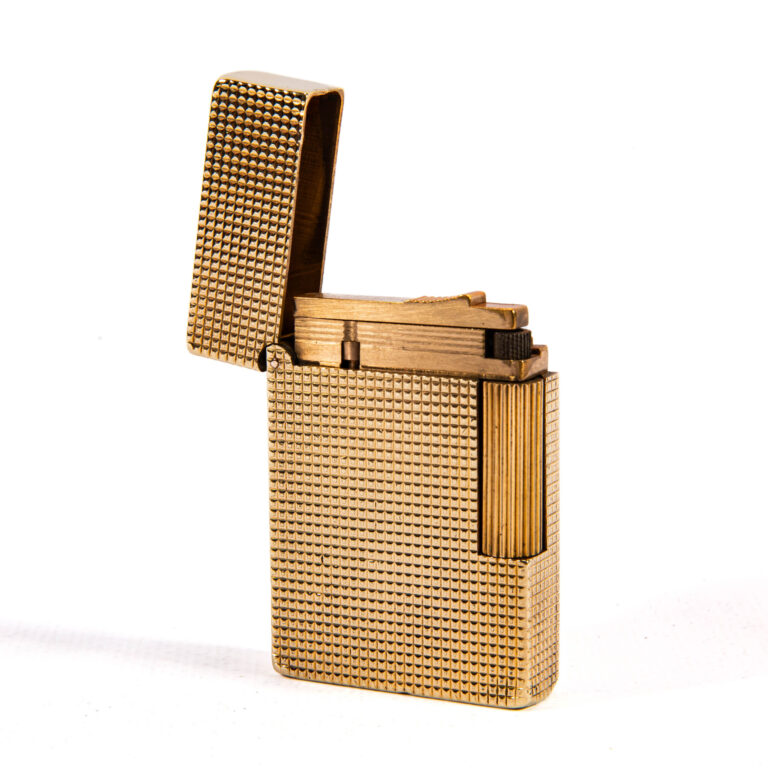
The Ligne 1 and Ligne 2 are the lighters most people picture when they think of S.T. Dupont, and that is exactly why they are copied most. Fakes turn up on eBay, Vinted and marketplace listings every week, usually priced well below a genuine example. Some are crude; others pass a quick look.
A counterfeit almost always gives itself away somewhere, if you know where to look. Below are the checks we use in our workshop, in the order we do them. None settles it on its own. Together they tell you a great deal.
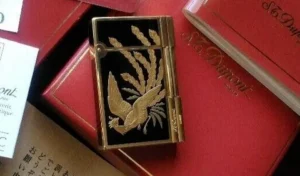
Is there a Japanese style picture on the front? Then also read our guide to spotting a fake S.T. Dupont maki-e lighter. Those fakes work differently: the lighter is often genuine and only the decoration is false.
The checks at a glance
- Serial number: not on the list of known fake numbers, and on a vintage piece stamped slightly unevenly.
- Engraving: “S.T. Dupont, Paris, Made in France” sharp, clean and centred.
- Size and weight: within a few grams and millimetres of the figures below.
- Refill cap: a colour dot inside is a good sign; no dot is not proof of a fake.
- Sound: a Ligne 2 or Gatsby opens with a clear cling.
- Finish: real Chinese lacquer has depth; plating is even and durable.
- Price and seller: too cheap, or no photos of the bottom and the open lighter, is a warning.
Check the serial number
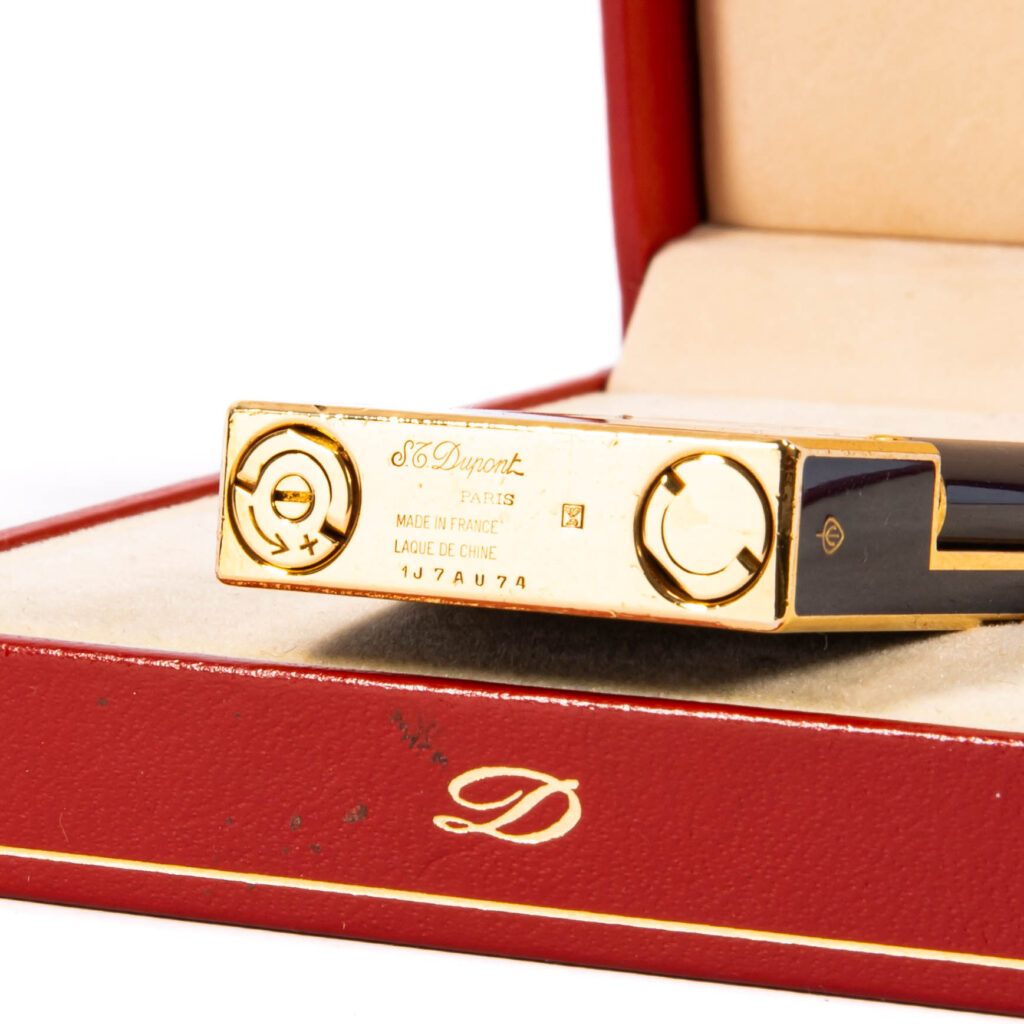
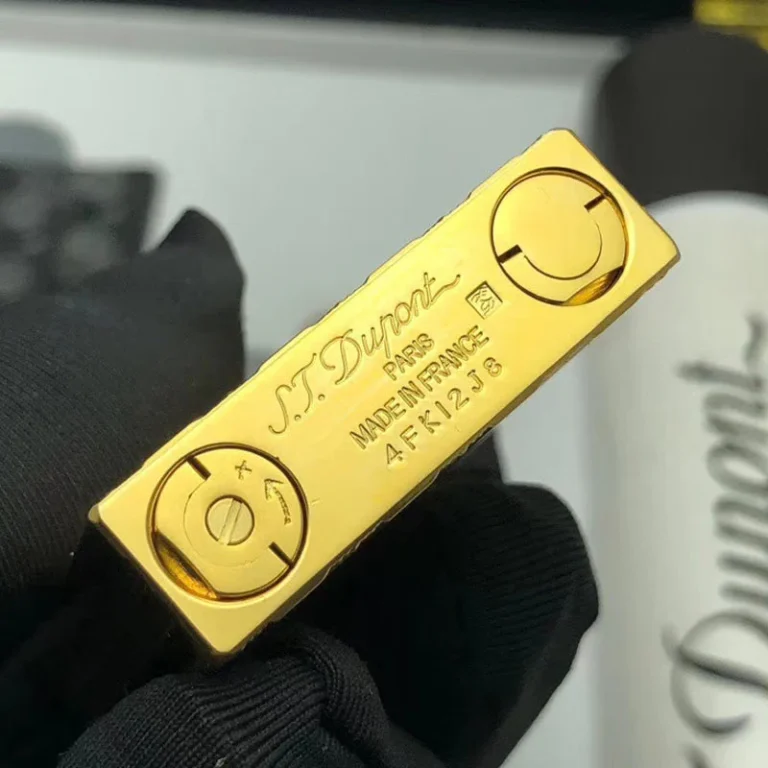
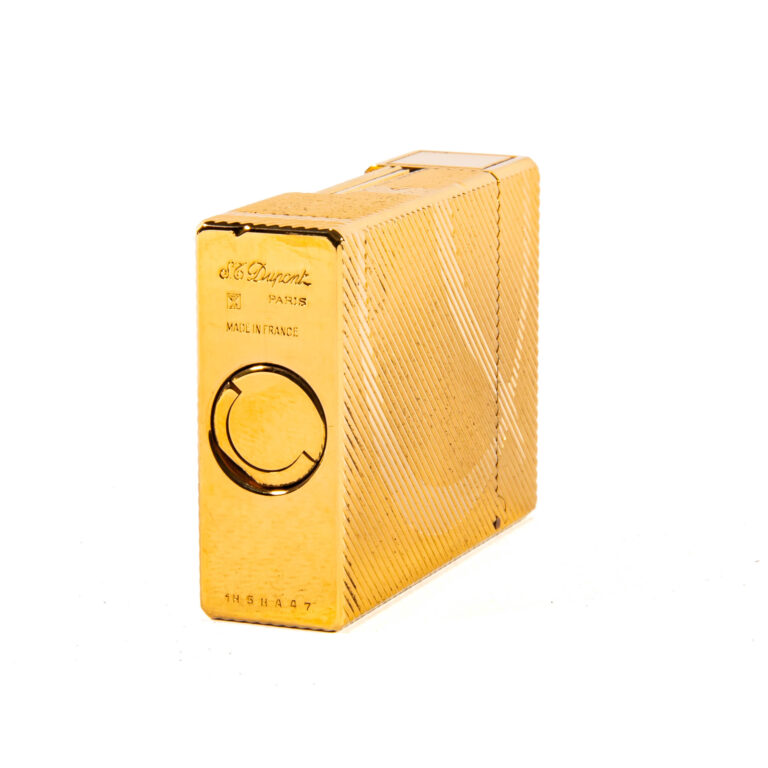
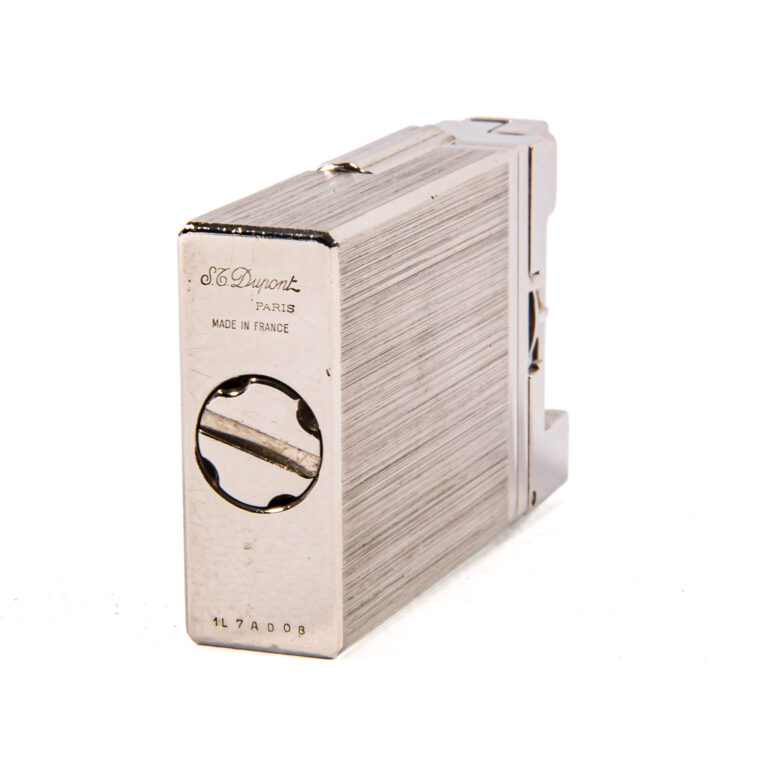
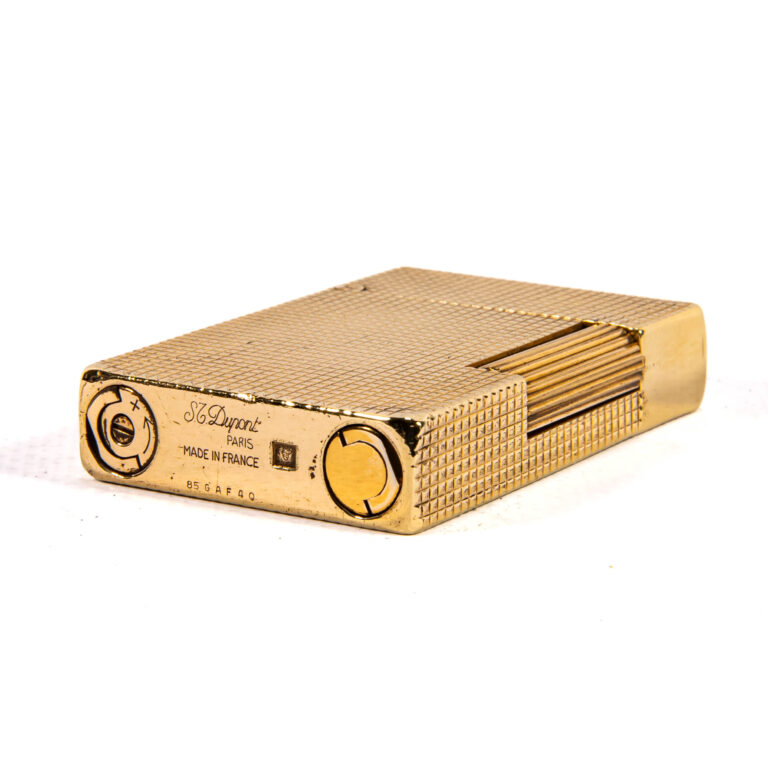
Start with the bottom. Every genuine S.T. Dupont carries its own serial number. On vintage Ligne 1 and Ligne 2 lighters it was stamped by hand at the factory, character by character, and the result is rarely perfect: the spacing varies a little, a character sits a fraction higher than its neighbour, the depth is not quite even. On a vintage piece that irregularity is a good sign.
Counterfeits tend to go the other way, with machine engraved numbers that are perfectly spaced and evenly deep. On a lighter from the 1970s or 1980s that is a warning. Note that newer Ligne 2 lighters, the Cling and Le Grand among them, are laser engraved by S.T. Dupont itself, so on those a neat number is normal and you need the other checks.
Serial numbers known from fakes
There is no official S.T. Dupont serial number checker: the house has never published its records. What collectors have done is keep track of the numbers that turn up again and again on fakes. The best known is 4FK12J8, found on a great many counterfeit Ligne 2 lighters. If the serial on a Ligne 2 starts with one of these, look very closely at everything else:
4FK · 01D · 02D · 03D · 04D · 05D · 06D · 07D · 08D · 14A · 1AA · 1FJ · 1FK · 1GC · 1GH · 1GM · 1J2 · 1J8 · 1JG · 1JN · 1KS · 19LT · 2A0 · 2FH · 2FJ · 2FK · 2JN · 2K0 · 2KS · 2YJ · 2YN · 3FK · 5FK · 6FN · 7FN · 82F · 8A3 · 93T
2A0 is a known fake on the Ligne 2 but does appear on genuine Ligne 1 lighters. A match is a strong warning, not proof; a number that is not on the list proves nothing either.
Look at the engraving
On a genuine lighter, “S.T. Dupont, Paris, Made in France” is cut sharply and cleanly, well centred and in the right typeface, with the elegant, flowing S.T. Dupont signature. On counterfeits the lettering is often shallow, uneven, too thick or slightly off centre, and logos may be skewed or stamped at different depths.
Measure and weigh it
Genuine Ligne 1 and Ligne 2 lighters were made to consistent sizes, so a lighter that measures noticeably differently deserves suspicion. These are the standard models, weighed empty. Heavy lacquer or plating can shift the weight a few grams, and some limited editions are much heavier. Many fakes weigh 130 grams or more.
| Ligne 1 large | Ligne 1 small | Ligne 2 large | Ligne 2 small | |
|---|---|---|---|---|
| Height | 58 mm | 47 mm | 62 mm | 56 mm |
| Width | 35 mm | 35 mm | 37 mm | 37 mm |
| Thickness | 14 mm | 14 mm | 11 mm | 11 mm |
| Weight, empty | about 95 g | about 80 g | about 114 g | about 102 g |
Not sure which model you are holding? Our guide to every S.T. Dupont model helps you place it.
Look inside the refill cap
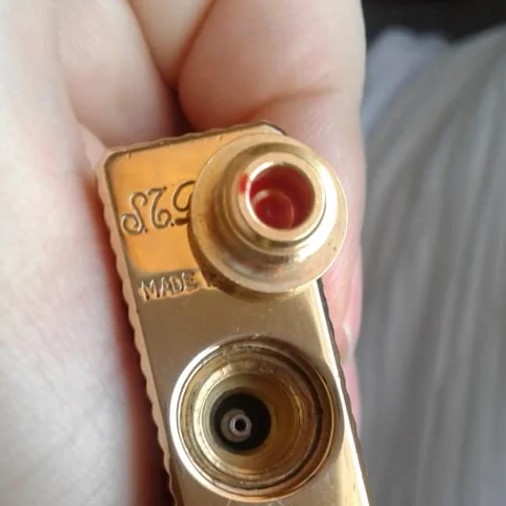
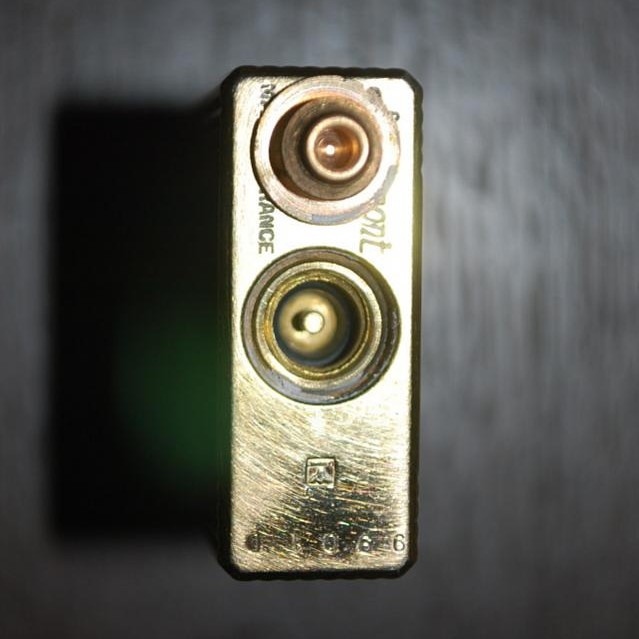
The refill valve sits on the bottom of the lighter under a cap. On most lighters you lift the small lip of the cap with a fingernail and turn it out; only the oldest models have a slotted cap you turn with a coin. Inside a genuine S.T. Dupont cap there is a dot of paint in the colour of the gas the lighter needs: yellow, green, red or blue.
A dot is a good sign, because fakes usually do not bother. But a cap without a dot does not make a lighter fake. Caps get lost and are replaced, and paint wears off over decades. No dot only tells you the cap is probably not the original. Which gas a lighter takes is in our S.T. Dupont gas refill guide.
Listen to the cling
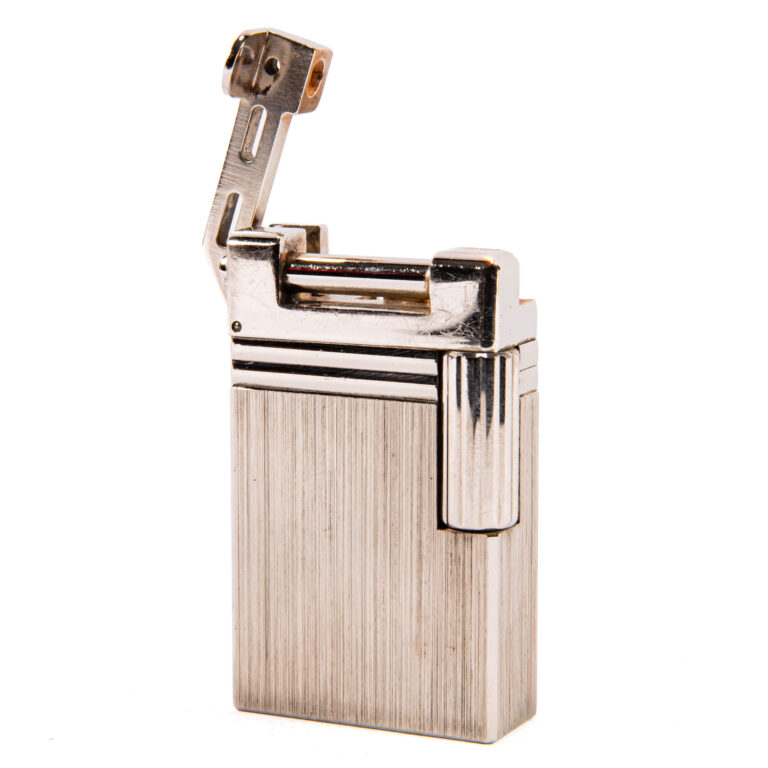
Open a genuine Ligne 2 and the cap rings with a clear, high cling. It was designed into the model and has become one of the things collectors know it by; the Gatsby shares it. Counterfeits rarely get it right: most give a dull click, some barely make a sound.
Do not expect the same from a Ligne 1. Some do ring, but the model was never designed for it, and a quieter opening is perfectly normal. What a Ligne 1 should have is a crisp, precise action, with no play or grinding in the hinge. Sound alone decides nothing, but a supposed Ligne 2 that opens with a dull click deserves a closer look.
Check the lacquer and the plating
“Laque de Chine” on the bottom means Chinese lacquer: natural lacquer, applied by hand in many thin layers and polished between coats. It is one of the hardest things to fake. Real lacquer has depth, smooth and almost glass like, with the colour seeming to sit beneath the surface. Most fakes use paint or a synthetic coating that looks flat, uneven or slightly plasticky up close. The words on the bottom prove nothing on their own; the finish has to match them.
The body tells you something too. A genuine Ligne 1 or Ligne 2 is made of brass with good quality precious metal plating, gold or palladium. Many fakes use thinner plating that wears through or even chips.
Before you buy
- Price: a Ligne 2 in top condition does not sell for a fraction of what comparable pieces fetch. A bargain is the most common sign of a fake.
- Photos: ask for clear photos of the bottom (serial and engraving), the open lighter and the inside of the cap. A seller who will not send them is answering your question.
- Seller: buy from someone who specialises in S.T. Dupont and stands behind what they sell. Why it matters beyond the money: why you should avoid counterfeit Dupont lighters.
Every S.T. Dupont at The Lighterhouse is inspected, serviced and guaranteed authentic before it is listed. See the S.T. Dupont lighters we have now.
Genuine S.T. Dupont lighters, serviced and guaranteed
See all S.T. Dupont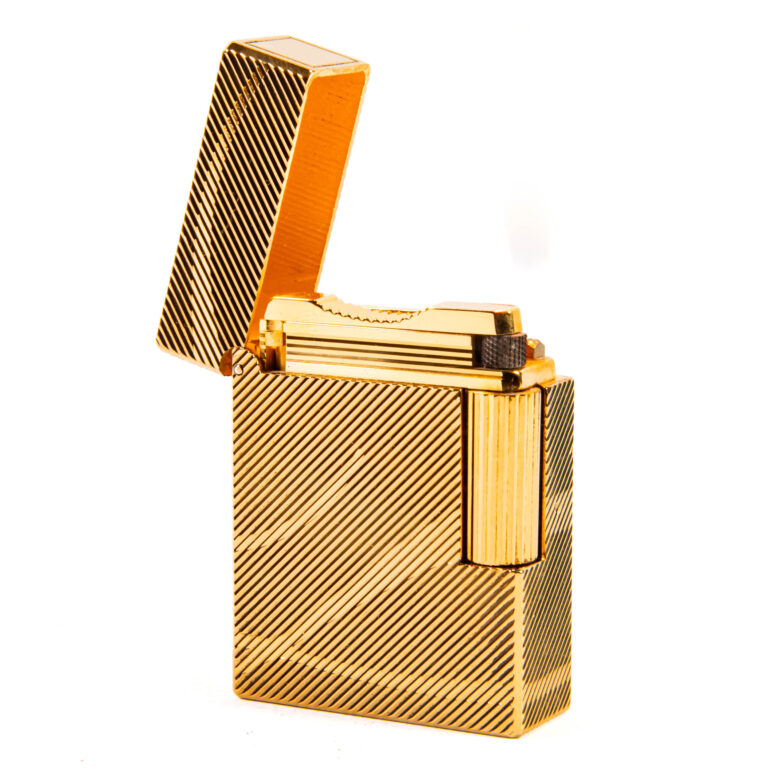
Questions collectors ask
Is there an S.T. Dupont serial number checker?
No. S.T. Dupont has never published its serial records. Collectors do keep a list of serial numbers that turn up on fakes, such as 4FK12J8; a match is a strong warning.
What does a serial starting with 4FK mean on a Dupont lighter?
Serials starting with 4FK, best known as 4FK12J8, are found on a great many counterfeit Ligne 2 lighters. A Dupont with a serial starting with 4FK is almost certainly fake.
How much does a genuine S.T. Dupont Ligne 2 weigh?
About 114 grams empty for the large model and about 102 grams for the small one, on average. Some limited editions are heavier, but a standard Ligne 2 of 130 grams or more is suspect.
Does every genuine S.T. Dupont make the cling sound?
No. The Ligne 2 and the Gatsby are known for it. A Ligne 1 was never designed to cling, so a quieter opening is normal there.
My S.T. Dupont has no colour dot in the cap. Is it fake?
Not necessarily. Caps get lost and replaced and the paint can wear off. No dot means the cap is probably not original; judge the lighter on the other checks.
What does Laque de Chine mean?
Chinese lacquer: natural lacquer applied by hand in many layers and polished, used by S.T. Dupont on many lighters and pens. Real lacquer has a deep, glass like finish that paint cannot copy.
Sources and further reading
- Artbrown: how do I know if my S.T. Dupont Ligne 2 lighter is authentic? known fake serial prefixes, weights, hand stamped and laser engraved serials
- r/STDupont: S.T. Dupont lighter authentication guide collector list of fake serial numbers, cap colour code, engraving
- S.T. Dupont: lighter refills and flints gas colour per model