The Patek Philippe Lighter: A Collector’s Guide to the Golden Ellipse
In the 1970s Patek Philippe sold a lighter in solid gold, shaped like its Golden Ellipse watch. Who made it, the references, how many exist, how to identify one and what they fetch today.
By Max Meijster Updated 15 October 2026 7 min read

Patek Philippe is not a name you expect to find on a lighter. The Geneva manufacture built its reputation on watches, and almost nothing else it has made carries the same weight. Yet in the 1970s and early 1980s Patek sold a lighter of its own: solid 18 carat gold, shaped like its Golden Ellipse watch, sold through the same retailers and made in such small numbers that only a few dozen have surfaced since.
This guide covers where the Patek Philippe lighter came from, who really made the mechanism, how to identify a genuine example, what the market looks like and what to check before you buy one.
- Made
- 1970s to early 1980s
- Material
- Solid 18 carat yellow or white gold; some with translucent enamel
- References
- 9502, 9504, 9505 (gold); 9506, 9507, 9508 (enamel); 9512-1 (Oman)
- Case number
- “A” followed by three digits
- Size and weight
- About 40 by 58 mm; over 90 grams
- Original price
- 5,800 US dollars (gold), 8,000 US dollars (enamel), early 1980s

From watch to family: the Golden Ellipse
To understand the lighter, start with the watch. Patek Philippe introduced the Golden Ellipse in 1968, with references 3546 and 3548: its first new collection since the Calatrava of 1932. The case follows the golden ratio, 1 to 1.6181, the proportion studied since antiquity and used throughout Western art and architecture. The result sits between a circle and a rectangle, and it was unlike anything else in the catalogue.
The Ellipse sold well. By the end of the 1970s there were around 65 versions, according to Patek specialist John Reardon, and Patek used the shape as a design language: cufflinks, key chains, tie clips, rings, clocks and, the furthest from its own trade, lighters.
The references

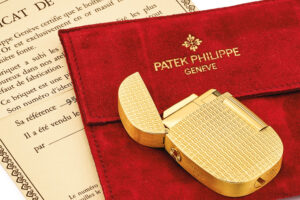
All Golden Ellipse lighters share the elliptical shape of the watch, and the surfaces are not flat but convex. Patek made a point of it. Its late 1970s brochure explains that the flat surfaces of ordinary lighters “can be engine turned industrially”, while the convex Patek case, which fits more snugly in the palm, had to be decorated on “hand operated equipment, rose engines from the 19th century”. That is the same guilloché technique used on Patek’s finest dials and cases.
| Reference | Name | Decoration |
|---|---|---|
| 9502 | Louis Philippe | Solid gold, striped pattern |
| 9504 | Ocean | Solid gold, woven pattern |
| 9505 | Chevrons | Solid gold, chevron pattern |
| 9506 | Red | Translucent red enamel over a hand engraved barleycorn pattern |
| 9507 | Blue | Translucent blue enamel over barleycorn |
| 9508 | Green | Translucent green enamel over barleycorn |
| 9512-1 | Oman | Chevrons with an enamel panel in the Omani colours and the Khanjar emblem |
The plain gold designs could be ordered with a factory monogram, and the enamel pieces are the rarest of the standard references. The 1978 brochure also invited clients to order hand engraved or enamelled lighters to their own design, just as Patek still did for its enamelled watches.
Who made it: the Colibri question
Patek’s period literature presented each lighter as handmade in 18 carat gold, case and mechanism, and individually numbered. The auction houses tell a more nuanced story. Sotheby’s catalogued the lighters as most probably commissioned from the specialist lighter maker Colibri, and Christie’s describes Patek as believed to have commissioned Colibri. According to Patek’s own marketing, every internal part was then hand finished and polished in Geneva.
Colibri, founded in 1928 by Julius Lowenthal, was one of the large lighter makers of the period. Sotheby’s notes a nice detail: Colibri also made the golden gun for the 1974 James Bond film The Man with the Golden Gun.
For a collector this matters in two ways. The exterior, with its rose engine work, enamel and finishing, is entirely Patek in quality, and in the hand the lighter reads as a Patek object. The mechanism, however, is not held in the same regard as those of the great lighter houses of the period, such as S.T. Dupont and Dunhill, and specialists have pointed out that its mechanical performance was not flawless. Buy it for the object, and expect the lighter part to need care.
It is the same story as the Paris jewellers who had specialist workshops make their gold boxes and lighters: Patek was a watch manufacture, and when it wanted a lighter, it sourced the mechanical core from people who already built them.
The Sultan of Oman commissions
The most sought after Golden Ellipse lighters were made for Sultan Qaboos bin Said of Oman, who reigned from 1970 to 2020. A keen watch collector, he commissioned pieces from Patek Philippe, Rolex and others, many of them marked with the Khanjar, the curved dagger over crossed swords that is Oman’s national emblem. They were given as diplomatic gifts to foreign dignitaries, senior officials and loyal staff.
The Oman lighters include enamel pieces from the standard range made for the Omani market and the special reference 9512-1: a gold Chevrons case with an enamel panel in red, white and green and the Khanjar engraved on the case. Christie’s in Dubai has offered more than one, including an example with matching Ellipse cufflinks that the Sultan gave to the consignor’s father.
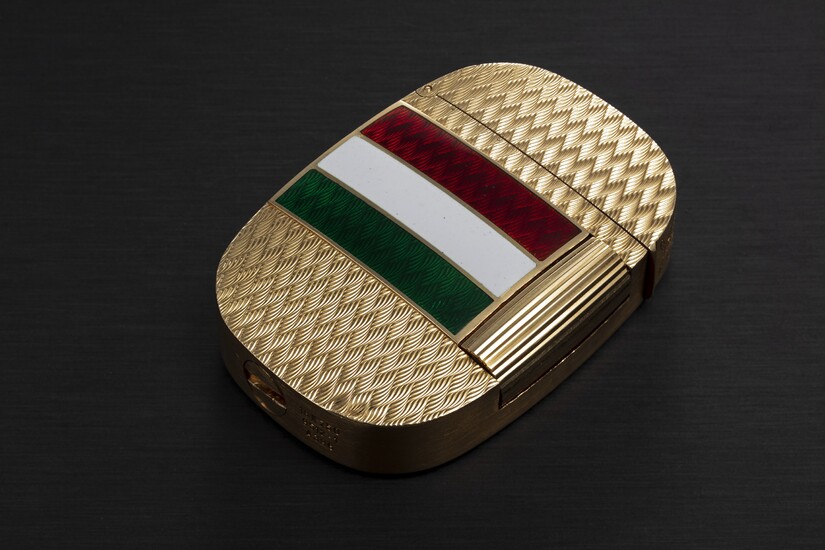
Auction record: in November 2020 Phillips in Geneva sold a green enamel reference 9508 made for the Omani market, case number A325, for CHF 52,920, well above its estimate of CHF 20,000 to 40,000.
How to identify a genuine example
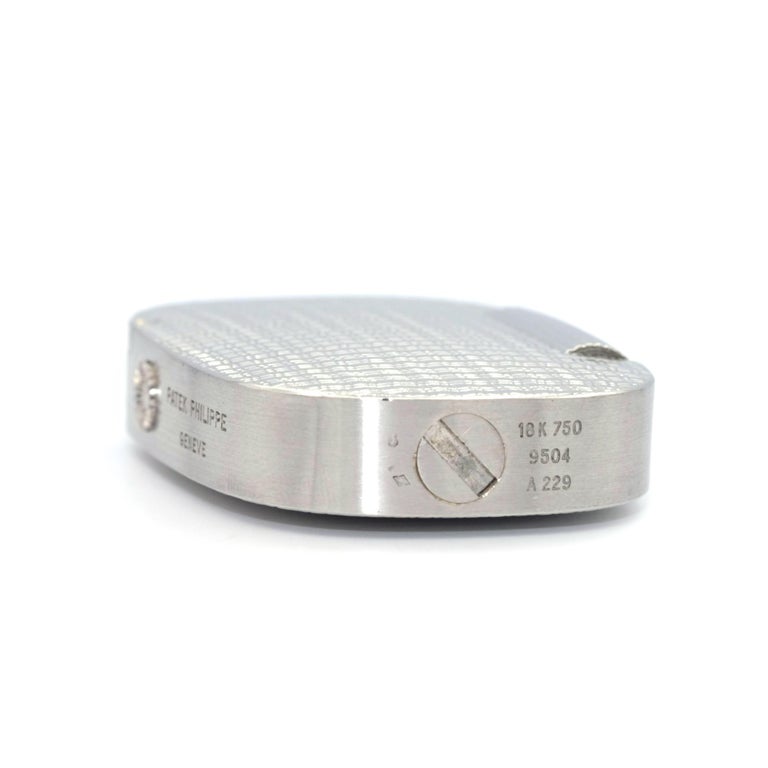
- Signature. “PATEK PHILIPPE” engraved on the case.
- Gold marks. 18K and 750, with two further Swiss hallmarks next to them. Christie’s reports hallmarks inside the flip top and on the base.
- Reference. A four digit reference starting with 95: 9502, 9504, 9505, 9506, 9507, 9508 or 9512-1.
- Case number. The letter A followed by three digits, such as A158 or A325.
- Shape and weight. Convex elliptical case of about 40 by 58 mm, hand turned decoration, and a solid weight of over 90 grams; an enamel 9507 weighed 106.5 grams at Dreweatts.
- Papers. The original Patek Philippe certificate records the reference and the identification number of the lighter. They should match the engraving.
How many were made?
Nobody outside Patek knows for sure. John Reardon counted about 30 lighters that had surfaced at auction or with dealers by 2021 and estimated 100 to 200 in total, while Patek itself said only a few dozen were released each year. Phillips, in its 2020 catalogue, puts the total at approximately 400, consecutively numbered.
The case numbers support the higher figure: lighters numbered A394 and A396 have been offered at Christie’s. Either way, the Golden Ellipse lighter is one of the rarest lighters with a great name on it.
Prices then and now
In the early 1980s the solid gold references retailed at 5,800 US dollars and the enamel versions at 8,000 US dollars. For scale: in 1985 the Patek Philippe reference 2499/100J, one of the most celebrated perpetual calendar chronographs ever made, cost 22,000 US dollars. The lighter sat at roughly a quarter of that.
Today prices depend on reference, condition and the presence of box and certificate. As a guide, plain solid gold examples typically sell for 15,000 to 25,000 euros. Rare enamel pieces, Khanjar pieces for Oman and complete sets with box and certificate can fetch several times that, and a strong auction can go well above the range: a 2025 market report gives auction results of about 30,000 to 45,000 euros, while Sotheby’s estimated a plain gold 9504 with its certificate more modestly, at 12,000 to 15,000 US dollars, in 2019. The Phillips result of CHF 52,920 for an enamel piece made for Oman is the benchmark at the top.
Buying advice for collectors
- Box and certificate. Original lighters came with a fitted presentation box, a certificate and sometimes matching cufflinks. A complete set with matching numbers is worth a clear premium.
- Enamel. Check the enamel closely in good light for chips, cracks and old repairs. Translucent enamel over engraving is very hard to restore invisibly.
- Wear on the guilloché. Rose engine patterns soften with heavy polishing. Crisp edges are a good sign.
- The mechanism. Ask whether it lights and holds gas. Auction condition reports regularly mention a stiff roller or play in the hinge. Plan for a careful service by a specialist who knows period lighters.
- Monograms. Patek offered factory monograms, so a monogram is not automatically a later addition. It does make the piece more personal, which some buyers mind.
- Provenance. For an Oman piece, documented provenance matters even more than usual.
Where it fits in a lighter collection
For collectors who care about lighters first and watches second, the Golden Ellipse is a fascinating crossover object. It belongs in the same conversation as the solid gold S.T. Dupont lighters of the same period, the precious Cartier lighters of the 1970s and Dunhill’s gold work. It is rarer than any of them, signed by a name almost nobody connects with lighters, and built around a shape that has barely changed since 1968.
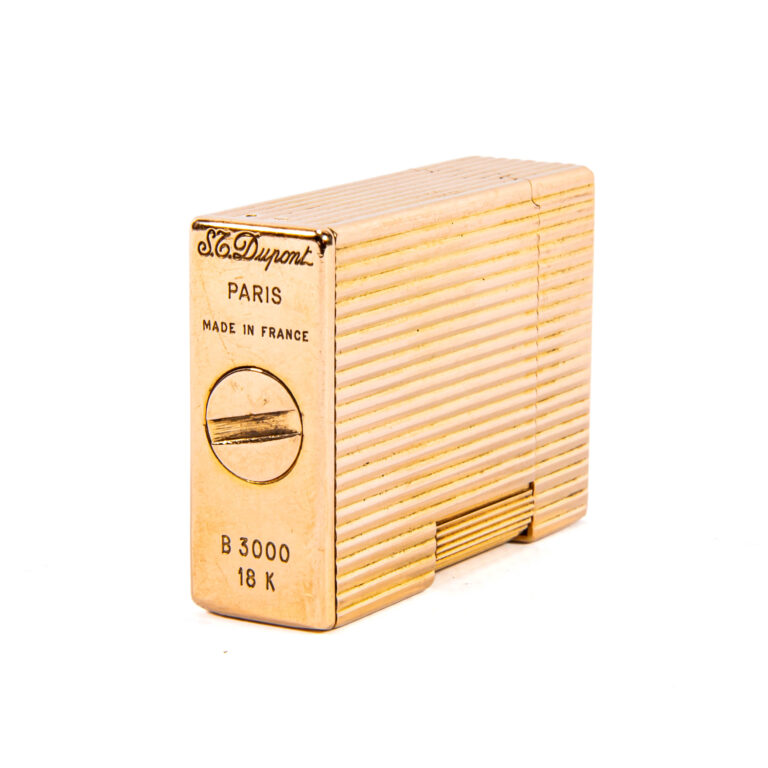
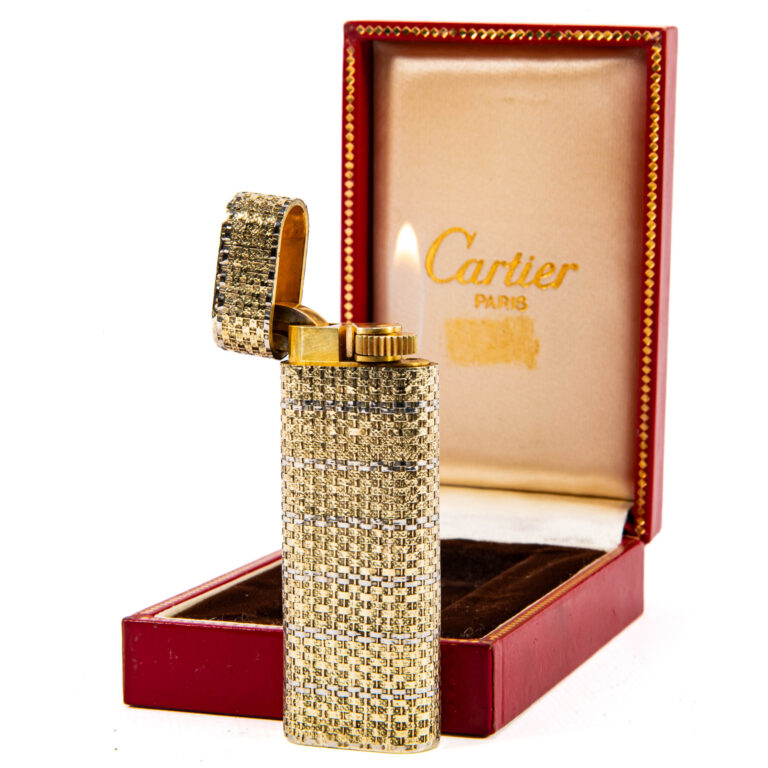
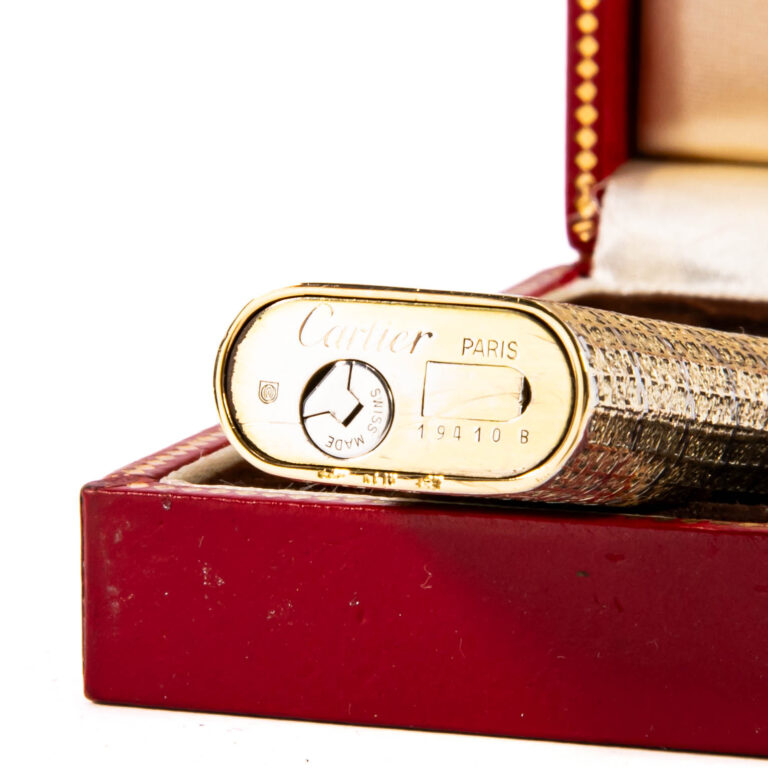
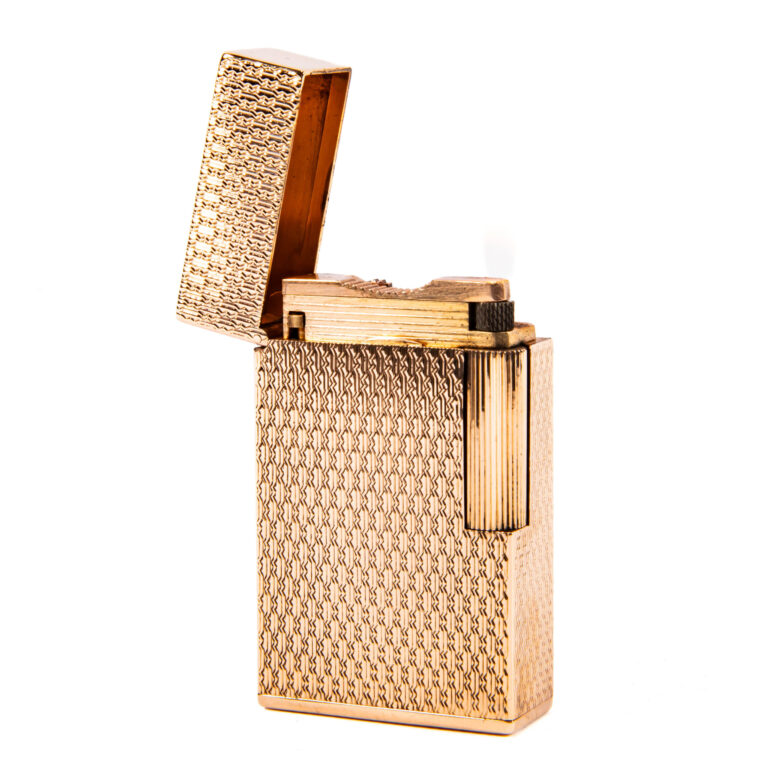
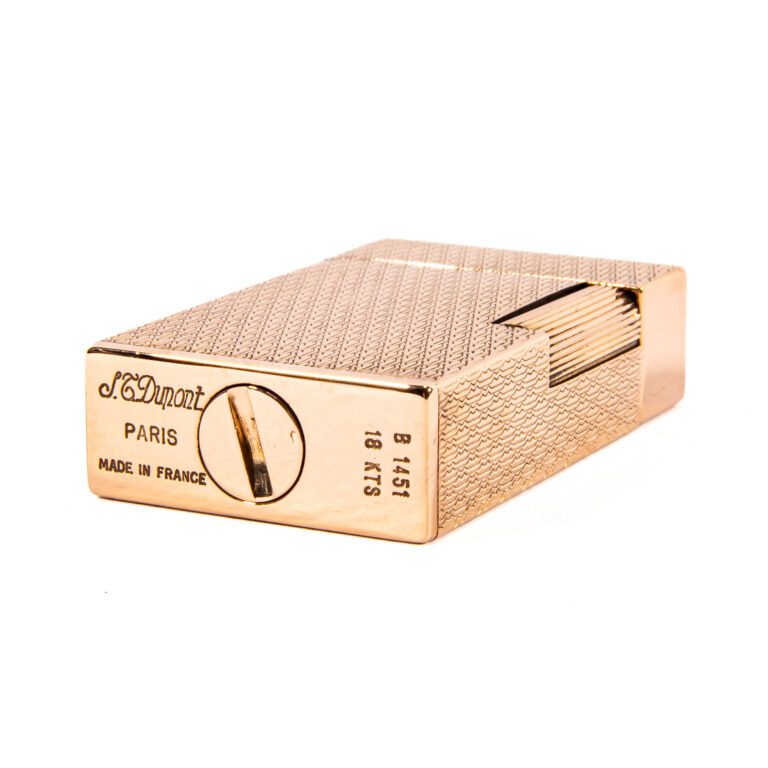
A Patek is rarely available, but other precious lighters of the period are. Browse our vintage solid gold lighters, our masterpieces or our vintage Cartier lighters, all serviced in our workshop.
Vintage solid gold lighters available now
See all solid gold lighters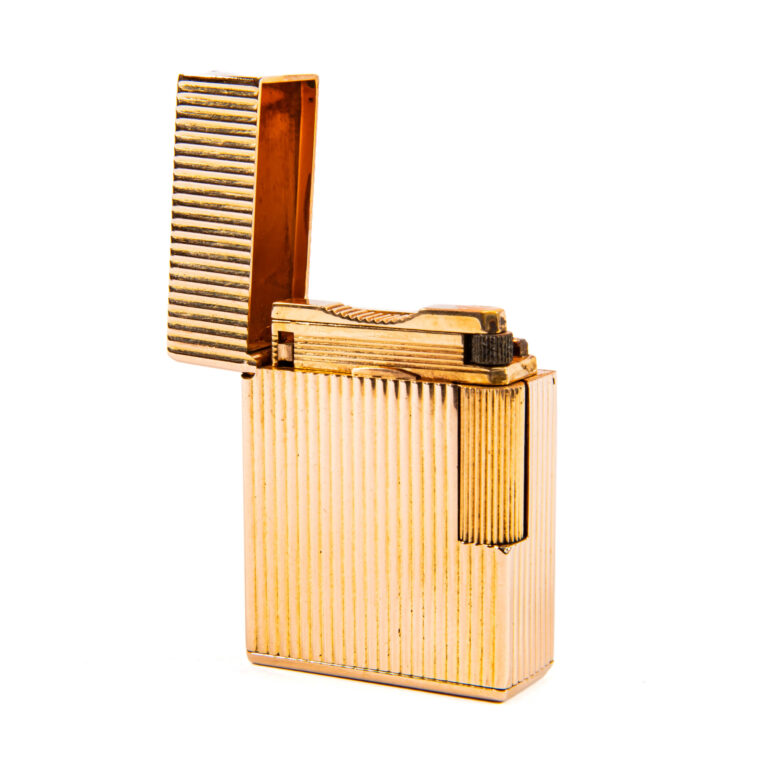
Questions collectors ask
Did Patek Philippe make lighters?
Yes. In the 1970s and early 1980s Patek Philippe sold Golden Ellipse lighters in solid 18 carat gold, some with enamel, as part of its Ellipse accessories. Very few were made.
Who made the Patek Philippe lighter?
Patek Philippe finished and signed the case, but Sotheby's and Christie's both say the mechanism was most probably commissioned from the lighter maker Colibri.
How much is a Patek Philippe lighter worth?
It depends on reference, condition and papers. Plain solid gold examples typically sell for 15,000 to 25,000 euros; enamel pieces and those made for Oman can fetch much more, up to CHF 52,920 at Phillips in 2020.
How many Patek Philippe Golden Ellipse lighters were made?
Nobody knows exactly. John Reardon estimates 100 to 200, Phillips about 400; case numbers above A390 are known.
How do I know if a Patek Philippe lighter is genuine?
Look for PATEK PHILIPPE engraved on the case, 18K and 750 gold marks with Swiss hallmarks, a reference starting with 95 and a case number of A plus three digits, ideally matching the original certificate.
What was the original price of the Patek Philippe lighter?
In the early 1980s the solid gold versions cost 5,800 US dollars and the enamel versions 8,000 US dollars.
Sources and further reading
- Collectability (John Reardon): the Golden Ellipse lighter references, hallmarks, A serials, about 30 known, 100 to 200 estimate, original prices, 1978 brochure
- Phillips, Geneva Watch Auction XII, lot 34 ref. 9508 for the Omani market, A325, sold CHF 52,920; about 400 made
- Sotheby's 2019, lot 7: Patek Philippe yellow gold lighter Colibri attribution, estimate 12,000 to 15,000 US dollars
- Christie's Dubai: Golden Ellipse ref. 9512-1 with Khanjar and cufflinks A394, Oman gift, Colibri, hallmarks
- FNL Guide: the curious relationship between a lighter and Patek Philippe 200 to 400 made, auction results of about 30,000 to 45,000 euros, mechanism not flawless
- Collectability: the history of the Golden Ellipse 1968 launch, refs 3546 and 3548, 65 versions, accessories