Dunhill Rollagas vs S.T. Dupont Ligne 2: Which Luxury Lighter Should You Choose?
Two classic luxury flint lighters side by side: years, mechanism, sound, size, weight, gas, finishes, servicing and price, and who should pick which.
By Max Meijster Updated 15 October 2026 6 min read

The Dunhill Rollagas and the S.T. Dupont Ligne 2 are the two classic luxury flint lighters of the late twentieth century. Both are brass with precious metal plating or lacquer, both were built to be serviced and used for decades, and both are easy to find on the vintage market. In the hand, though, they feel, sound and work quite differently.
We service and sell both, so here they are side by side: the facts in one table, then what the differences mean in daily use, and who should pick which.


Rollagas vs Ligne 2 at a glance
| Dunhill Rollagas | S.T. Dupont Ligne 2 | |
|---|---|---|
| Made | Small numbers from 1953, launched 1956, original design until 2004 | 1977 to today |
| Maker | Dunhill, London; mechanism by La Nationale, made in Switzerland | S.T. Dupont, made in Faverges, France |
| Mechanism | Opening the lid opens the gas; a roll of the long roller strikes the flint | Opening the cap opens the gas; a turn of the flint wheel strikes the flint |
| Sound | A short, snappy action, but no ring | The famous cling as the cap opens |
| Size | 64 × 24 × 13 mm (Mini from 1993: 50 mm tall) | Large 62 × 37 × 11 mm, small 56 × 37 × 11 mm |
| Weight, empty | About 78 g | About 114 g (large), about 102 g (small) |
| Gas | Standard refined butane | S.T. Dupont refills: yellow (large), green (small) |
| Flint | Any standard flint (5 mm, or the 3 mm red flints) | S.T. Dupont black flint |
| Flame adjustment | Small wheel on the body; fine tuning with a screw in the base | Screw under the base |
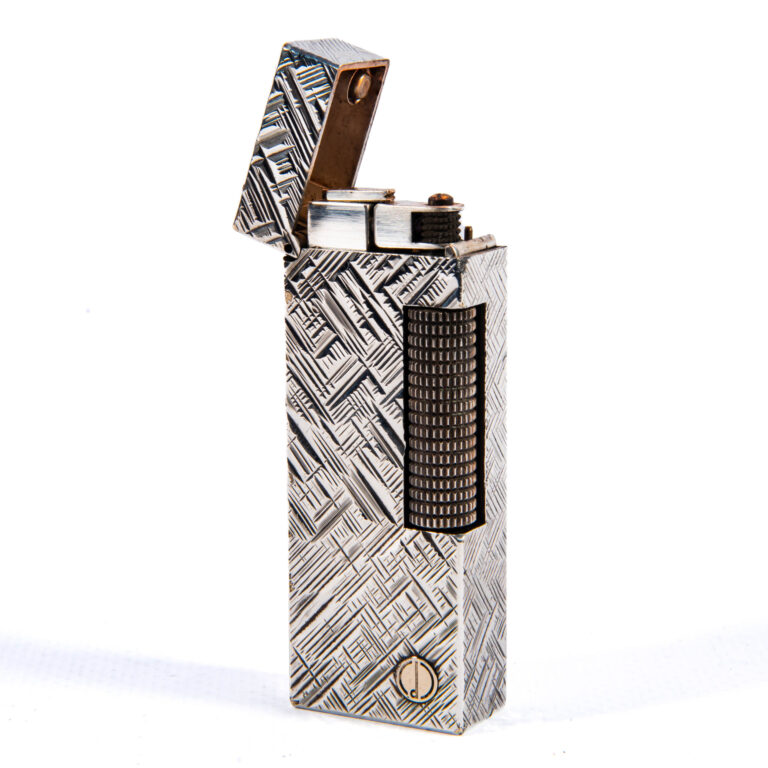
| Finishes | Gold, silver or palladium plate in engine turned patterns, lacquer from 1973, stone tops (1972 to 1975), solid silver, factory gold jackets | Gold, silver or palladium plate, Chinese lacquer, guilloché patterns, many limited editions, solid gold |
| Servicing | Repair kits are sold online; with some experience and steady hands you can do it yourself | Needs special tools; best left to an authorised repair service |
| Collectability | Lacquer colours, stone tops, rare patterns, early barrel hinge pieces, solid silver and gold jackets | Lacquer, limited editions, precious metal, early pieces |
| In our shop now | Mostly about €200 to €425 | Mostly about €325 to €700 |
Shop prices are for serviced vintage lighters in October 2026; rare pieces, such as a Rollagas with a solid gold jacket or a sought after Ligne 2 limited edition, cost a good deal more.
Two houses, two flagships
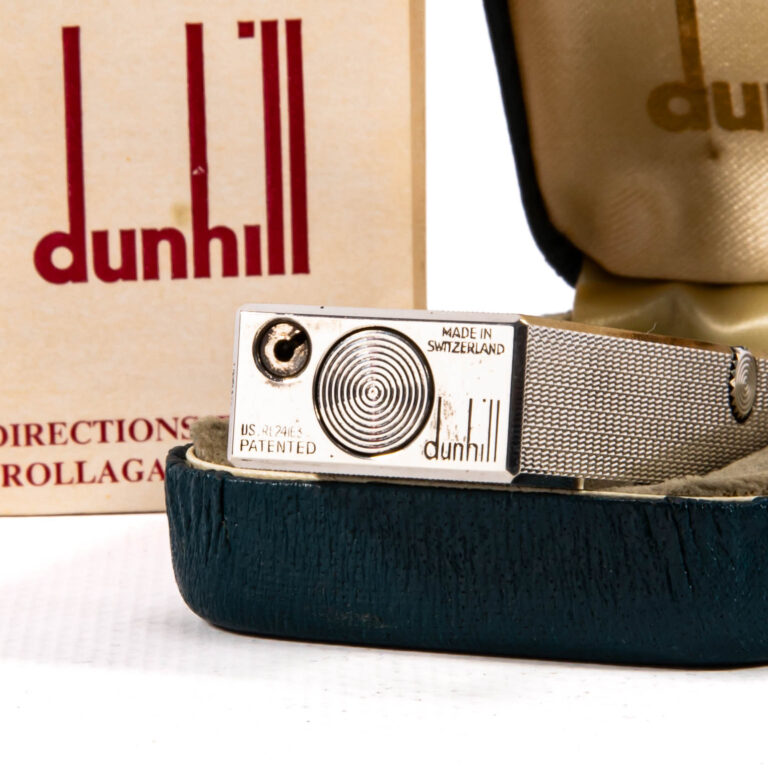
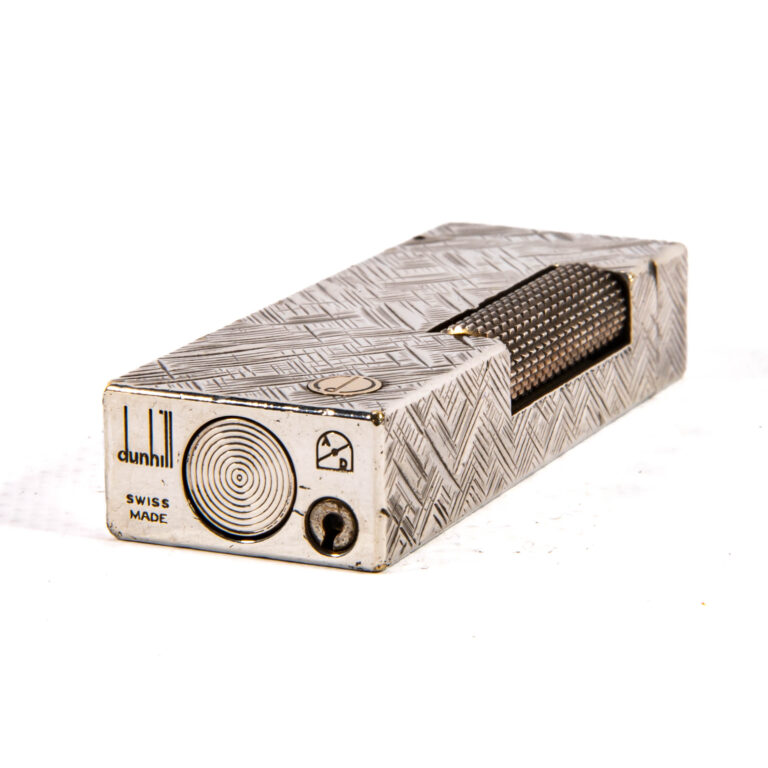
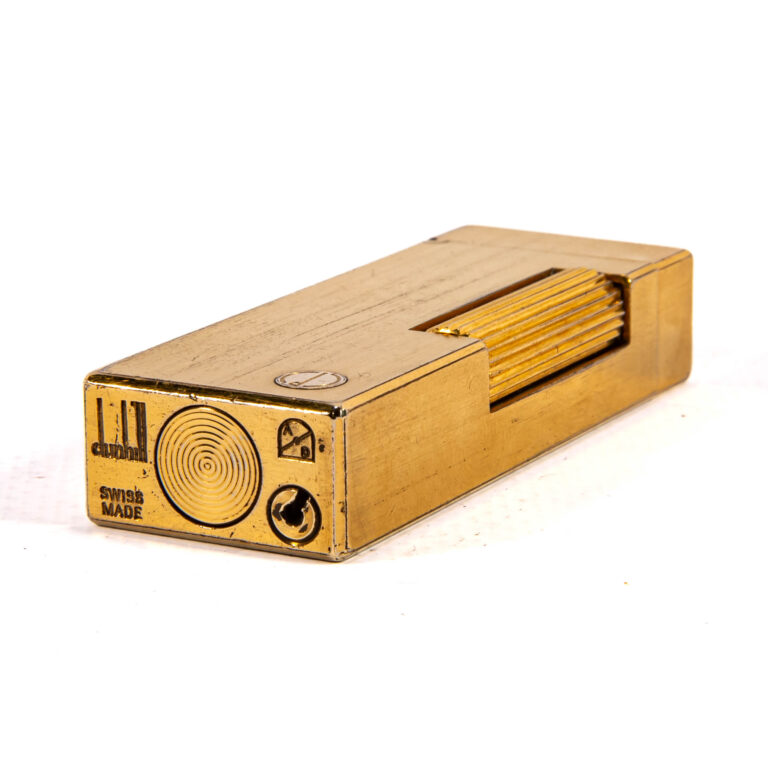
Dunhill did not make its own lighters. The Rollagas was developed with the Geneva firm La Nationale and its engineer Conrad Zellweger. It appeared in small numbers in 1953, was patented and launched in 1956 and went into mass production in 1957, as one of the first truly successful butane lighters. The concealed hinge came in 1971, lacquered colours in 1973 and the Rollagas Mini in 1993. In 2004 Dunhill replaced the original design with a new generation. The whole story is in the history of the Dunhill Rollagas.
S.T. Dupont was founded in Paris in 1872, works from Faverges in the French Alps and made its first lighter in 1941. The Ligne 2 followed in 1977 and became the house’s flagship, still made today. It sits in a long line of models, from the Ligne 1 to the Gatsby, all explained in our guide to every S.T. Dupont lighter model.
Feel, size and sound
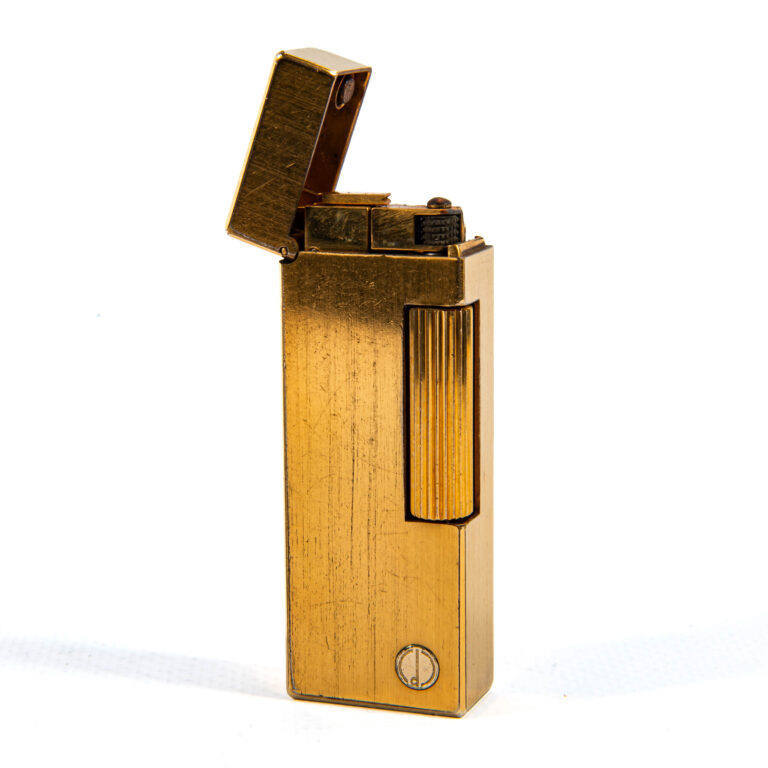
This is where the two differ most. The Rollagas is narrow and thick, light at around 78 grams, with a long knurled roller down one side. Flipping the lid open opens the gas; one roll with your thumb strikes the flint. The action is short and snappy, but there is no ring. It is understated in a very British way.
The Ligne 2 is wide and flat, and much heavier: a large one weighs about 114 grams, a small one about 102. It works the same way, opening the cap opens the gas and a turn of the flint wheel lights it, but the cap rings with the clear, high cling that S.T. Dupont is famous for. It has more presence on the table and makes more of a ceremony of lighting. If you want quiet and slim, the Rollagas wins; if you want sound and weight, the Ligne 2 does.
Gas, flints and everyday use
The Rollagas takes standard butane: any well refined gas will do, and you can buy it almost anywhere. It takes any standard flint (a 5 mm flint, or the 3 mm red flints), which you change by pushing back a small slide under the lid; you need no tool for it. The flame is set with a small wheel on the body. Our Dunhill Rollagas maintenance guide shows each step.
The Ligne 2 needs S.T. Dupont’s own refills, which fit its valve and are colour coded: yellow for the large Ligne 2, green for the small. They cost more than a can of butane and are sold by fewer shops. Which refill fits which model is in our S.T. Dupont gas refill guide. For carefree daily use the Rollagas is the easier companion; the Ligne 2 asks a little more and gives more back.
Servicing and durability
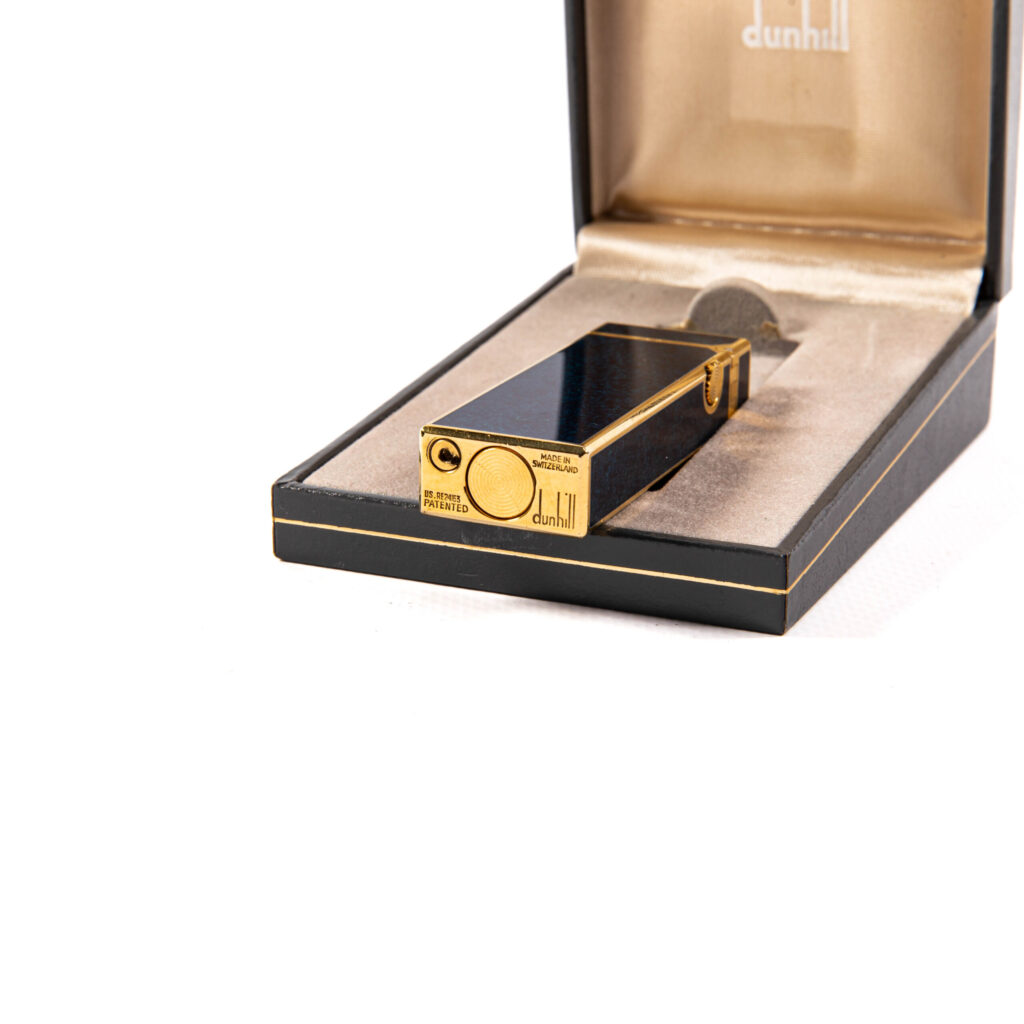
Both are built to last for generations. Their bodies are solid brass and their mechanisms can be cleaned, resealed and adjusted again and again. The difference is in who can do it. A Rollagas is the easier one for a handy owner: repair kits are sold online, and with some experience and steady hands anyone can do it. An S.T. Dupont needs special tools. For either, the safest route is an authorised repair service. Dunhill replaced the original Rollagas design in 2004 with the lighter it sells today, which collectors call the new generation.
Every lighter we sell has been through our workshop first, and we bleed it after the service. It ships empty, as transport rules require, so the first thing you do is fill it.
Value and collectability
Both are good lighters to collect. Rollagas collectors look for the lacquered colours of the 1970s, the stone tops of 1972 to 1975, unusual engine turned patterns, early lighters with a barrel hinge, solid silver versions and the gold jackets, which Dunhill always made as a gold jacket over the lighter, in the factory. Ligne 2 collectors chase Chinese lacquer, the many limited editions S.T. Dupont has made since 1989, and lighters in good plating with the cling still crisp.
On price the Rollagas is the more accessible of the two. In our shop a serviced vintage Rollagas mostly costs between about €200 and €425, a Ligne 2 between about €325 and €700. Before you buy either, read our guides on how to spot a fake Dunhill Rollagas and how to spot a fake S.T. Dupont, and date a Rollagas with our Rollagas dating guide.
Which should you choose?
Choose the Dunhill Rollagas if you want:
- a slim, light lighter that disappears into a jacket or a bag;
- quiet, understated British design;
- gas you can buy anywhere;
- the best value for a serviced vintage luxury lighter.
Choose the S.T. Dupont Ligne 2 if you want:
- the cling, and a lighter people notice;
- more weight and presence in the hand;
- Chinese lacquer or a limited edition;
- a model that is still made, with factory service.

Ready to choose? See the Dunhill Rollagas lighters we have now or browse our S.T. Dupont Ligne 2 lighters.
Dunhill Rollagas lighters, serviced and ready to use
See all Rollagas lighters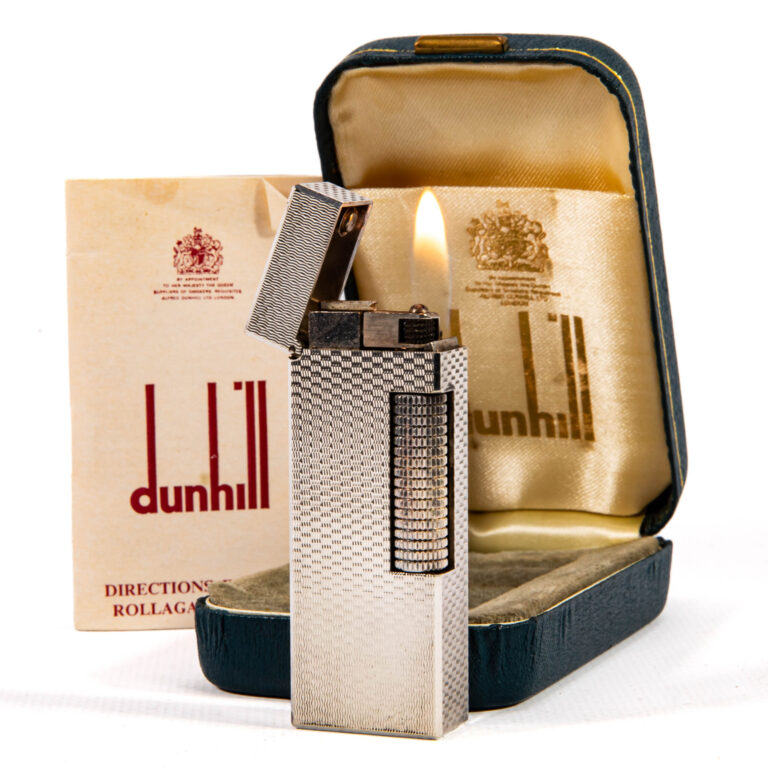
Questions collectors ask
Is Dunhill or S.T. Dupont better?
Neither is simply better. The Rollagas is slimmer, lighter, quieter and runs on standard butane; the Ligne 2 is heavier, has the cling and a wider choice of lacquer and limited editions, but needs its own refills.
Why are Dunhill lighters so expensive?
A Dunhill is a precision mechanism made in Switzerland, in brass with gold or silver plating or lacquer, built to be serviced and used for decades. A serviced vintage Rollagas usually costs much less than a new one.
Does a Dunhill Rollagas make a cling like an S.T. Dupont?
No. The Rollagas has a short, snappy action, but no ring. The cling belongs to the S.T. Dupont Ligne 2 and the Gatsby.
Can I use the same gas in a Rollagas and a Ligne 2?
No. The Rollagas takes standard refined butane; the Ligne 2 needs an S.T. Dupont refill, yellow for the large model and green for the small. See our S.T. Dupont gas refill guide.
Which is heavier, the Rollagas or the Ligne 2?
The Ligne 2. A large Ligne 2 weighs about 114 grams empty and a small one about 102 grams, against about 78 grams for a Rollagas. These are averages: the finish makes a few grams of difference.
Are the Rollagas and the Ligne 2 still made?
The Ligne 2 has been in production since 1977. Dunhill replaced the original Rollagas with a new generation in 2005, so vintage collectors look for the original design made up to 2004.
Sources and further reading
- Dunhill: the history of dunhill lighters Rollagas 1956, Conrad Zellweger of La Nationale, concealed hinge 1971
- Pipes Magazine: the Cadillac of lighters, Dunhill Rollagas 1953 limited production, 1956 patent, 1957 mass production, no parts for private owners
- S.T. Dupont: lighter refills and flints yellow refill for the Ligne 2, green for the small Ligne 2, black flints
- Wikipedia: S.T. Dupont founded 1872, Faverges, first lighter 1941