The History of the S.T. Dupont Ligne 1 Lighter
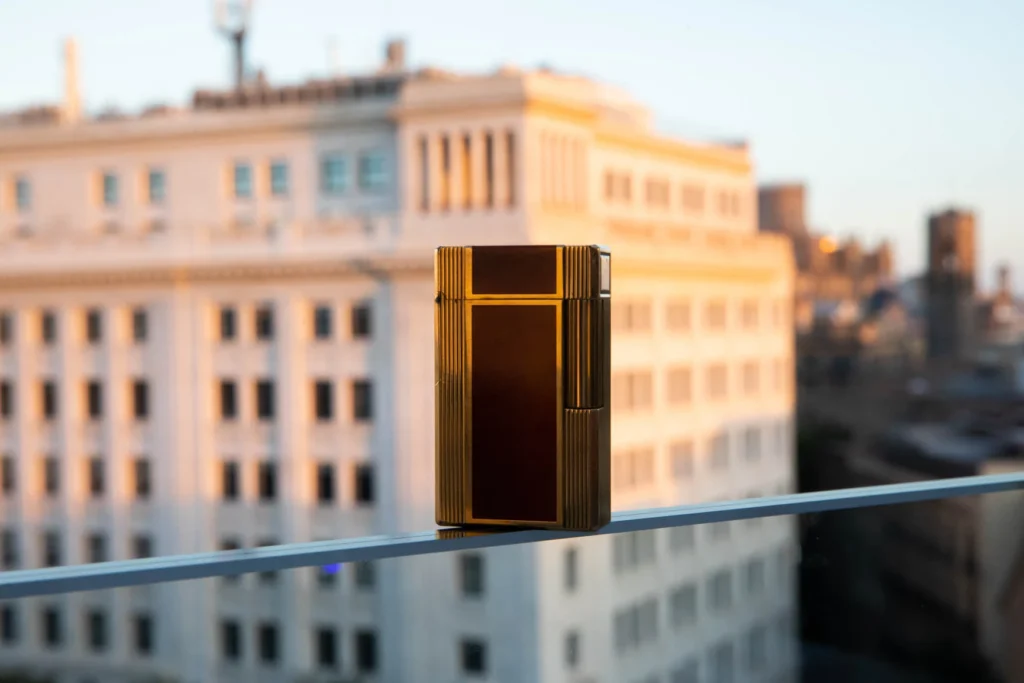
S.T. Dupont’s history begins in 1872, when Simon Tissot Dupont founded the Maison in Paris as a maker of luxury leather goods and bespoke travel trunks. The company quickly built a clientele among European aristocracy, diplomats, and high society, and by 1934 had earned the epithet “Malletier of Kings” on the strength of its trunk-making for royalty, world leaders, and cultural figures. The shift into lighters came almost by accident, and the story of the Ligne 1 begins with two unrelated events in the 1930s and 1940s that together turned a leather house into the maker of one of the most recognisable luxury objects of the twentieth century.
The 1941 Maharaja Commission
The first S.T. Dupont luxury lighter was produced in 1941, commissioned by Yadavindra Singh, the Maharaja of Patiala. He ordered one hundred Chinese lacquer minaudière clutch bags, each one to contain a matching pocket lighter in solid gold. The workshop spent three years completing the order. The lighter that emerged is now considered the seed of what would become the Ligne 1 series.
This commission marked the moment when S.T. Dupont transformed a functional object into a luxury accessory, applying the same standards of leather-house craftsmanship and the freshly acquired lacquer expertise to a small metal object intended to be carried in a pocket.

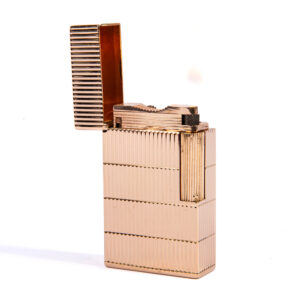
Alongside the bespoke gold commissions, S.T. Dupont also produced an off-the-shelf range of lighters in 1941, but with brass restricted for military use, these early production examples were made in aluminium. Even in this utilitarian material, the clean rectangular proportions, gently softened edges, and fluted detailing that would later define the Ligne 1 were already in place.
How Dupont Became a Lacquer House by Mistake
In 1935, the Tissot Dupont brothers placed a job advertisement looking for a Plaqueur — a gilder, to work on gold-plating. A typing error transformed the word into Laqueur. The man who responded was Georges Novossiltzeff, a master lacquerer trained in the workshop of Jean Dunand, the most famous practitioner of Asian lacquer in interwar Paris. The Duponts hired him anyway, and in doing so accidentally became the first luxury Maison in Europe to master traditional Chinese lacquer applied to metal.
The technique, known in French as laque de Chine, involves applying many thin layers of natural lacquer to a metal body and polishing each one to a deep, glass-like sheen. It is slow, labour-intensive, and unforgiving of error. It would also become one of the most recognisable visual signatures of S.T. Dupont, applied to lighters, pens, and accessories for the next ninety years and still in use today.
The Butane Revolution of 1952
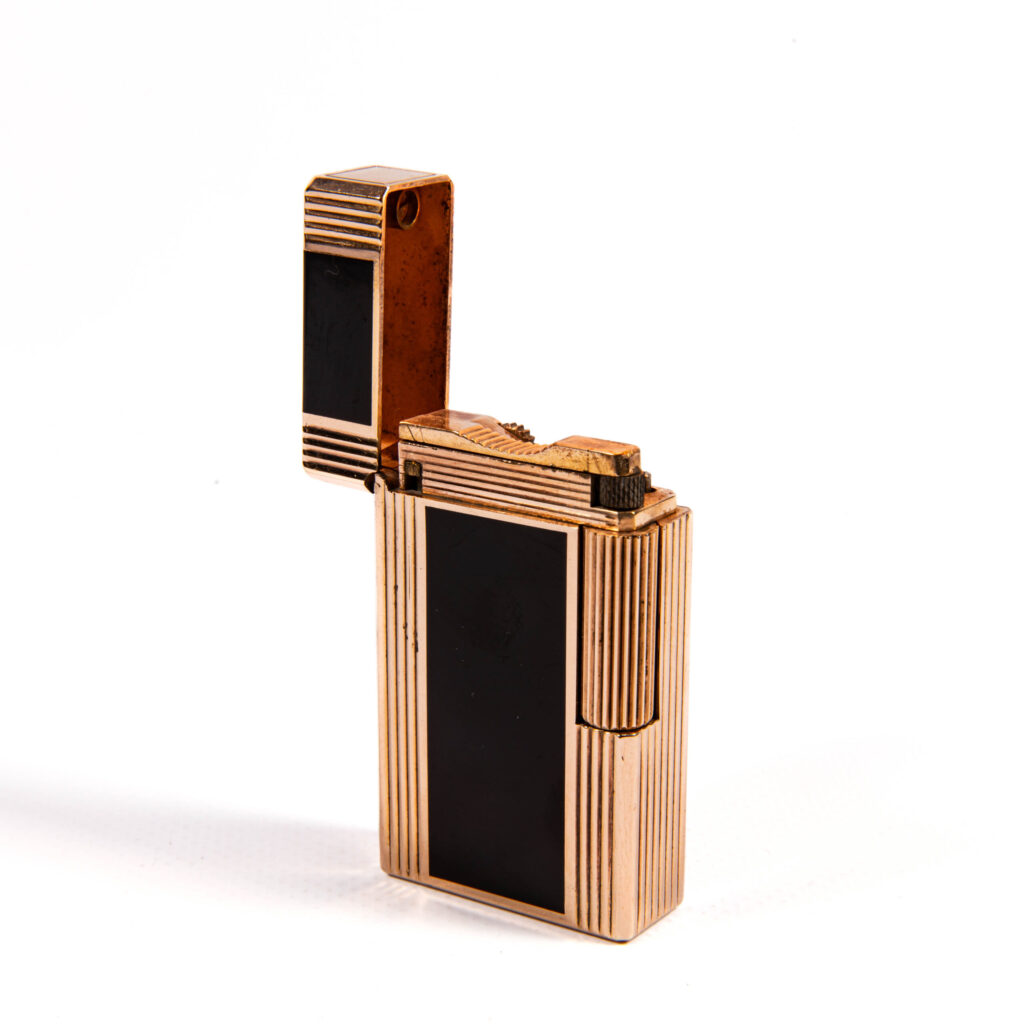
For its first decade of production, the Ligne 1 used a petrol fuel system with a wick. The shift came in 1952, when S.T. Dupont introduced one of the first gas-fuelled luxury lighters, internally codenamed the D57. Butane brought a cleaner, more reliable flame, and it made a flame adjustment mechanism possible for the first time, though it would be more than a decade before one reached the range.
The gas models gave rise to the designations vintage collectors still use today. The BS, for Briquet Standard, made from 1959 to 1973, carries a gas cutoff lever on the latch: it will shut the gas off, but it will not let you set the flame. The BR, for Briquet Réglable, introduced in 1965 and produced until 2013, replaced that lever with a flame adjustment wheel, so the flame height could be tuned rather than simply turned off. Both terms predate the eventual official model names and remain the most reliable shorthand for distinguishing early Ligne 1 variants.
On both models the mechanism sits on the latch, under the cap, rather than on the exterior of the lighter, preserving the clean rectangular profile. To a casual observer the BR looked essentially identical to the BS that came before it. To the user, it was a completely different object.
The Ping
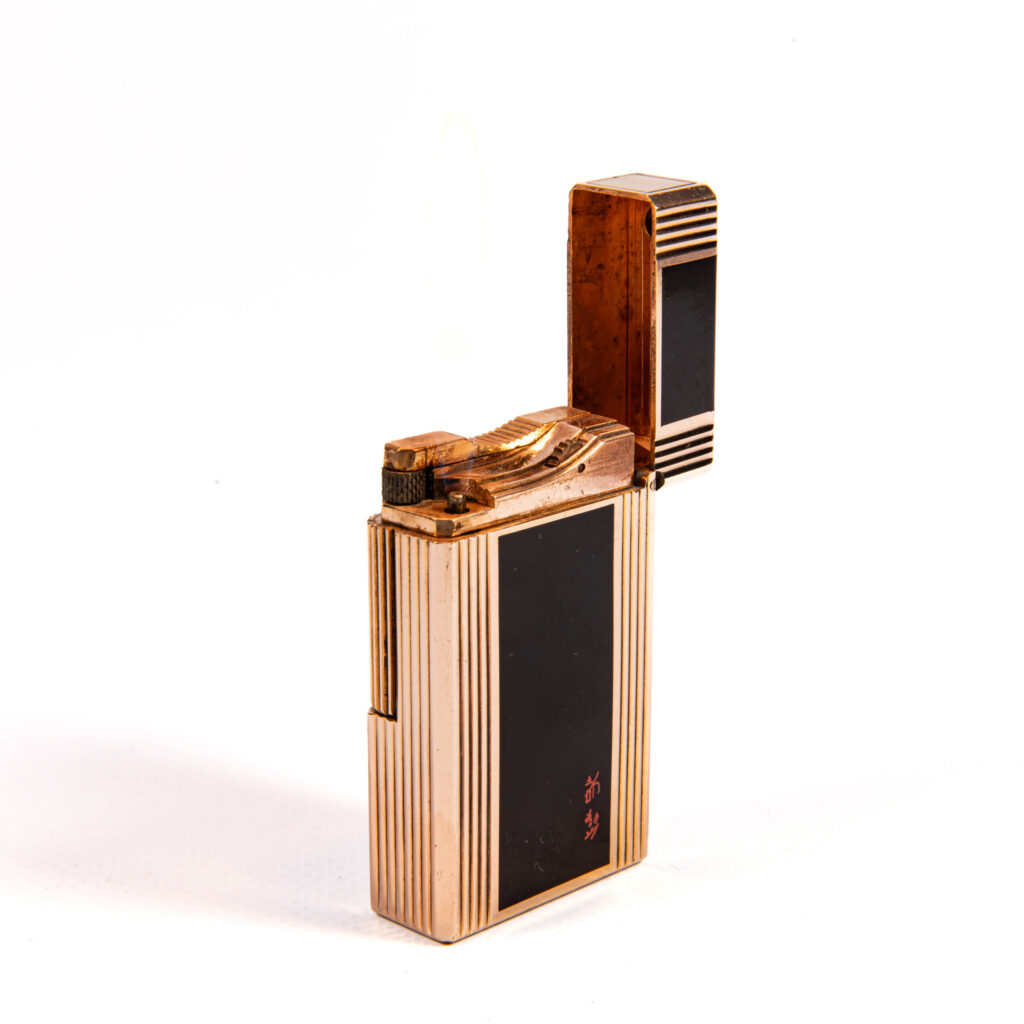
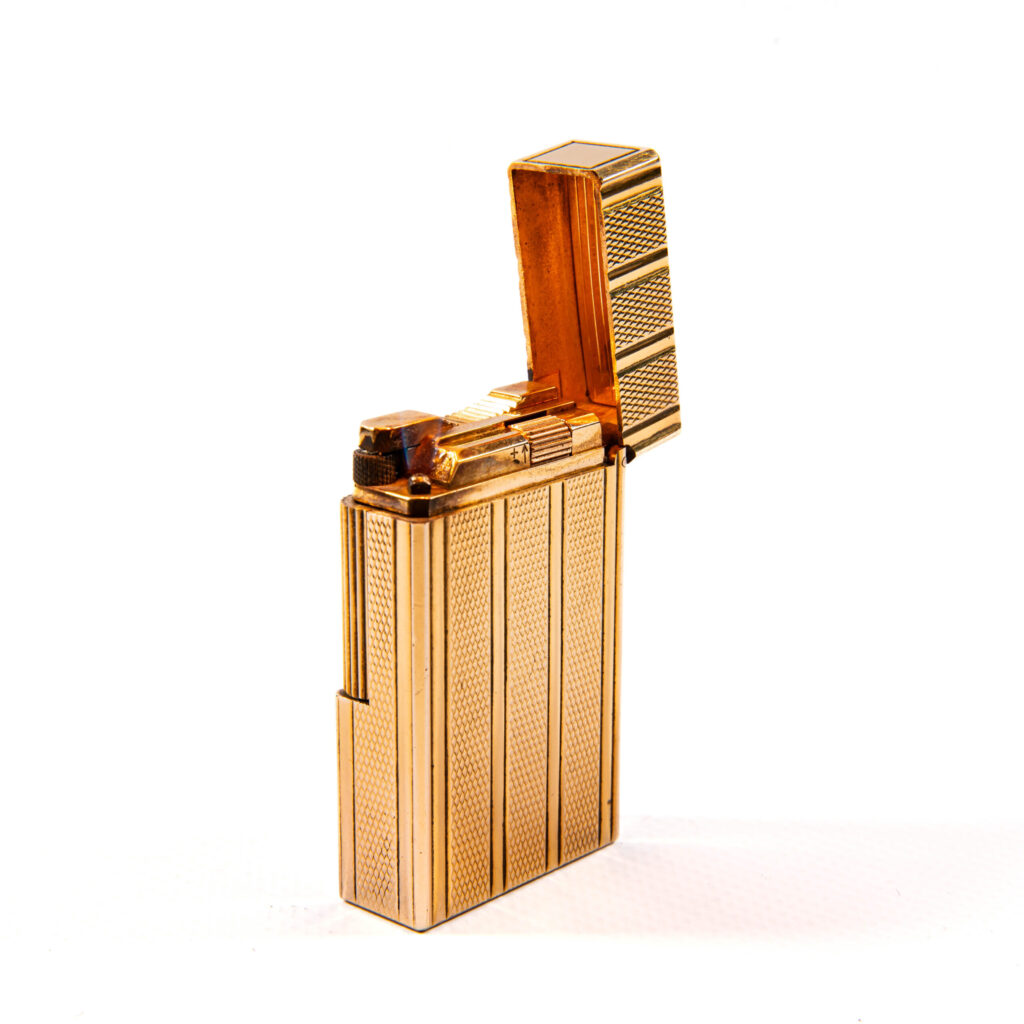
Of all the design details that define the Ligne 1, the most often discussed is the sound. When the cap of an S.T. Dupont lighter is closed, the metal-on-metal contact produces a bright, clear note that has come to be known as the “ping” or “cling”. It is the brand’s auditory signature, instantly recognisable to anyone who has handled one.
In the early Ligne 1 models, the cling was an accidental product of the precision required to assemble a hinged metal cap with closely tuned tolerances. Dupont came to recognise the emotional appeal of the sound, and with the introduction of the Ligne 2 in 1977, the architecture of the cap was deliberately refined to produce an even more pronounced note. The cling on a vintage Ligne 1 varies between examples depending on materials and condition, which is part of its character. A muffled or absent cling on a piece that should have one is usually a sign that the lighter has been dropped, poorly serviced, or fitted with replacement parts.
A Symbol of Mid-Century Style
By the middle of the twentieth century, the Ligne 1 had moved beyond its functional role and become a marker of taste. The Maison’s client list during this period reportedly included Humphrey Bogart, Audrey Hepburn, Wallis Simpson, and Jackie Kennedy Onassis. Pablo Picasso famously sketched on the black lacquer of one of his own Dupont lighters, an anecdote that has passed into collector folklore.
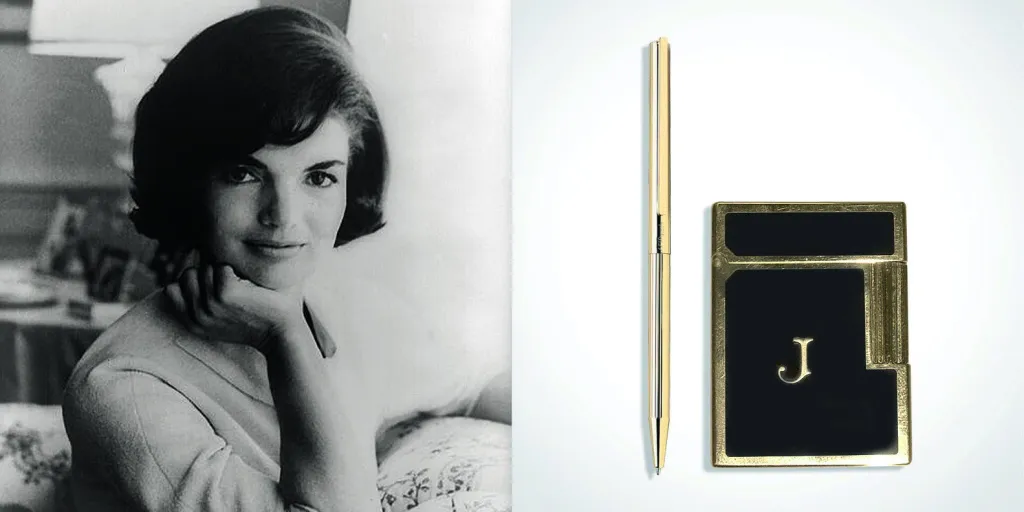
The most documented of these connections is the Jackie Kennedy story, which is also the origin of S.T. Dupont’s writing instruments business. In 1962, André Malraux, then General de Gaulle’s Minister of Cultural Affairs, presented the First Lady with a Ligne 1 lighter adorned with a discreet “J” monogram in yellow gold. She kept and used it for the next decade. In 1972, ten years after receiving the lighter, Jackie Onassis Kennedy asked S.T. Dupont to produce a ballpoint pen to match it. The Maison did not make writing instruments at the time, but accepted the commission and created the Classique, a faceted-body pen with vertical guilloché transposed from the lighter’s body. It became S.T. Dupont’s first writing instrument and the foundation of a product category the Maison still produces today.
Production, Collectibility, and Limited Editions
The Ligne 1 remained in continuous production for more than seventy years, with countless variations in finish, size, and detail. The two principal sizes are the large (Briquet de Poche, often referred to as standard) and the small (Petit), with both BS and BR mechanisms produced across the range.
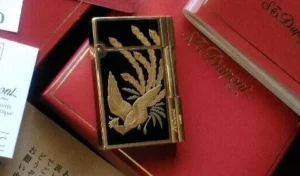
S.T. Dupont marked the fiftieth anniversary of the Ligne 1 with a Jubilee Limited Edition in 1991, celebrating the five decades since the original 1941 Maharaja commission. Other notable variants include solid gold and silver examples, lacquer pieces with hand-painted Chinese characters and dragon motifs, and diamond-set versions produced for the Prestige line. Early aluminium pieces from the wartime production, surviving solid gold examples from the 1940s through 1960s, and lacquered pieces with documented provenance remain the most sought-after by collectors today.
In Summary
The Ligne 1 began with a typing error and a royal commission, and grew into one of the defining luxury objects of the twentieth century. It pulled together leather-house craftsmanship, an accidentally acquired lacquer technique, post-war metalwork, and the technical innovation of gas-fuelled adjustable-flame ignition, and combined them into a form that has barely needed to change in eighty years. At The Lighterhouse, every vintage Ligne 1 we handle is individually inspected, hallmark-verified where applicable, and serviced where necessary by specialists. All vintage Dupont lighters offered by The Lighterhouse are guaranteed authentic.
Sources:
- S.T. Dupont Heritage Timeline – S.T. Dupont Maison
- Vintage Dupont Lighters History – Fabcollectibles
- James Foster, “S.T. Dupont Review and a Tale of Two Lighters” – PipesMagazine
- Harrison B. Caldwell, “Brand History: S.T. Dupont Lighter” – dupontlighter.com Blog
- David Cherner (Art Brown Intl.) Interview – PipesMagazine (on the origin of the “ping” sound)
- “The ‘Cling’: S.T. Dupont’s signature sound” – S.T. Dupont Official Site