How to Spot a Fake Dunhill Lighter: 8 Checks for the Rollagas
Size and weight, the roller, the hinge, the base and the RE24163 patent marking: the checks we use to tell a genuine Dunhill Rollagas from a fake.
By Max Meijster Updated 15 October 2026 6 min read

The Dunhill Rollagas has been made since the 1950s, and as one of the best known luxury lighters it is also one of the most copied. Fakes turn up on online marketplaces and at fairs, and some carry all the right words on the base: Dunhill, Swiss Made, even the US RE24163 patent number.
What a copy rarely gets right is the proportions and the mechanism. Below are the checks we go through before a Rollagas goes into our shop, in the order we do them. None of them settles it on its own. Together they tell you a great deal.
The checks at a glance
- Size and weight: about 64 × 24 × 13 mm and around 78 grams empty.
- Roller: about an inch long, its top ending some 6 mm below the lid.
- Hinge: a barrel hinge until about 1970, then a concealed hinge with three prongs down and two up.
- Under the lid: a plain flint slide, the right flint housing for the period (open and plated from 1971).
- Base: the filler valve in the centre, the burner screw in a corner.
- Markings: crisp, even engraving, with the right wording for the period.
- Finish: a sharp, even pattern or a deep, smooth lacquer.
- Price and seller: too cheap, or no photos of the base and the open lid, is a warning.
Measure and weigh it
Dunhill built the Rollagas to the same size for decades, so start with a ruler and a kitchen scale. A lighter that is clearly shorter, thicker or heavier than the figures below deserves suspicion. Heavy copies often weigh around 100 grams; a genuine Rollagas is much lighter. The finish can move the weight a few grams either way, and solid gold versions are heavier.
| Rollagas | Rollagas Mini (from 1993) | |
|---|---|---|
| Height | 64 mm (2½ in) | 50 mm (2 in) |
| Width | 24 mm | 24 mm |
| Thickness | 13 mm | 13 mm |
| Weight, empty | about 78 g | about 68 g |
Check the roller
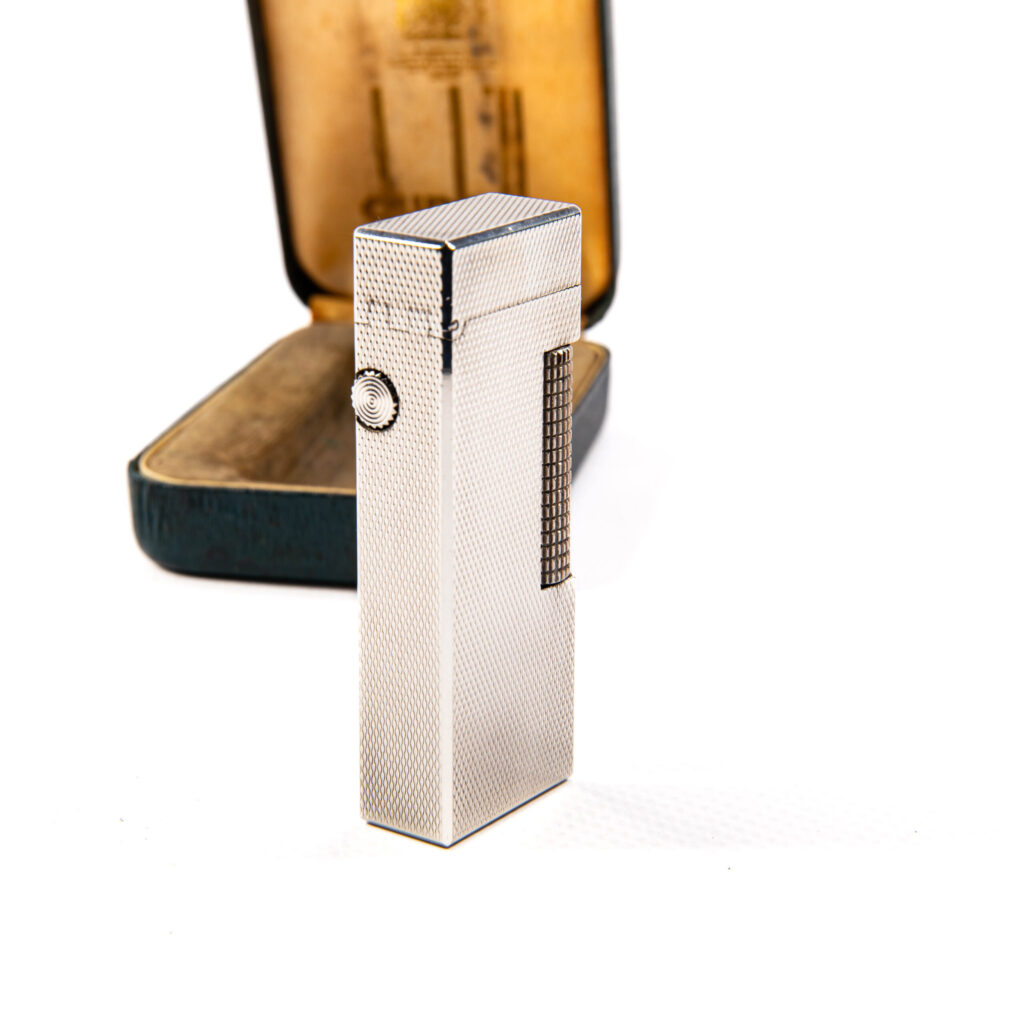
The roller gave the Rollagas its name, and it is where many fakes go wrong. On a genuine lighter the knurled roller is about 25 mm (1 inch) long and starts about 25 mm from the bottom. Its top always stops about 6 mm (a quarter of an inch) below the line of the lid. If the roller runs right up to the lid, or is clearly shorter, you are very likely looking at a copy.
Then open the lid and roll it. On a genuine Rollagas one smooth movement of the thumb strikes the flint and opens the gas at the same time. A stiff or gritty roller does not prove a fake, since a genuine lighter that has not been serviced for years can feel the same, so judge the position of the roller first.


Look at the hinge
Early Rollagas lighters have a barrel hinge, visible at the back of the lighter. Dunhill moved to a concealed hinge in 1971, so a lighter from the 1970s onward should not have a barrel hinge.
On the concealed hinge, open the lid and look at it from behind: a genuine Rollagas has three prongs pointing down and two pointing up. Fakes often have fewer, typically one up and two down. A hinge that matches neither pattern is a strong sign the lighter is not genuine.

Look under the lid
The parts under the lid changed over the years. On early models the flint wheel and flint housing are partly shielded. From 1971 Dunhill used a new plated flint housing with a more open layout, and from the same year the Dunhill name is stamped inside the lid. The parts should match the period that the rest of the lighter points to.
Look closely at the flint release slide, the small flat plate you push back to change the flint. On a genuine Dunhill it is plain metal. A stone set on top of the slide is a typical sign of a fake; we have seen these many times.

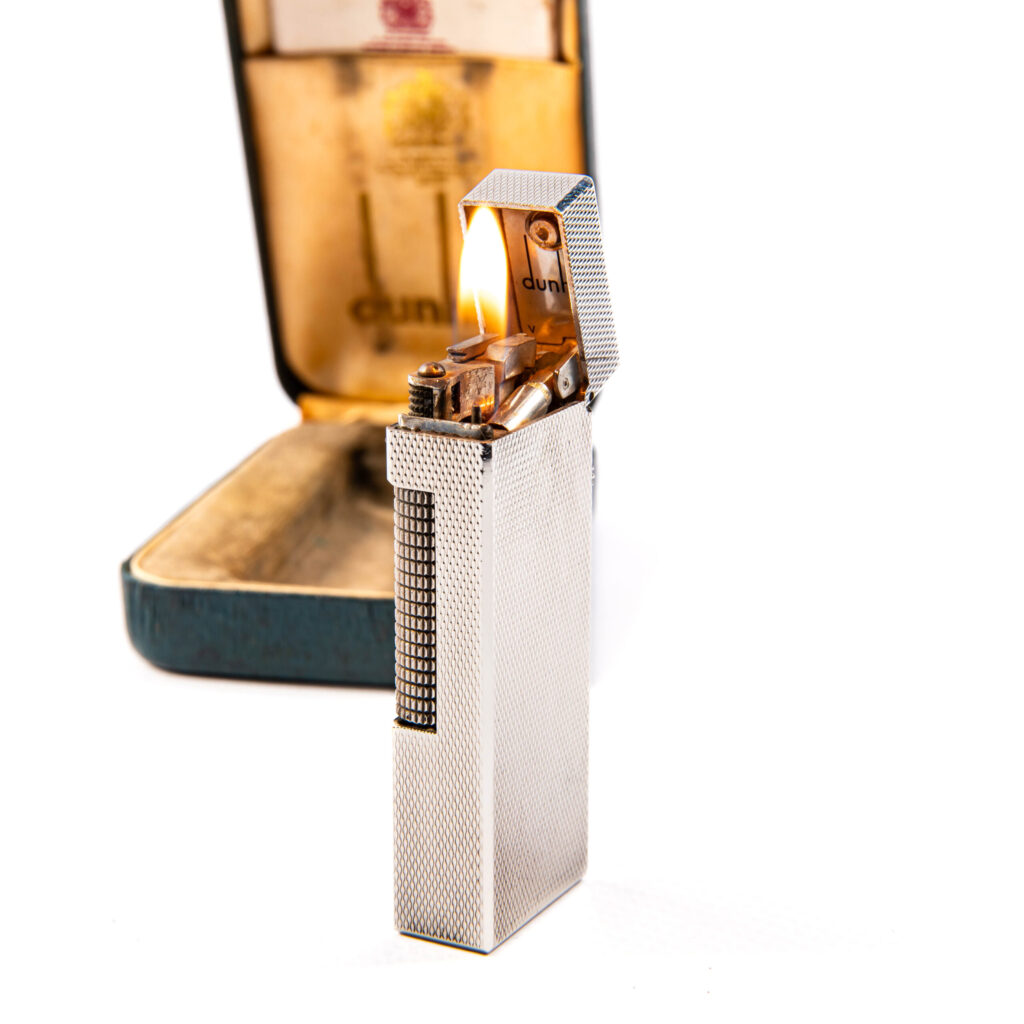
Close the lid again and find the small round wheel near the top of the body: it sets the flame height. Its style changed over the years, which is one more detail that should fit the period of the rest of the lighter.
Check the base layout
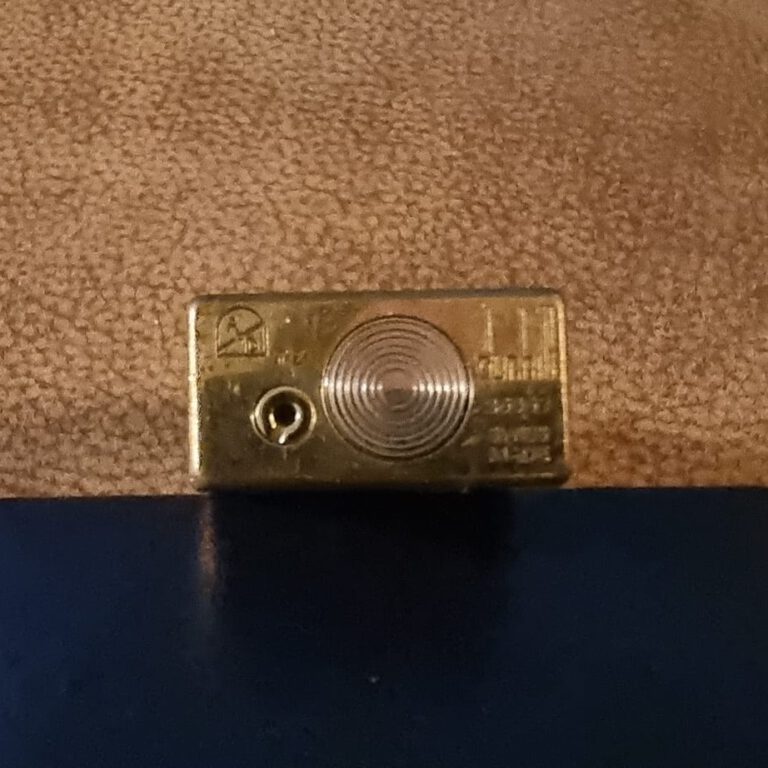
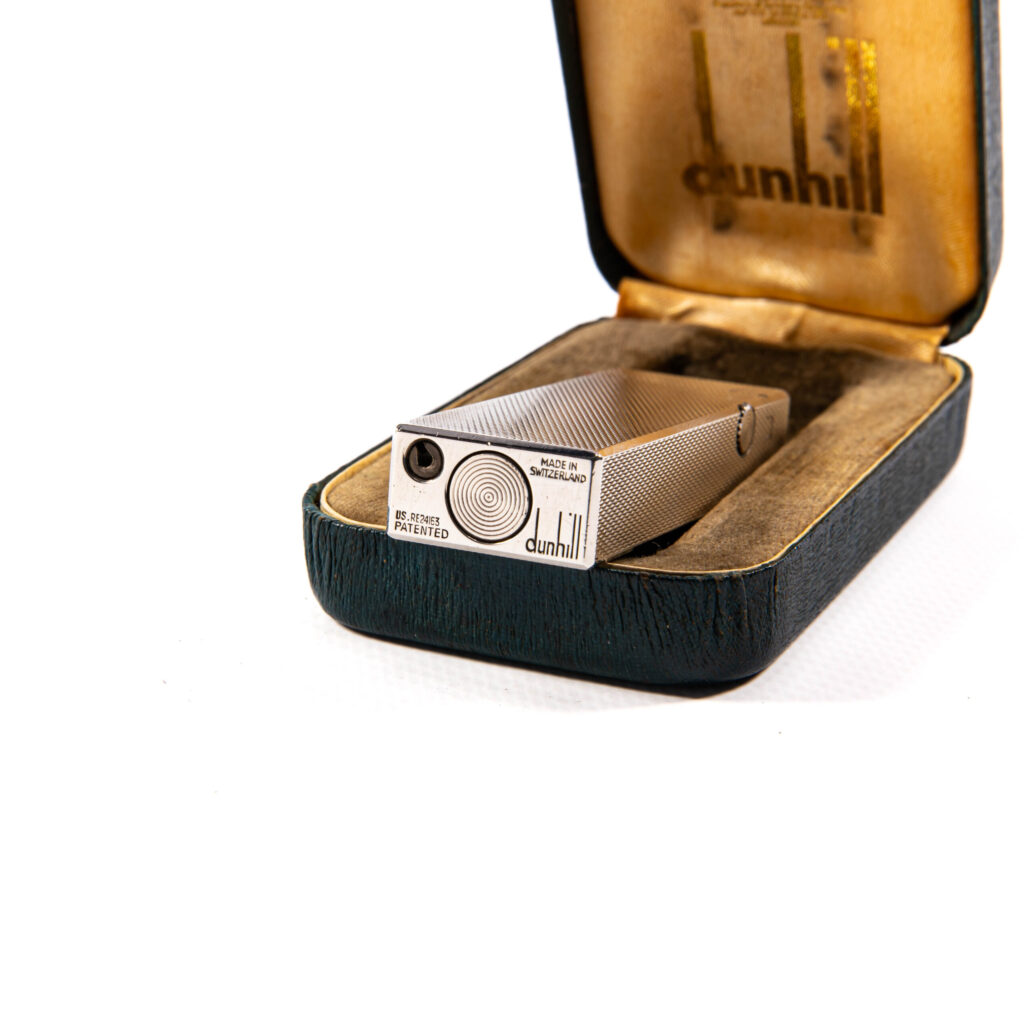
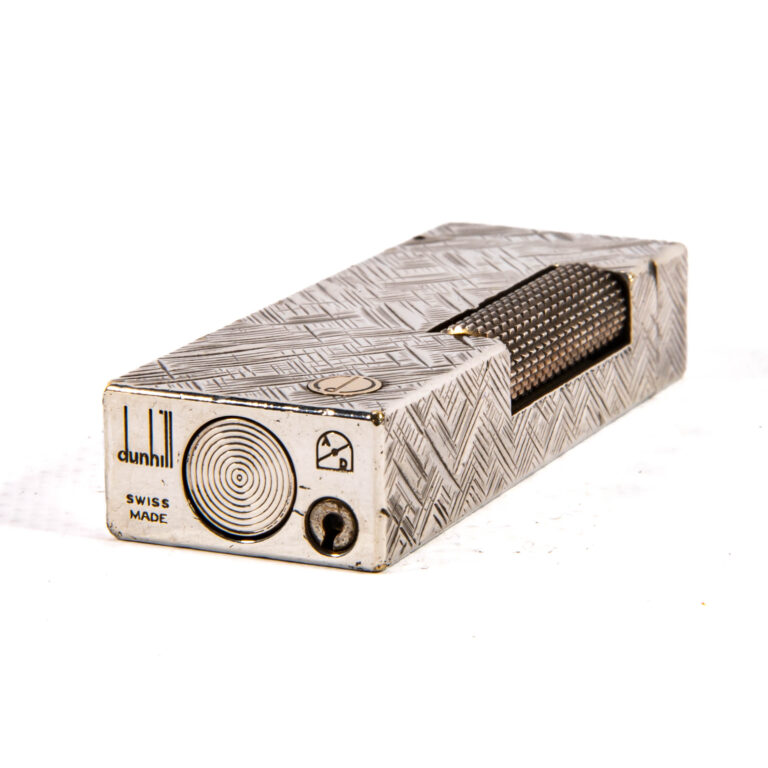
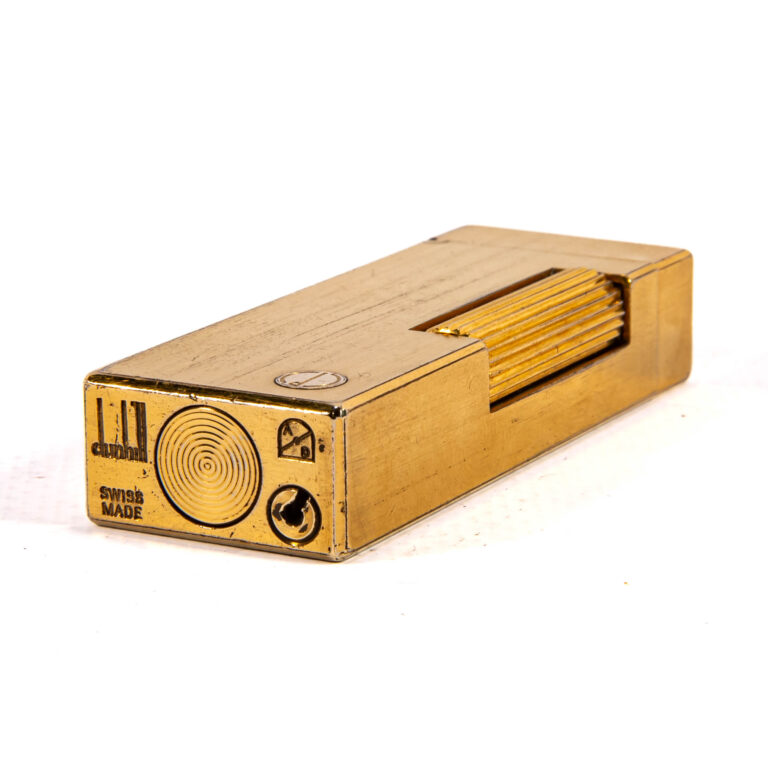
Turn the lighter over. On a genuine Rollagas the gas filler valve always sits in the centre of the base. The burner adjuster screw, with its keyhole shaped head, sits in one corner. If these parts are in a different position or out of line, the lighter is a counterfeit.
The filler cap helps with the date too. From 1971 it has a pattern of concentric circles; earlier caps are marked with two arrows. On a genuine lighter the cap sits flush and turns smoothly; fakes often have caps that sit crooked or are hard to turn. A Rollagas takes standard butane, filled through this centre valve, as our Dunhill Rollagas maintenance guide shows step by step.
Read the markings and the patent number
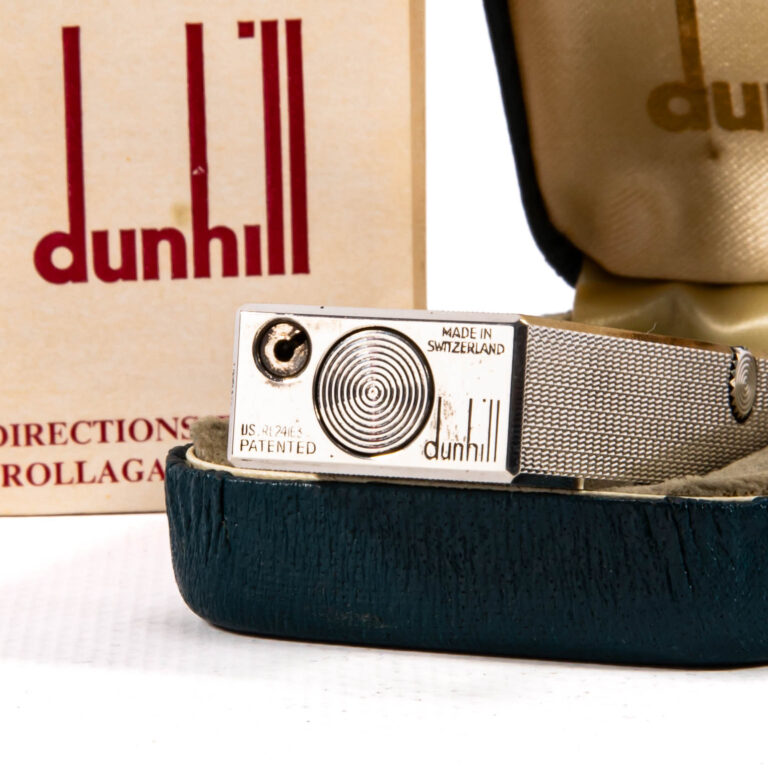
The Rollagas mechanism came from La Nationale SA in Geneva, and every vintage Rollagas was made in Switzerland. The base says so (“Made in Switzerland” or “Swiss Made”) next to the Dunhill name. On a genuine lighter the engraving is crisp, evenly deep and well centred. Shallow, uneven or blurred lettering, or a typeface that looks wrong, is a classic sign of a copy.
Rollagas lighters made from 1968 to 1981 carry US RE24163 on the base. It is a real patent: a United States reissue patent of 5 June 1956 for the gas filling valve designed by Conrad Zellweger and assigned to La Nationale. It covers only that filling valve, not the whole lighter. From 1981 Dunhill dropped the patent number, and the last generation carries serial numbers: from 1995 until the original design ended in 2004.
The right markings do not prove a lighter genuine: counterfeiters copy “Swiss Made” and RE24163 as well. What fakes rarely get right is the combination of markings, hinge, filler cap and flint housing that belongs to one period. How to read them is in our guide on how to date your Dunhill Rollagas.
Know the finishes
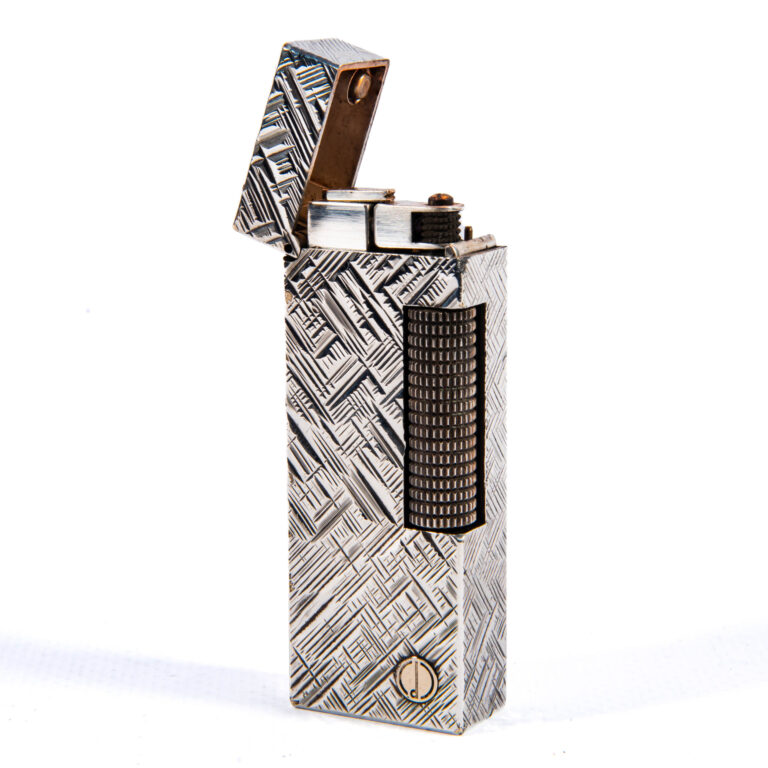
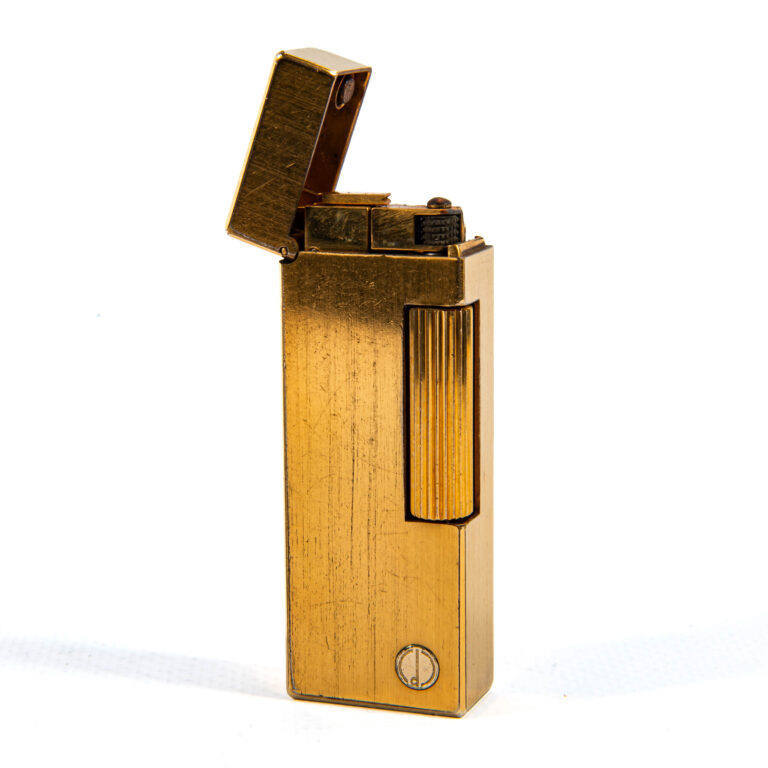
A genuine Rollagas is brass with gold or silver plating, usually engine turned in a pattern such as barley, fine barley, Florentine, hobnail, silk moiré or chevron, or left plain or satin. From 1973 Dunhill also made lacquered versions, in colours from black and red to lapis lazuli. On a genuine lighter the pattern is sharp and even right up to the edges, and the lacquer is smooth, with real depth.
A pattern that looks soft or uneven, decoration Dunhill never used on the Rollagas, or stones set into the mechanism should all make you look more closely. The history of the Dunhill Rollagas shows how the model and its finishes developed.
Before you buy
- Price: a Rollagas in good working order that costs a fraction of comparable pieces is the most common sign of a fake.
- Photos: ask for clear photos of the base, the roller side, the open lid and the hinge from behind. A seller who will not send them is answering your question.
- Seller: buy from someone who knows vintage Dunhill and stands behind what they sell.
Also own an S.T. Dupont? Read our guide on how to spot a fake S.T. Dupont lighter, or see how the two compare in Dunhill Rollagas vs S.T. Dupont Ligne 2.
Every Rollagas at The Lighterhouse is inspected, serviced and guaranteed authentic before it is listed. See the Dunhill Rollagas lighters we have now.
With thanks to Michael Thompson, whose An Unofficial Guide to the Dunhill Rollagas (2021) helped with this guide.
Genuine Dunhill Rollagas lighters, serviced and guaranteed
See all Rollagas lighters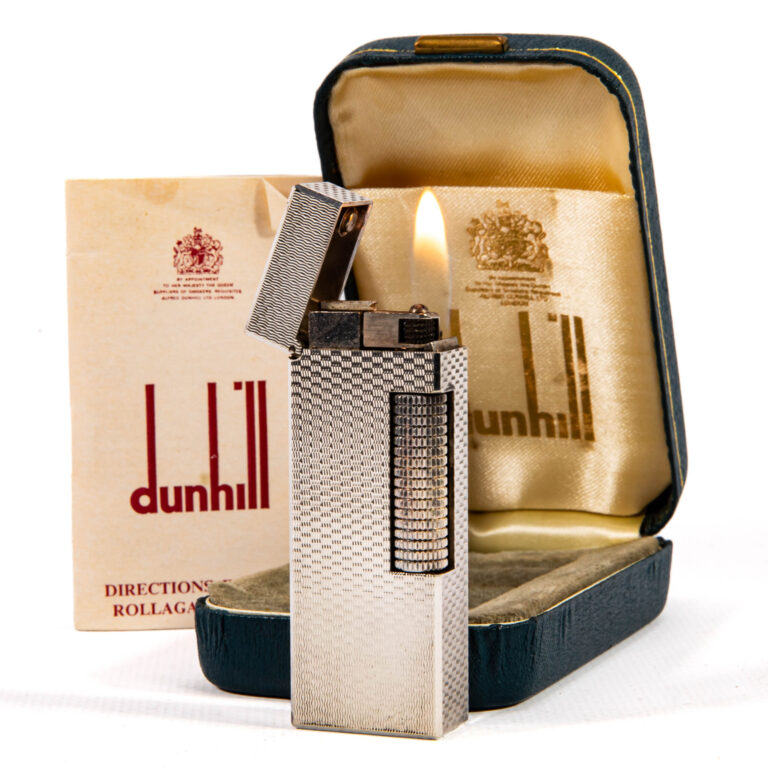
Questions collectors ask
How can I tell if my Dunhill lighter is real?
Check the size and weight, the position of the roller, the hinge, the layout of the base and the quality of the engraving. A fake usually fails several of these checks at once.
What does US RE24163 on a Dunhill lighter mean?
It is a United States reissue patent of 1956 for the gas filling valve designed by Conrad Zellweger of La Nationale in Geneva, which made the Rollagas mechanism. It is stamped on Rollagas bases from 1968 to 1981, but counterfeiters copy it too.
How much does a genuine Dunhill Rollagas weigh?
Around 78 grams empty on average, a few grams more or less depending on the finish. A lighter of about 100 grams is very likely a copy.
Is a Rollagas without a serial number fake?
No. Only the last generation carries serial numbers, from 1995 to 2004. Older ones are dated by their markings and date codes; see how to date your Dunhill Rollagas.
Where were Dunhill Rollagas lighters made?
In Switzerland. The mechanism was developed with La Nationale SA in Geneva, and the base reads "Made in Switzerland" or "Swiss Made".
Do genuine Dunhill lighters have a stone on the flint slide?
No. The flint release slide on a genuine Dunhill is plain metal. A stone set on top of it is a typical sign of a fake.
Sources and further reading
- Google Patents: USRE24163E, valves for filling lighters for liquefied gas Conrad Zellweger, La Nationale S.A. Geneva, reissued 5 June 1956
- Gordon Byast: Dunhill Rollagas lighters fakes: roller gap, hinge posts, stone on the flint slide, weight
- Gordon Byast: how to date your Rollagas base markings and patent per period, filler cap arrows and circles, concealed hinge 1971
- Dunhill: the history of dunhill lighters Rollagas 1956, Conrad Zellweger of La Nationale, concealed hinge 1971
- Pipes Magazine: the Cadillac of lighters, Dunhill Rollagas La Nationale, the patent covers only the filling valve