The History of the Dunhill Rollagas Lighter: From 1956 to Today
Swiss engineering, a London name and a Bond film: how the Dunhill Rollagas came about, how it changed decade by decade, and why collectors still prefer the vintage lighters.
By Max Meijster Updated 15 October 2026 7 min read

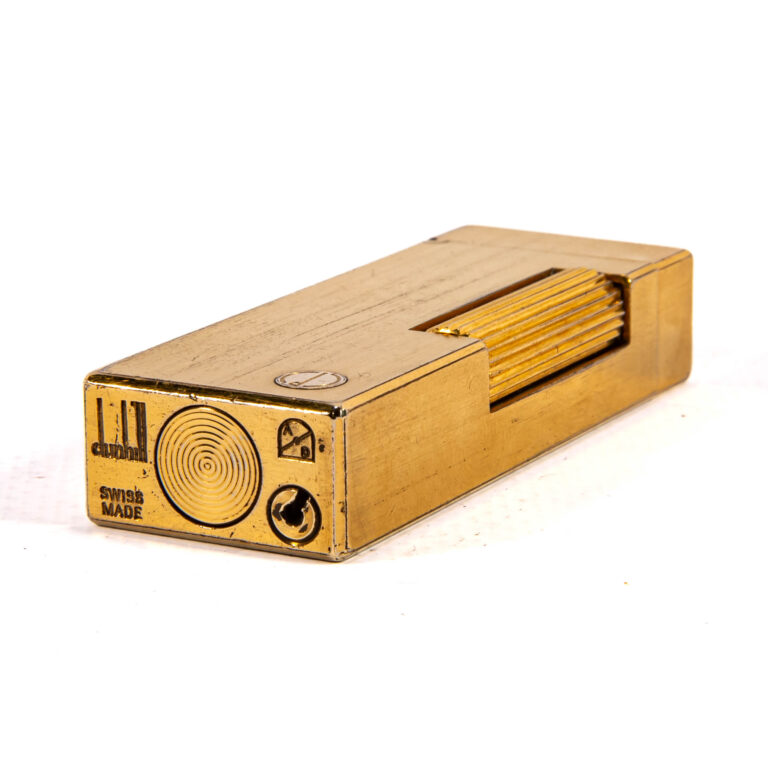
Few lighters are as instantly recognisable as the Dunhill Rollagas: a slim upright body, a ribbed roller on the side and a lid that opens to a steady butane flame. It has been in production in one form or another since the 1950s, appeared in the first James Bond film and still sits in Dunhill’s range today.
Here is the full story: where the Rollagas came from, how it changed decade by decade, the finishes and versions collectors look for, and why so many prefer the vintage lighters made before the mid 2000s.
What is a Dunhill Rollagas?
The Rollagas is a butane lighter with flint ignition. You lift the lid, roll the ribbed wheel on the side with your thumb, and the roller strikes the flint while it opens the gas. The name says it: roll, gas. A small wheel at the back sets the flame height, and the tank is refilled through a valve in the base.
- Made
- From 1956; still made today
- Maker
- La Nationale SA, Geneva, for Dunhill; marked Made in Switzerland or Swiss made
- Fuel
- Butane gas, with a red Dunhill flint
- Size
- About 64 mm tall and about 78 grams; the Mini Rollagas is shorter
- Known for
- The ribbed roller, the barley pattern and, from 1971, the concealed hinge
- In stock
- Vintage Dunhill Rollagas lighters
Before the Rollagas: the Unique and the Rollalite
Dunhill had been selling lighters since the First World War. Its breakthrough came in 1926 with the Unique, a lighter you could open and light with one hand (read more in our story of the Dunhill Unique). In 1937 came the Rollalite, a petrol lighter with a roller that you turned with your thumb. The Rollalite already had the slim upright shape and the roller of the later Rollagas. Only the fuel was different: petrol on a wick instead of gas.
Swiss engineering: Zellweger and La Nationale
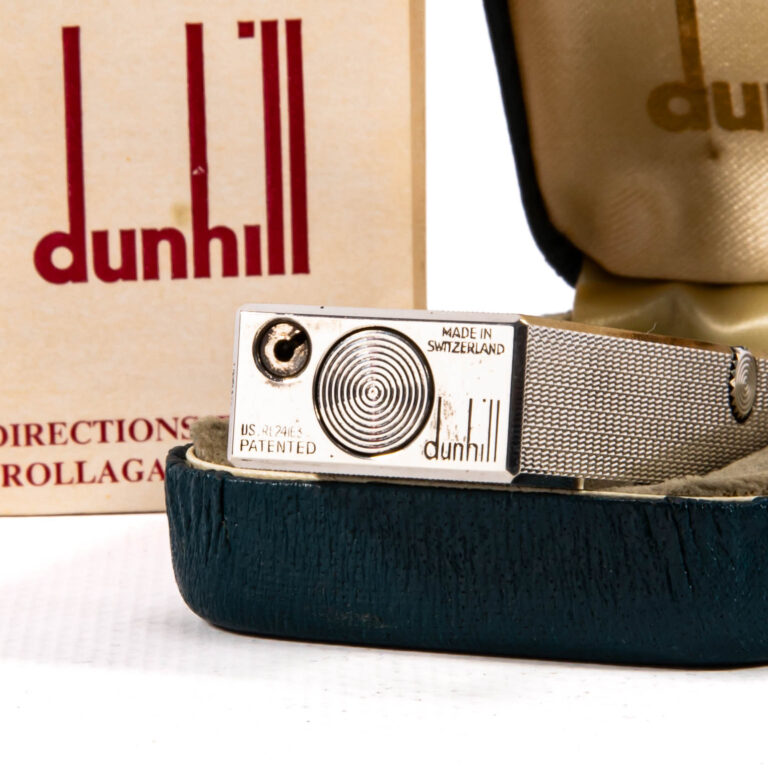
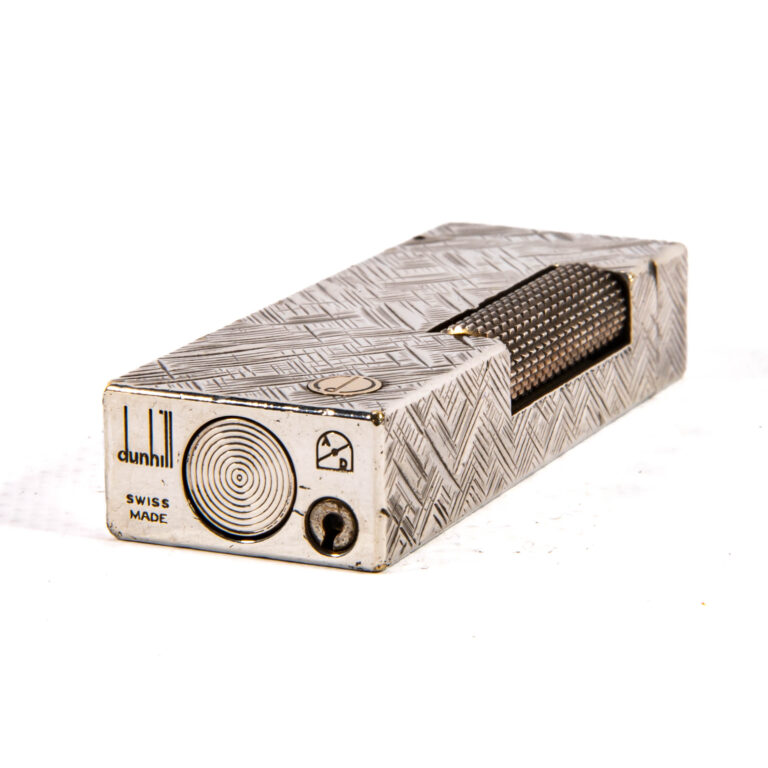
Dunhill did not build the Rollagas mechanism itself. It was developed with Conrad Zellweger, a Swiss engineer at La Nationale SA in Geneva. In March 1953 Zellweger filed his patent for a new gas filling valve, which let you refill the lighter from a can of liquid butane. The patent was granted in the United States in 1955 and reissued as RE24163 on 5 June 1956: the number you still find on the base of many Rollagas lighters.
The filling valve, the burner and the flame adjuster all came from La Nationale. That is why almost every classic Rollagas reads “Made in Switzerland”, even though it carries the name of a London house. Butane also gave a steadier flame than petrol and burned without its smell, one of the reasons gas lighters soon took over.
The launch: 1956 to 1957
Dunhill introduced the Rollagas in 1956, once Zellweger’s patent was through. Mass production followed in 1957, and in August of that year Dunhill began stamping a small date code in its lighters, which is why most Rollagas can be dated so precisely (see how to date your Dunhill Rollagas).
The early lighters looked very close to the petrol Rollalite: gold or silver plate, an engine turned barley body, a smooth lid and a visible barrel hinge at the back.


Dunhill Rollagas timeline
| Year | What happened |
|---|---|
| 1926 | Dunhill launches the Unique, its first great lighter, opened and lit with one hand. |
| 1937 | The Rollalite petrol lighter: the roller ignition and the slim upright shape that the Rollagas would inherit. |
| 1953 | Conrad Zellweger of La Nationale in Geneva files his patent for the gas filling valve. |
| 1956 | The US patent is reissued as RE24163 on 5 June. Dunhill officially introduces the Rollagas and lists it in its catalogue. |
| 1957 | Mass production starts. In August Dunhill begins stamping date codes. |
| 1959 | The Rollagas goes on sale in Japan, where it sells very well. |
| Early 1960s | New engine turned patterns join the barley: Florentine, hobnail and diamond. |
| 1962 | The Rollagas appears in the first James Bond film, Dr. No. |
| 1968 to 1969 | The wider Dunhill 70, made in England, is the first Dunhill lighter with a concealed hinge. |
| 1971 | The concealed hinge comes to the standard Rollagas, together with a new flame wheel and a filler cover with concentric circles. |
| 1973 | Lacquer finishes arrive. |
| 1974 | Dunhill names The Man with the Golden Gun as the Rollagas’ second Bond film. |
| 1977 | Lacquer lighters with a domed top. In October the date code changes to two letters. |
| Mid 1980s | A small D medallion on the front, the AD shield on the base; the patent number disappears. |
| About 1987 | The serial number moves from the guarantee papers to the base. |
| 1993 | The Mini Rollagas: the same lighter, shorter. |
| Mid 2000s | The original mechanism makes way for a new generation, with the flame control moved to the base. |
| Today | Dunhill still sells the Rollagas, among others in the classic barley pattern. |
Finishes and patterns
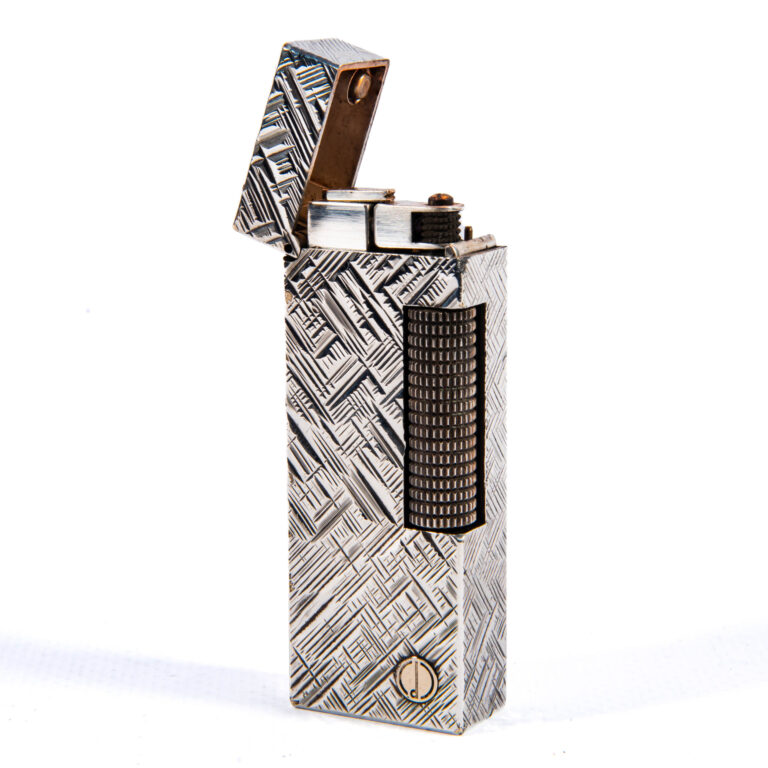
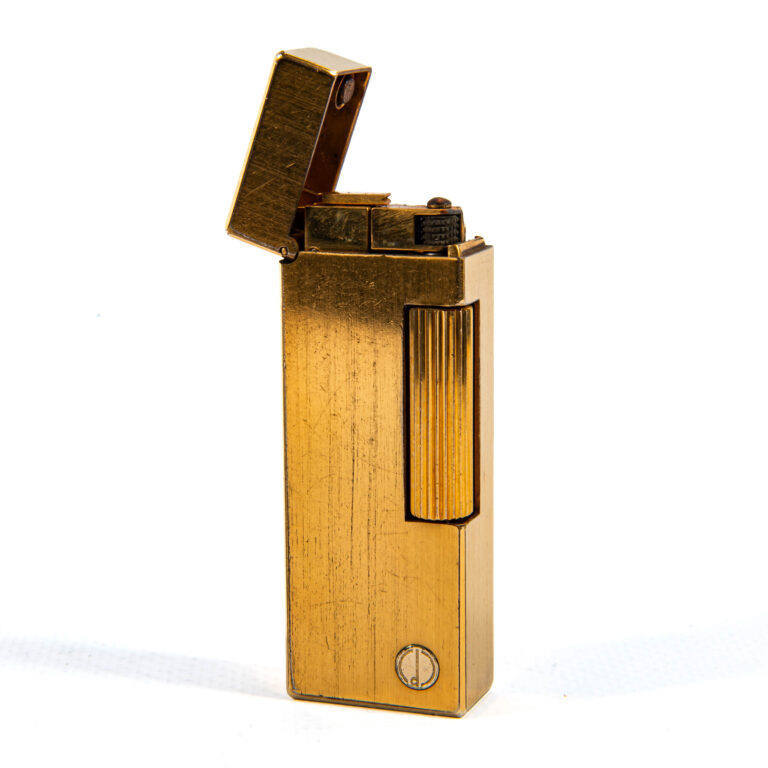
Part of the appeal of the Rollagas is the sheer variety. Over five decades Dunhill dressed the same lighter in dozens of finishes, in gold or silver plate. There are far too many to list them all, but to name a few:
| Group | Finishes |
|---|---|
| Barley | Barley, fine barley, barley lines. The original engine turned pattern of small ribs, and still the Rollagas pattern most people picture. |
| Lines | Lines, variable lines, ribbed, parallax, chevron, waves. |
| Engine turned and geometric | Florentine, hobnail and diamond (from the early 1960s), tartan, cross tartan, basket, pyramid, rectangles, dots, gold bars. |
| Textured | Bark, fine bark, bamboo, hammered, silk moiré. |
| Decorative | Aztec, Art Deco, pavé. |
| Plain | Satin, brushed gold. |
| Lacquer | From 1973, with colours such as black, maroon, lapis lazuli and tortoiseshell, often combined with gold plate. From 1977 also with a domed top. |
| Stone tops | A panel of natural stone on the lid, made from 1972 to 1975. |
- Precious metal: besides the plated ones, Dunhill made Rollagas lighters in solid silver and in solid gold (9 and 14 carat, for example), in very limited numbers. Dunhill also made gold jackets, a solid gold case around a standard Rollagas; see our solid gold lighters.
- Special editions: engraved and themed pieces such as the Year of the Dragon lighter with its dragon around all four sides.


Versions of the Rollagas
The classic Rollagas (1956 to the mid 2000s)
The lighter collectors mean when they say Rollagas. The big change in its life came in 1971, when the barrel hinge made way for the concealed hinge, together with a new flame wheel and a Dunhill name under the lid. Small details changed later, such as the D medallion on the front in the mid 1980s and the serial number on the base from about 1987, but the mechanism stayed the same.
The Dunhill 70 (from 1968)
A wider relative, made in England to compete with the broad S.T. Dupont lighters of the time. It was the first Dunhill lighter with a concealed hinge and has “Dunhill 70” on the side. Curious how the two rivals compare today? Read Dunhill Rollagas vs S.T. Dupont Ligne 2.
The Mini Rollagas (from 1993)
The same design in a shorter body with a shorter roller. It was made only for a short time, which makes the Mini Rollagas rare today and highly collectible.
The new generation (from the mid 2000s)
Around the Rollagas’ 50th anniversary Dunhill replaced the original mechanism. The new lighter keeps the look, but moves the flame control to the base and has a new filler without a dust cap. The usual service kits for the classic Rollagas do not fit it, and repairs usually go through Dunhill’s own service.
Famous owners and the Bond films
According to Dunhill, the Rollagas soon became the lighter of choice for well known figures such as Ian Fleming, the creator of James Bond, and Elvis Presley, who owned a 14 carat gold Rollagas. On screen it appeared in Dr. No (1962), the first Bond film, and Dunhill also names The Man with the Golden Gun (1974). Many other famous smokers were Dunhill customers, but we only name owners we can trace to a reliable source.
Why collectors prefer the vintage Rollagas
For many collectors the golden years of the Rollagas run from 1956 to the mid 2000s. The reasons are practical as much as nostalgic. The original mechanism is simple and well understood, and the seals and small parts can still be replaced, so a vintage Rollagas can be serviced again and again. The new generation is harder to repair outside Dunhill. Add half a century of finishes and the date codes that let you trace each lighter to its year, and it is easy to see why the classic Rollagas is so sought after.
Thinking of buying one? Learn how to spot a fake Dunhill Rollagas, keep it working with our Dunhill Rollagas maintenance guide, or browse the vintage Dunhill Rollagas lighters in our shop, each serviced in our workshop.
Our thanks to Michael Thompson, whose An Unofficial Guide to the Dunhill Rollagas (2021) documents much of this history.
Dunhill Rollagas lighters available now
See all Rollagas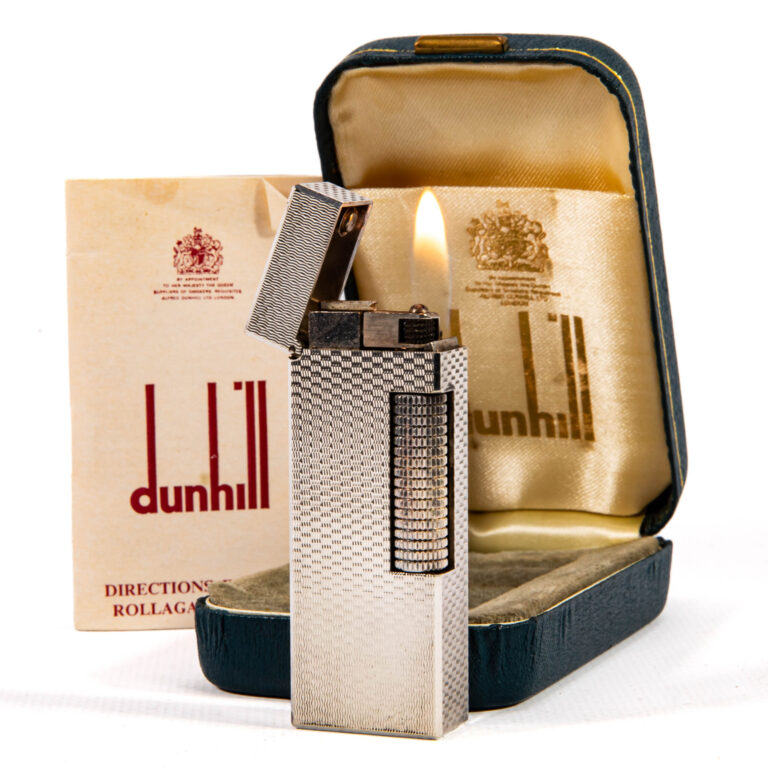
Questions collectors ask
When was the Dunhill Rollagas introduced?
Dunhill introduced the Rollagas in 1956, after Zellweger's patent for its gas filling valve (filed in 1953) went through. Mass production began in 1957.
Who invented the Dunhill Rollagas?
The mechanism was developed by the Swiss engineer Conrad Zellweger of La Nationale SA in Geneva, who patented the gas filling valve. La Nationale built the Rollagas for Dunhill.
Is the Dunhill Rollagas still made?
Yes. Dunhill still sells the Rollagas, but since the mid 2000s with a new generation mechanism. Collectors usually prefer the vintage lighters made before that.
Why is it called Rollagas?
Because you light it by rolling the ribbed wheel on the side with your thumb, and it runs on gas. Its petrol predecessor was called the Rollalite.
Which James Bond film has a Dunhill Rollagas?
Dunhill names Dr. No (1962), the first Bond film, and The Man with the Golden Gun (1974).
How do I know how old my Rollagas is?
Most vintage Rollagas lighters carry a small date code, and the hinge and base markings narrow it down further. See how to date your Dunhill Rollagas.
Sources and further reading
- Dunhill: lighter history official: introduction in 1956, Conrad Zellweger and La Nationale, concealed hinge in 1971, Ian Fleming and Elvis Presley, Dr. No and The Man with the Golden Gun
- Pipes Magazine: The Cadillac of Lighters, Dunhill Rollagas catalogue after the 1956 patent, mass production 1957, Rollalite, Series 70, finishes
- Google Patents: US RE24163 Zellweger's filling valve patent, filed 1953, reissued 5 June 1956, assigned to La Nationale S.A., Geneva
- The Rake Japan: the Dunhill lighter Rollagas exported to Japan from 1959; the 70 Series of 1969 and the concealed hinge on the standard model in 1971
- Gordon Byast: Dunhill Rollagas lighters collector's overview of changes by period: lacquer 1973, dome top 1977, D medallion, Mini Rollagas 1993, new generation