How to Date a Dunhill Rollagas Lighter: Date Codes, Patents and Base Markings
The date code under the lid, the words on the base and the hinge tell you when your Rollagas was made. Here is every code from 1957 to 1994 and how to read it.
By Max Meijster Updated 15 October 2026 9 min read
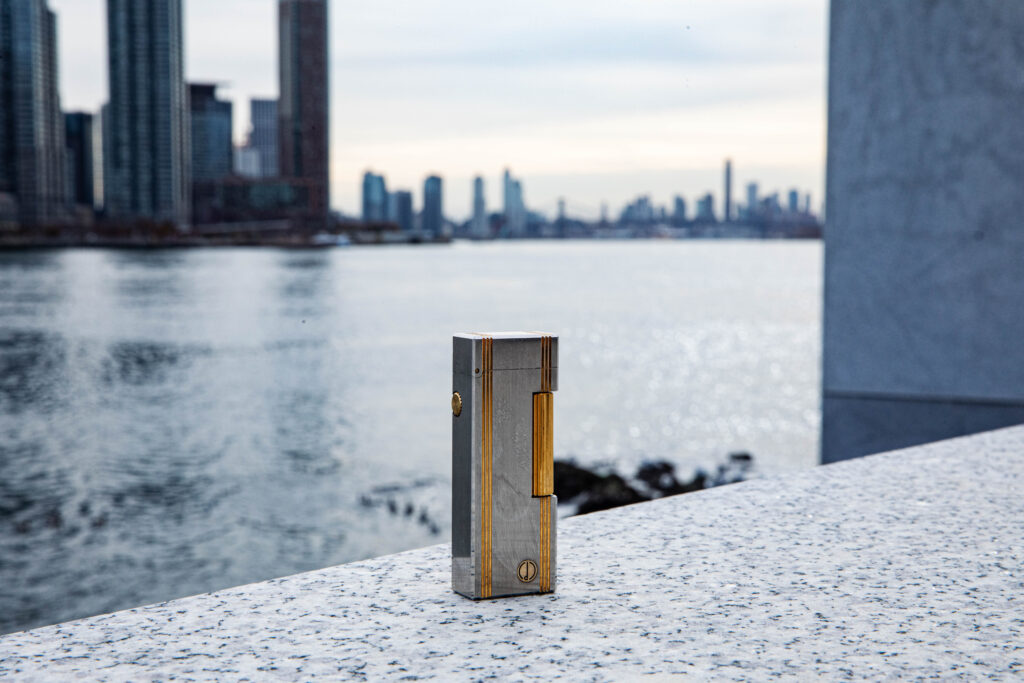
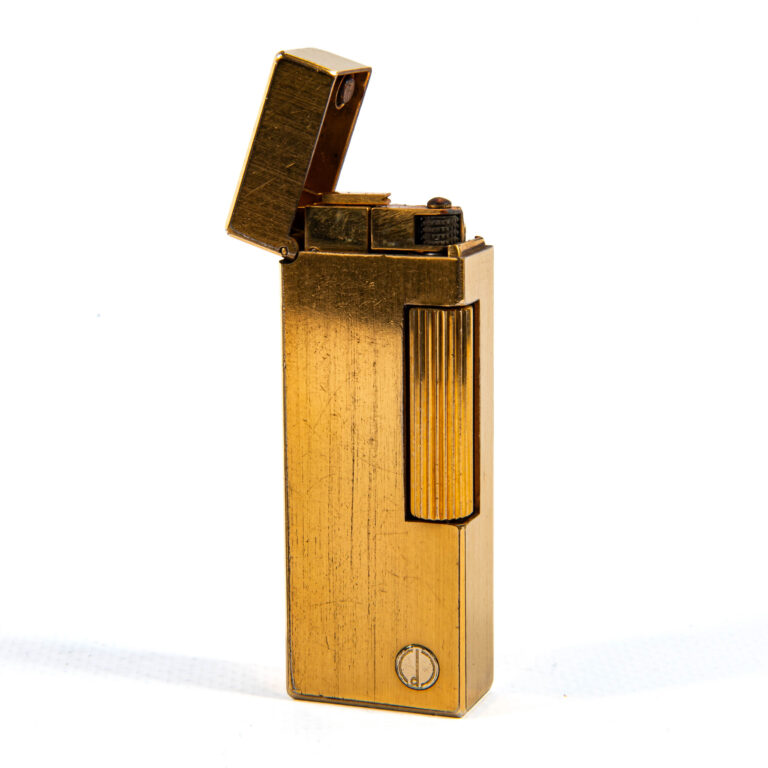
A vintage Dunhill Rollagas rarely carries a plain year, but it gives away its age in several places: the words stamped on the base, a small date code, the hinge of the lid and a handful of design details that Dunhill changed over the decades. Read together, they usually place a lighter within a year or two, and often to the exact month.
This guide shows you where to look, how to read the date code from 1957 to 1994, what the patent number and “Made in Switzerland” mean, and which details tell an early Rollagas from a later one.
Quick guide: what your Rollagas tells you
Start with the two clues you can check in seconds, then use the chart further down to narrow it down.
| What you see | Points to | More |
|---|---|---|
| A barrel hinge: the rolled hinge is visible on the back of the lid | before 1971 | Design changes |
| A concealed hinge: no visible hinge barrel | 1971 or later | Design changes |
| A letter and a number, like E5 | August 1957 to September 1977 | Date code chart |
| Two letters, like HC | October 1977 to 1994; on the bottom of the lighter 1995 to 2004 | Date code chart |
| US RE24163 PATENTED on the base | 1968 to 1981 | Base markings |
| A serial number on the base | 1995 to 2004 | Base markings |
Where to find the date code
Dunhill stamped a small date code on the burner plate, the flat plate around the gas jet that you see when you open the lid. On some later lighters the code sits on the base, next to the filler cap, and lighters from 1995 to 2004 carry it on the bottom. The letters are tiny and often worn by years of use and polishing, so a loupe and good light help.
- Open the lid and look at the burner plate around the gas jet.
- Turn the lighter over and look around the round filler cap on the base.
- Write down exactly what you see: one letter and a number, or two letters. Then use the right chart below.
Dunhill Rollagas date code chart, 1957 to 1994
Dunhill introduced its date code in August 1957. Find the year on the left and the month across the top, and the cell where they meet shows the code. On a phone, swipe the chart sideways to see all twelve months.
August 1957 to September 1977: a letter and a number
In the first system the letter is the year and the number is the month, from 1 for January to 12 for December. So E5 was made in May 1959 and N11 in November 1966.
October 1977 to 1994: two letters
In October 1977 the month number gave way to a second letter. Now the first letter is the year and the second letter is the month: A for January to L for December. So HC was made in March 1978 and TK in November 1989.
| Year | Letter | January | February | March | April | May | June | July | August | September | October | November | December |
|---|---|---|---|---|---|---|---|---|---|---|---|---|---|
| 1957 | A & B | A8 | A9 | A10 | A11 | B12 | |||||||
| 1958 | C & D | C1 | C2 or D2 | D3 | D4 | D5 | D6 | D7 | D8 | D9 | D10 | D11 | D12(S) |
| 1959 | E | E1 | E2 | E3 | E4 | E5 | E6 | E7 | E8 | E9 | E10 | E11 | E12 |
| 1960 | F | F1 | F2 | F3 | F4 | F5 | F6 | F7 | F8 | F9 | F10 | F11 | F12 |
| 1961 | G | G1 | G2 | G3 | G4 | G5 | G6 | G7 | G8 | G9 | G10 | G11 | G12 |
| 1962 | H | H1 | H2 | H3 | H4 | H5 | H6 | H7 | H8 | H9 | H10 | H11 | H12 |
| 1963 | K | K1 | K2 | ||||||||||
| 1964 | L | L1 | L2 | L3 | L4 | L5 | L6 | L7 | L8 | L9 | L10 | L11 | L12 |
| 1965 | M | M1 | M2 | M3 | M4 | M5 | M6 | M7 | M8 | M9 | M10 | M11 | M12 |
| 1966 | N | N1 | N2 | N3 | N4 | N5 | N6 | N7 | N8 | N9 | N10 | N11 | N12 |
| 1967 | P | P1 | P2 | P3 | P4 | P5 | P6 | P7 | P8 | P9 | P10 or A10 | P11 or A11 | P12 or A12 |
| 1968 | R & B | R1 or B1 | R2 or B2 | R3 or B3 | R4 or B4 | R5 or B5 | R6 or B6 | R7 or B7 | R8 or B8 | R9 or B9 | R10 or B10 | R11 or B11 | R12 or B12 |
| 1969 | S | S1 | S2 | S3 | S4 | S5 | S6 | S7 | S8 | S9 | S10 | S11 | S12 |
| 1970 | T | T1 | T2 | T3 | T4 | T5 | T6 | T7 | T8 | T9 | T10 | T10 | T11 |
| 1971 | T, U & V | T11 | T11 | T11 | U1 | U2 | U5 | U6 | U86 | U3 | U9 | U11 | V or V1 |
| 1972 | V | V1 | V2 | V3 | V4 | V5 | V6 | V7 | V8 | V9 | V10 | V11 | V12 |
| 1973 | W | W1 | W2 | W3 | W4 | W5 | W6 | W7 | W8 | W9 | W10 | W11 | W12 |
| 1974 | Y | Y1 | Y2 | Y3 | Y4 | Y5 | Y6 | Y7 | Y8 | Y9 | Y10 | Y11 | Y12 |
| 1975 | A | A1 | A2 | A3 | A4 | A5 | A6 | A7 | A8 | A9 | A10 | A11 | A12 |
| 1976 | B | B1 | B2 | B3 | B4 | B5 | B6 | B7 | B8 | B9 | B10 | B11 | B12 |
| 1977 | C & G | C1 | C2 | C3 | C4 | C5 | C6 | C7 | C8 | C9 | GJ | GK | GL |
| 1978 | H | HA | HB | HC | HD | HE | HF | HG | HH | HI | HJ | HK | HL |
| 1979 | I | IA | IB | IC | ID | IE | IF | IG | IH | II | IJ | IK | IL |
| 1980 | J | JA | JB | JC | JD | JE | JF | JG | JH | JI | JJ | JK | JL |
| 1981 | K | KA | KB | KC | KD | KE | KF | KG | KH | KI | KJ | KK | KL |
| 1982 | L | LA | LB | LC | LD | LE | LF | LG | LH | LI | LJ | LK | LL |
| 1983 | M | MA | MB | MC | MD | ME | MF | MG | MH | MI | MJ | MK | ML |
| 1984 | N | NA | NB | NC | ND | NE | NF | NG | NH | NI | NJ | NK | NL |
| 1985 | O | OA | OB | OC | OD | OE | OF | OG | OH | OI | OJ | OK | OL |
| 1986 | P | PA | PB | PC | PD | PE | PF | PG | PH | PI | PJ | PK | PL |
| 1987 | R | RA | RB | RC | RD | RE | RF | RG | RH | RI | RJ | RK | RL |
| 1988 | S | SA | SB | SC | SD | SE | SF | SG | SH | SI | SJ | SK | SL |
| 1989 | T | TA | TB | TC | TD | TE | TF | TG | TH | TI | TJ | TK | TL |
| 1990 | U | UA | UB | UC | UD | UE | UF | UG | UH | UI | UJ | UK | UL |
| 1991 | V | VA | VB | VC | VD | VE | VF | VG | VH | VI | VJ | VK | VL |
| 1992 | W | WA | WB | WC | WD | WE | WF | WG | WH | WI | WJ | WK | WL |
| 1993 | X | XA | XB | XC | XD | XE | XF | XG | XH | XI | XJ | XK | XL |
| 1994 | Y | YA | YB | YC | YD | YE | YF | YG | YH | YI | YJ | YK | YK |
A few years are untidy. Around changeovers Dunhill sometimes used two letters in the same year, and 1970 and 1971 in particular do not follow the months neatly. If your code matches one of these years, the hinge and base markings below help to confirm it.
A, B or C: 1950s or 1970s? The letters A, B and C were used twice: in 1957 and 1958, and again from 1975 to 1977. The hinge settles it. A barrel hinge means the earlier date, a concealed hinge the later one, because the concealed hinge only arrived in 1971.
The chart ends with 1994. Lighters made from 1995 to 2004 also carry a two letter date code, stamped on the bottom of the lighter together with the serial number.
How to read the base of your Rollagas
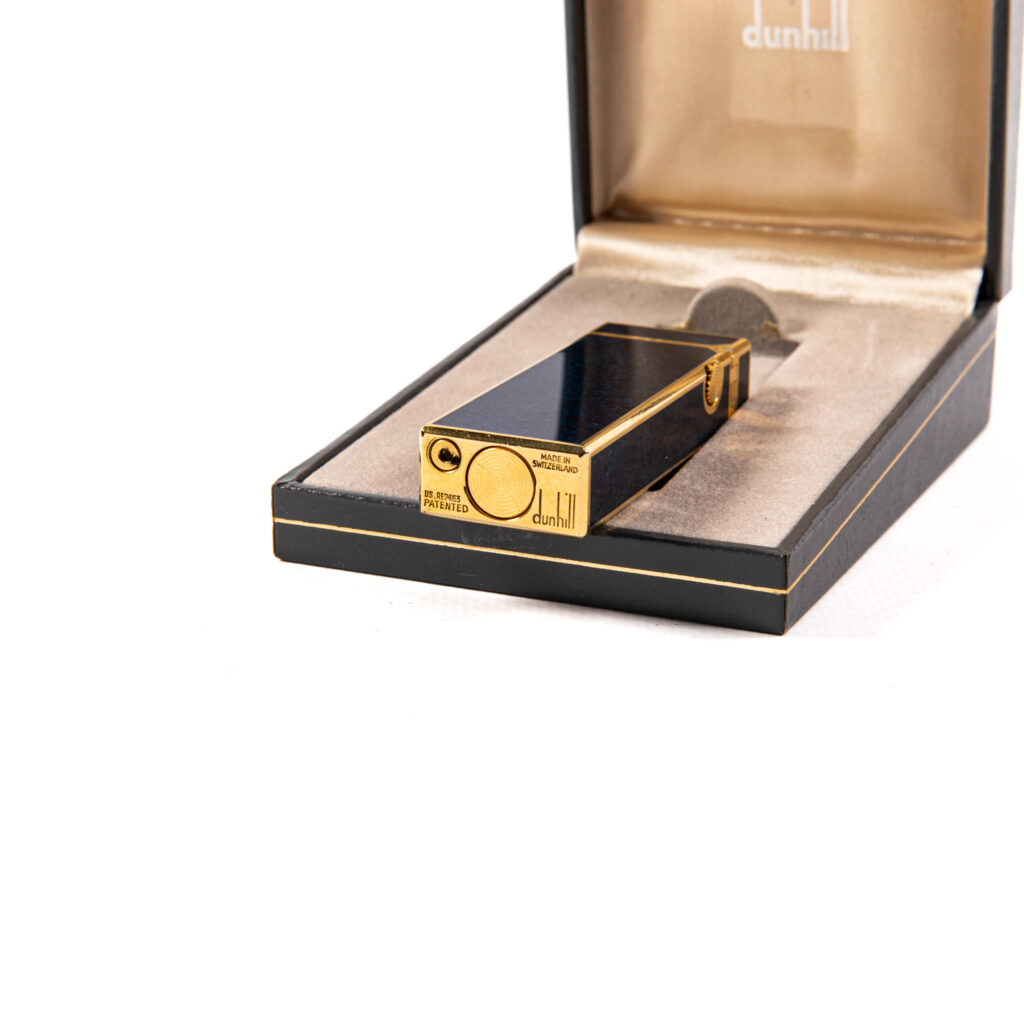
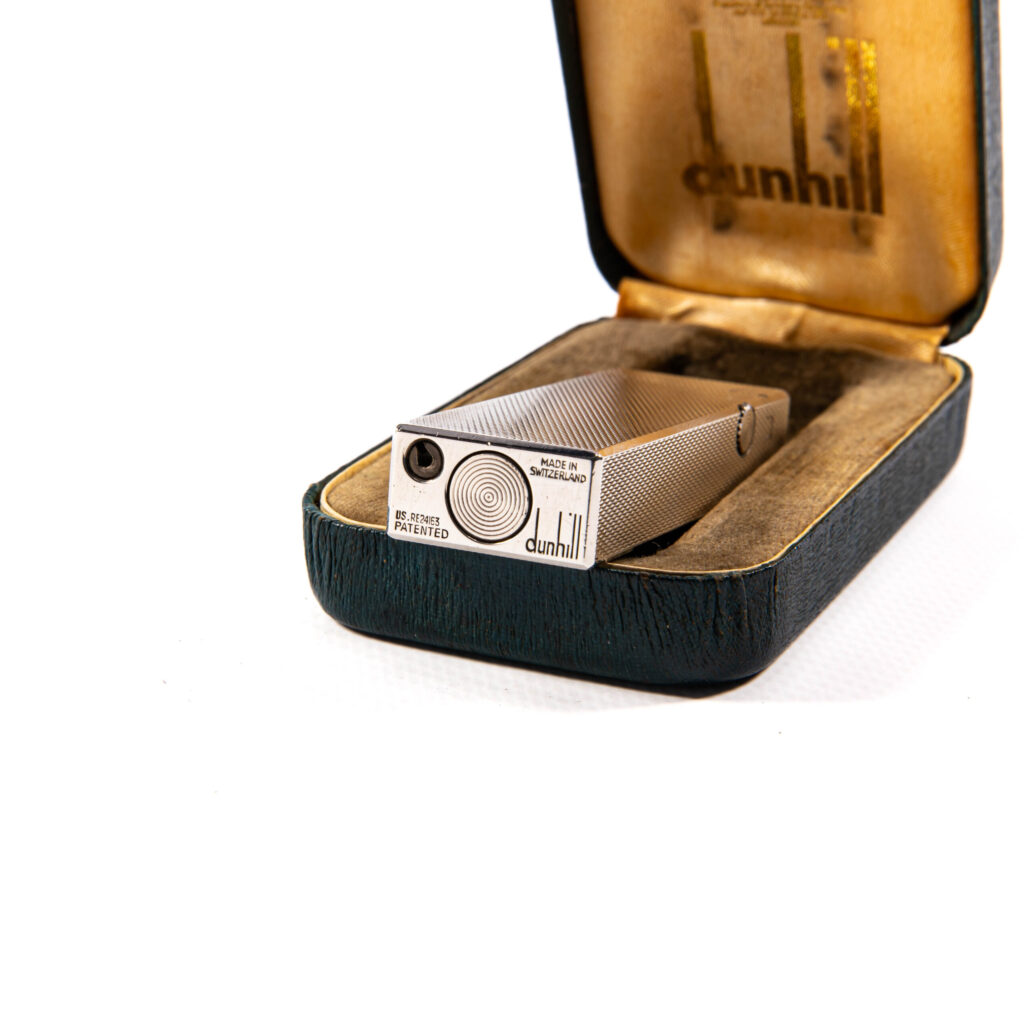
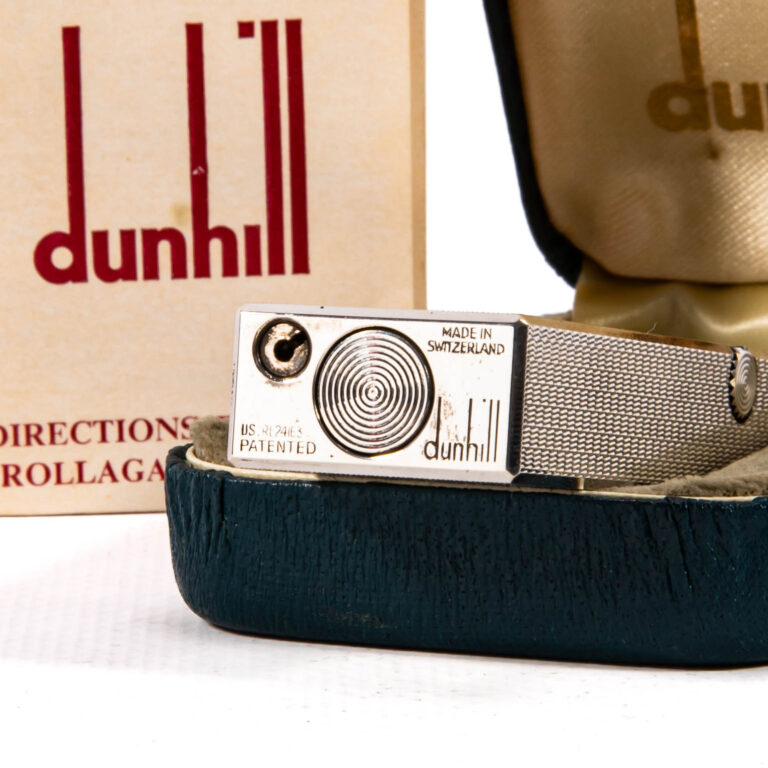
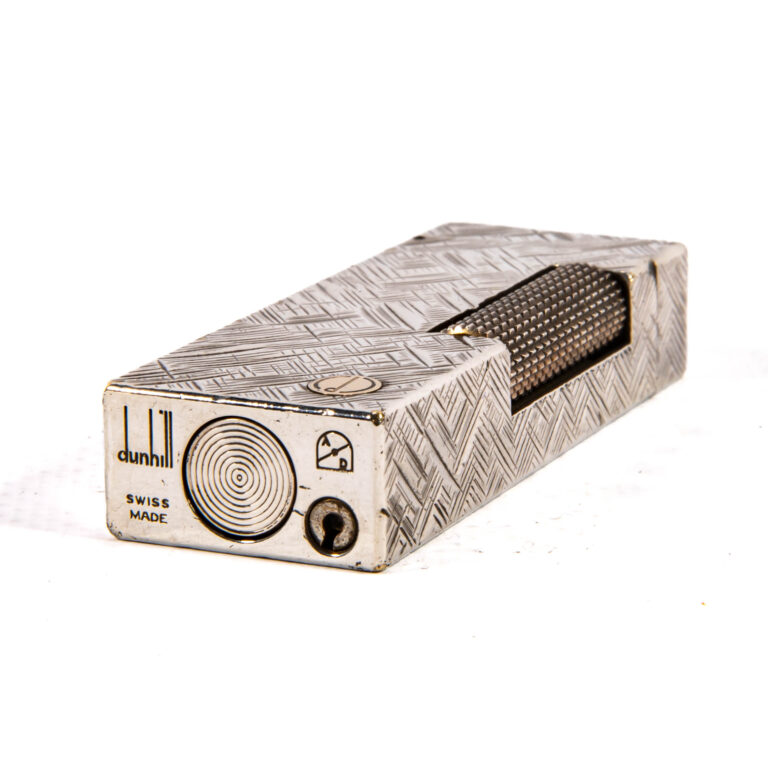
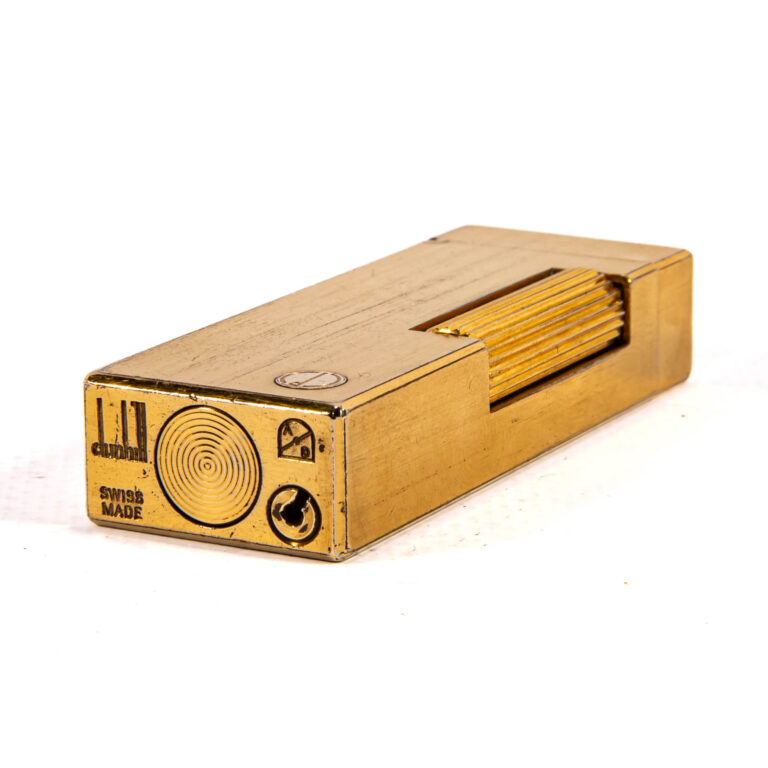
Turn the lighter over. On a genuine Rollagas the round filler valve sits in the middle of the base, with the small burner adjuster (it looks like a keyhole) in one corner. Around them Dunhill stamped its name, the country of manufacture and, for many years, a patent number. The wording changed over time:
| On the base | Made |
|---|---|
| “London” or “Paris” with “US Pat. and others pending” or “Brevet S.G.D.G.” | up to 1957 |
| Official US patent numbers | 1957 to 1965 |
| US RE24163 PATENTED, stamped on all Rollagas bases | 1968 to 1981 |
| No patent number; the Dunhill name and “Swiss made” more prominent | 1981 to 1995 |
| The AD shield on the base | from 1983 |
| A serial number and a two letter date code | 1995 to 2004 |
What does US RE24163 mean?
It is a United States patent number. RE stands for reissue: patent 2,710,506 for the gas filling valve, invented by Conrad Zellweger of La Nationale in Geneva, was reissued as Re. 24,163 on 5 June 1956. It covers the valve you fill the lighter through, not the look of the Rollagas. Dunhill stamped it on all Rollagas bases from 1968 to 1981, so it places a lighter in that period, but on its own it does not give you the exact year.
Made in Switzerland, England or elsewhere
Dunhill did not make the Rollagas mechanism itself. The classic Rollagas was built for Dunhill by La Nationale in Geneva, so almost every original Rollagas reads “Made in Switzerland” or, later, “Swiss made”.
- Made in Switzerland or Swiss made: the standard Rollagas, from the 1950s to the end of the original model.
- Made in England: the Dunhill 70 (Series 70), a wider relative of the Rollagas from the late 1960s, with “Dunhill 70” on the side. It was the first Dunhill lighter with a concealed hinge.
- No country, a strange spelling or a missing patent number where one should be: look closer. Our guide on how to spot a fake Dunhill Rollagas shows the details that give copies away.
Design changes that date a Rollagas
No date code, or a worn one? The design itself narrows it down.
| Detail | Period |
|---|---|
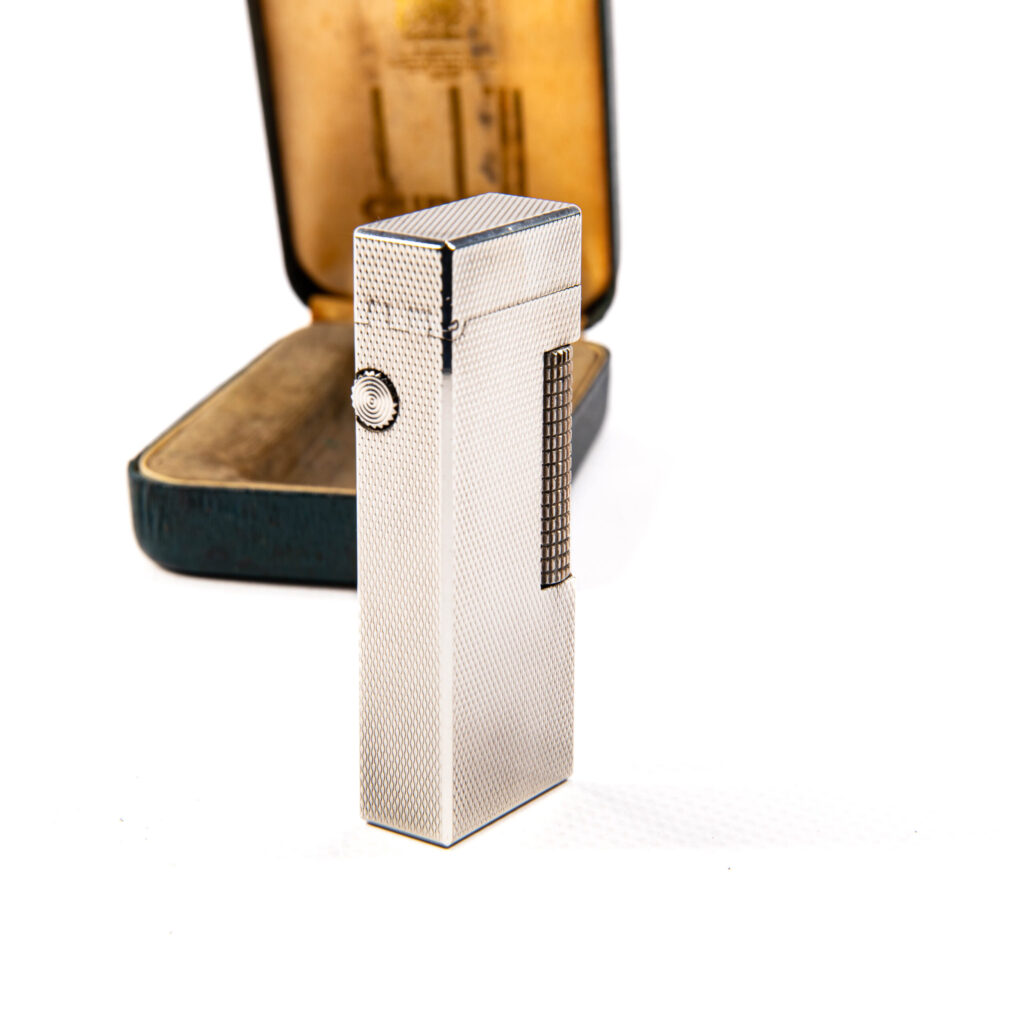
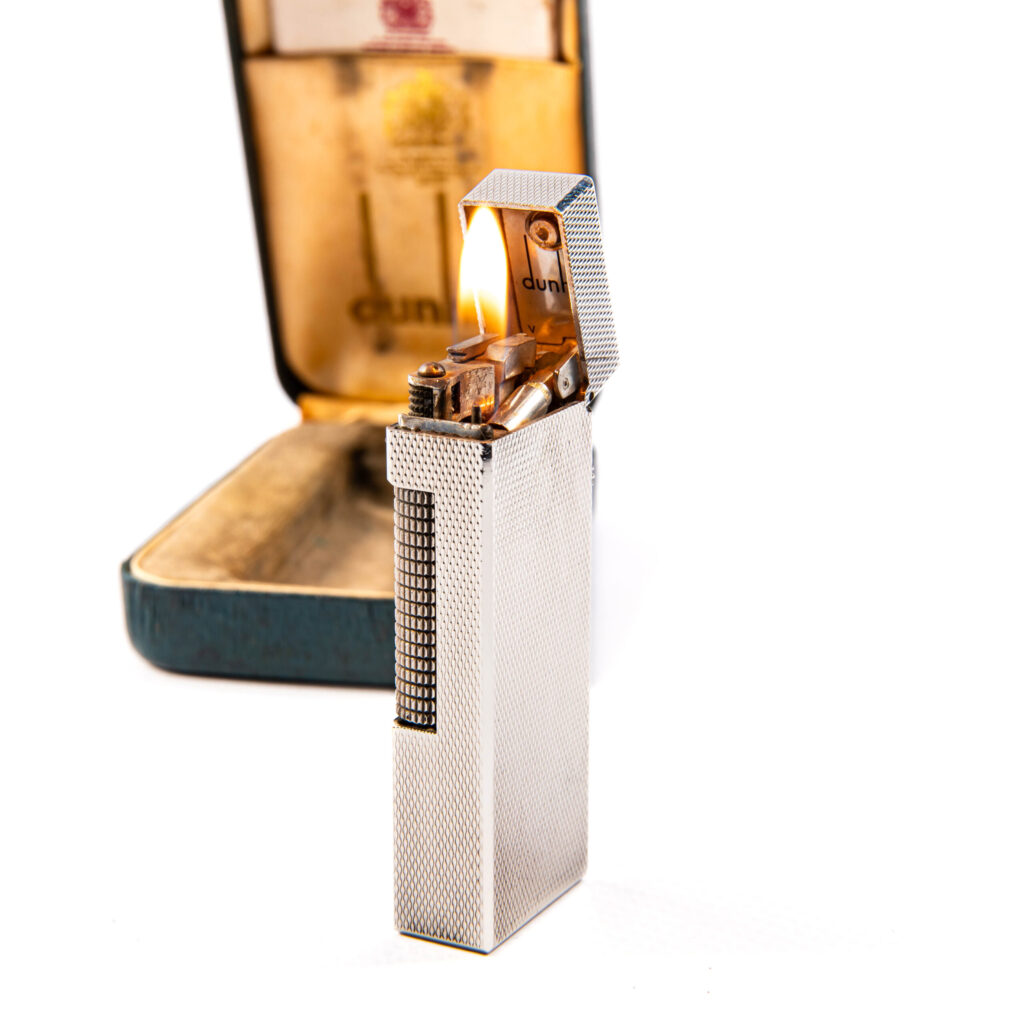
| Barrel hinge, smooth lid, barley pattern on the body | 1956 to 1970 |
| Filler cover with two arrows, no Dunhill name under the lid, unplated flint housing | 1950s to early 1960s |
| Plated flint housing | from the mid 1960s |
| Concealed hinge, new flame wheel, Dunhill name under the lid, filler cover with concentric circles | from 1971 |
| Lacquer finishes | from 1973 |
| Lacquer with a domed top | from 1977 |
| Small D medallion at the bottom right of the front | from the early 1980s |
| AD shield on the base | from 1983 |
| Mini Rollagas: the same design, shorter | from 1993 |
| Serial number and two letter date code on the bottom | 1995 to 2004 |
| New generation: flame control in the base, segmented filler plate without dust cap | from about 2006 |
The whole story behind these changes, from the launch in 1956 to the new generation, is in the history of the Dunhill Rollagas.
When the clues do not agree
- Replaced parts. A Rollagas that went back to Dunhill for service may have a newer flame wheel or other parts. Date it by the body, the hinge and the code, not by one small part.
- Swapped boxes and papers. A box or guarantee card can belong to another lighter. Check that a serial number on the papers matches the base.
- Worn codes. Polishing and decades of use can erase the date code. Then the hinge, base wording and finish give you the period.
- Overlapping periods. Dunhill used up existing parts, so stamps and details overlap by a few years. Treat the years in the tables as a guide, not a hard border.
Does the year make a Rollagas more valuable?
Age helps, but it is not everything. Collectors look for early barrel hinge lighters, rare finishes, solid gold or silver, and lighters in their original box with papers. Condition and whether the lighter works properly count at least as much as the year. Once you know its age, keep it working with our Dunhill Rollagas maintenance guide, or browse the serviced Dunhill Rollagas lighters in our shop, each dated and checked in our workshop.
The date code chart builds on An Unofficial Guide to the Dunhill Rollagas (2021) by Michael Thompson, who kindly allows his research to be shared. Dating other lighters works in a similar way: see how to date a Zippo lighter.
Dunhill Rollagas lighters available now
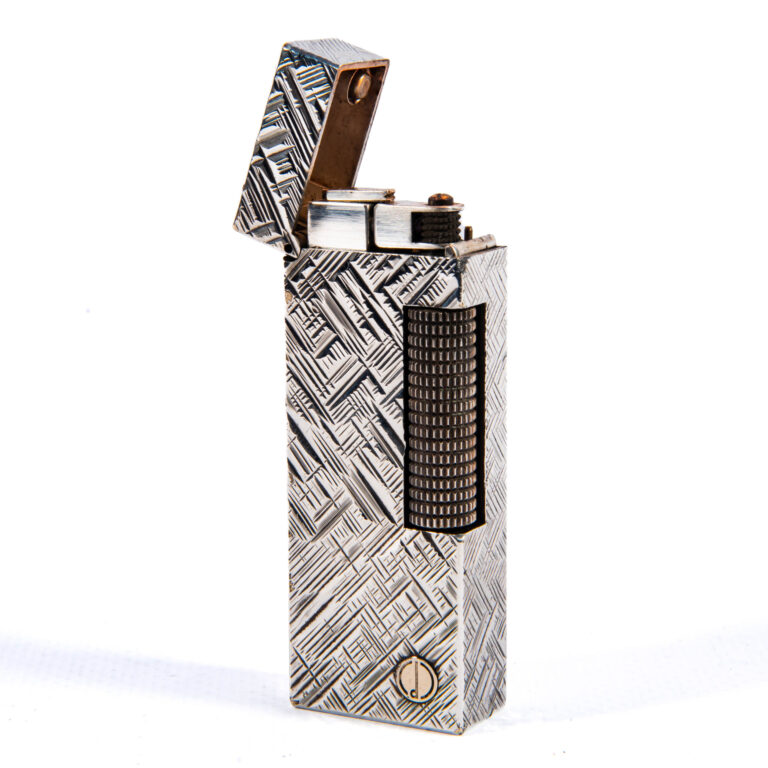
See all Rollagas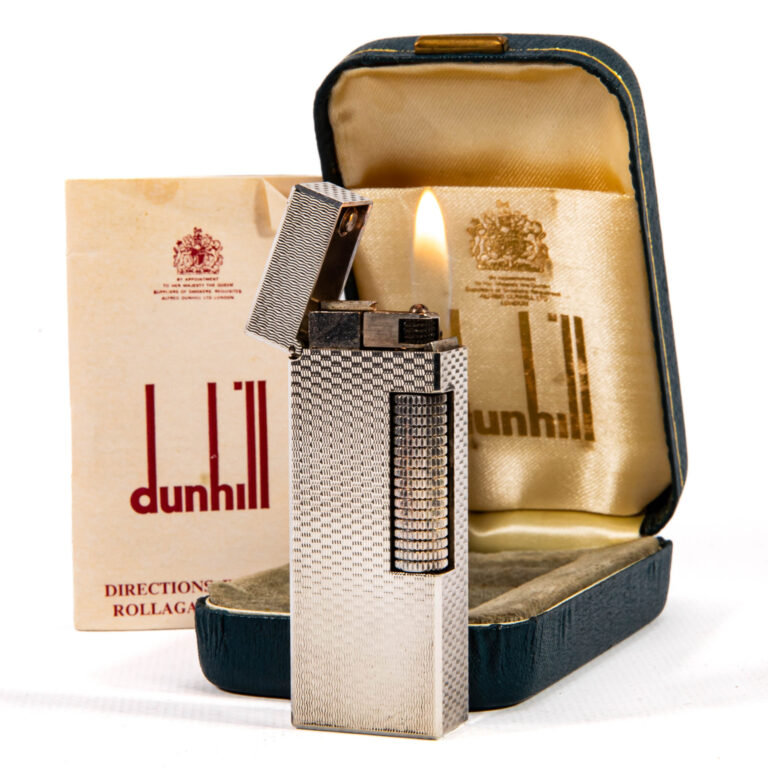
Questions collectors ask
How can I tell how old my Dunhill Rollagas is?
Look for the date code on the burner plate under the lid, then check the hinge and the base. A letter and a number dates from 1957 to 1977, two letters from 1977 onwards, and a concealed hinge means 1971 or later.
What does US RE24163 on my Dunhill lighter mean?
It is the reissued United States patent for the gas filling valve invented by Conrad Zellweger of La Nationale, reissued on 5 June 1956. It was stamped on all Rollagas bases from 1968 to 1981.
Where is the date code on a Dunhill Rollagas?
On the burner plate, the flat plate around the gas jet that you see when you open the lid. On some later lighters it is next to the filler cap, and lighters from 1995 to 2004 have a two letter code on the bottom.
Does a vintage Rollagas have a serial number?
Older Rollagas lighters have no serial number on the lighter itself. From 1995 to 2004 a serial number and a two letter date code are stamped on the base.
Are all Dunhill Rollagas lighters Swiss made?
The classic Rollagas was made for Dunhill by La Nationale in Geneva and is marked Made in Switzerland or Swiss made. The related Dunhill 70 was made in England.
When did the Rollagas get a concealed hinge?
In 1971. Earlier lighters have a visible barrel hinge, which makes the hinge one of the quickest ways to date a Rollagas. More in the history of the Rollagas.
Sources and further reading
- Gordon Byast: Dunhill Rollagas lighters, how to date your Rollagas collector's dating guide: where the date letters are stamped, hinge and design changes
- Google Patents: US RE24163, valves for filling lighters for liquefied gas Conrad Zellweger, La Nationale S.A., Geneva; reissue of patent 2,710,506 on 5 June 1956
- Dunhill: lighter history official: Rollagas from 1956, developed with Conrad Zellweger, concealed hinge in 1971
- Pipes Magazine: The Cadillac of Lighters, Dunhill Rollagas Series 70 in 1969 with the first concealed hinge, standard Rollagas from 1971; finishes by period