Cartier Lighter Maintenance: How to Refill, Clean and Repair Your Cartier
Gas, flints, flame height, cleaning lacquer and gold plate, and what to do when your Cartier will not light: a practical guide for the Les Must, Santos, Trinity, Pentagon and Oval.
By Max Meijster Updated 15 October 2026 10 min read

A vintage Cartier lighter is built to be used every day, and with a little care it will keep lighting for decades. Most of what it needs you can do at home: the right gas, a fresh flint now and then, the correct flame height and a gentle clean that respects the plating or lacquer.
This guide covers all of it for the Cartier lighters collectors meet most: the Les Must, Santos, Trinity, Pentagon, the desk lighter and the newer Oval. We service and sell vintage Cartier lighters in our workshop, so where something is better left to a professional, we say so.
Which Cartier lighter do you have?
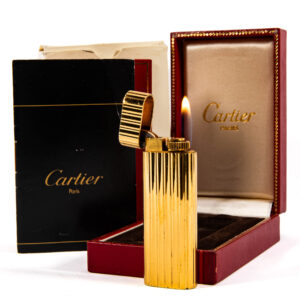
The first Cartier gas lighter appeared in 1968: a slim, fluted lighter in gold plate, made under licence by Robert Hocq’s company Silver Match. In 1973 it became the first piece of the Les Must de Cartier line. Most vintage Cartier lighters you will find share that same mechanism under a different case, so the care below applies to all of them.
| Model | How to recognise it | Care notes |
|---|---|---|
| Les Must | Slim oval case, often with the fluted godron pattern, plain, lacquered or with a cabochon | The classic mechanism; refill valve on the base |
| Santos | Les Must body with screw motifs, often two tone | Same mechanism and care as the Les Must |
| Trinity | Three bands around the case, after the Trinity ring | Same mechanism; dust collects between the bands |
| Pentagon | Five flat facets instead of a rounded case | Same mechanism; the edges show wear first |
| Mini versions | Les Must, Trinity and Pentagon in a smaller size | Smaller tank, so it needs refilling more often |
| Desk lighter | A long Les Must made to stand on a desk | Same care as the Les Must; the one from 1997 we sold had the 1990s base |
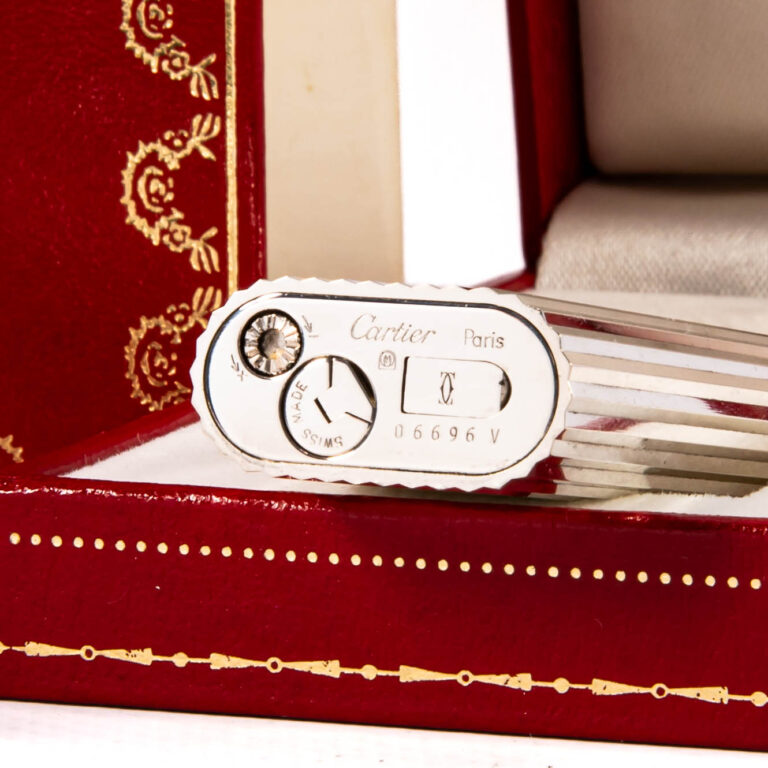
| Oval | Our name for Cartier’s newer line, still made today: a wider body, a new cap design and a sideways flame; “Swiss made” on the base | Flint from the top, under the cap; a large screw for the filling valve and a small flame screw on the base |

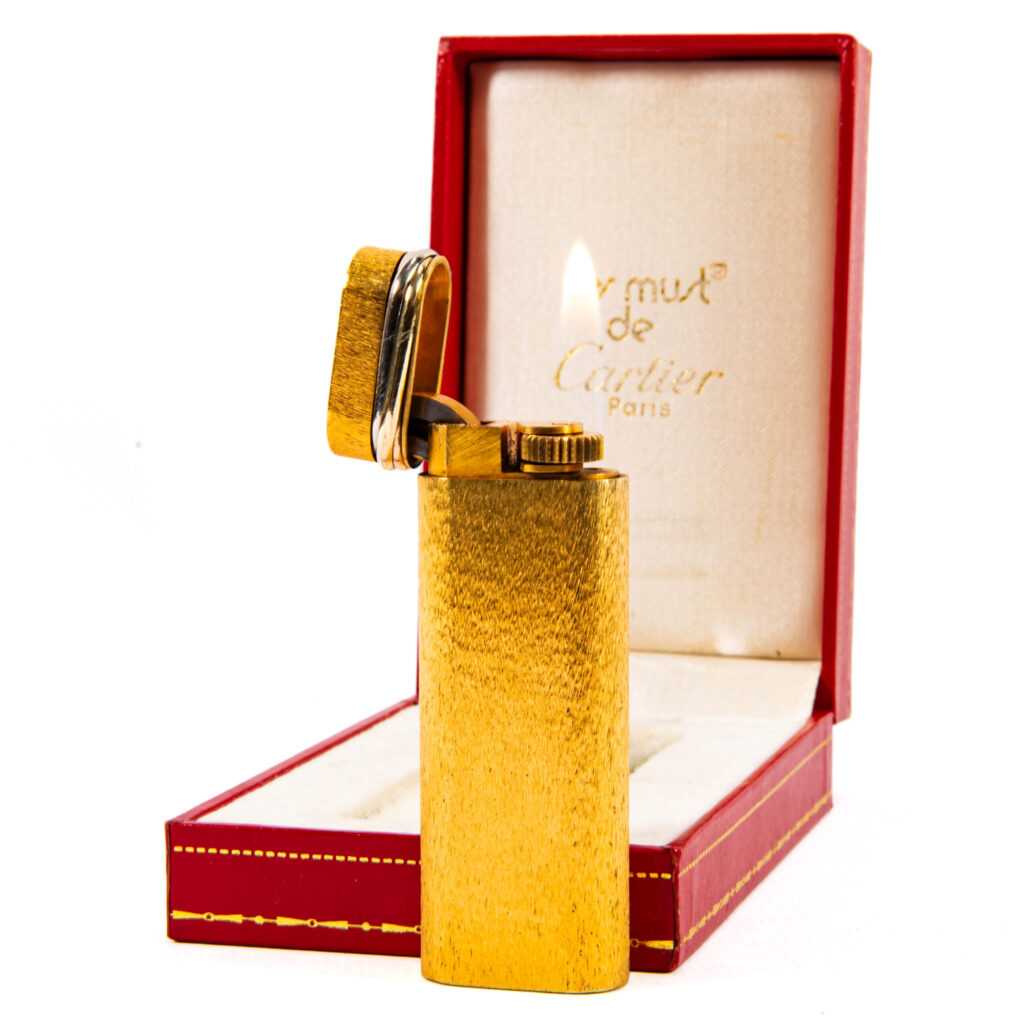
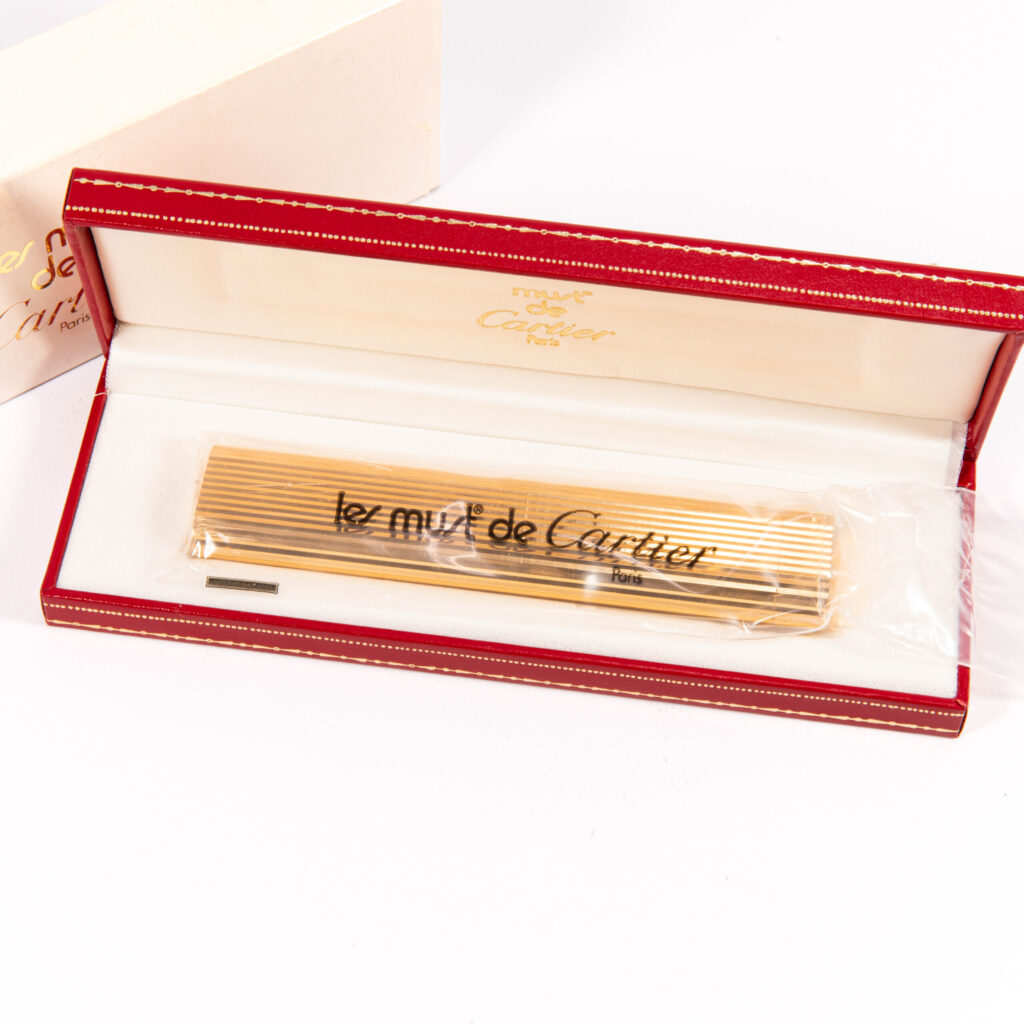
Cartier also made a desk version of the Les Must: a long lighter made to stand on a desk. We have sold a few, such as a gold plated Les Must Desk from the 1990s, 124 mm tall and still sealed in its box.
Know your base: valve, flint and flame
On a Cartier, almost everything you need happens on the base: the gas goes in there, the flame is set there and, on most models, the flint goes in there too. Which part does what depends on the base your lighter has. There are three types.
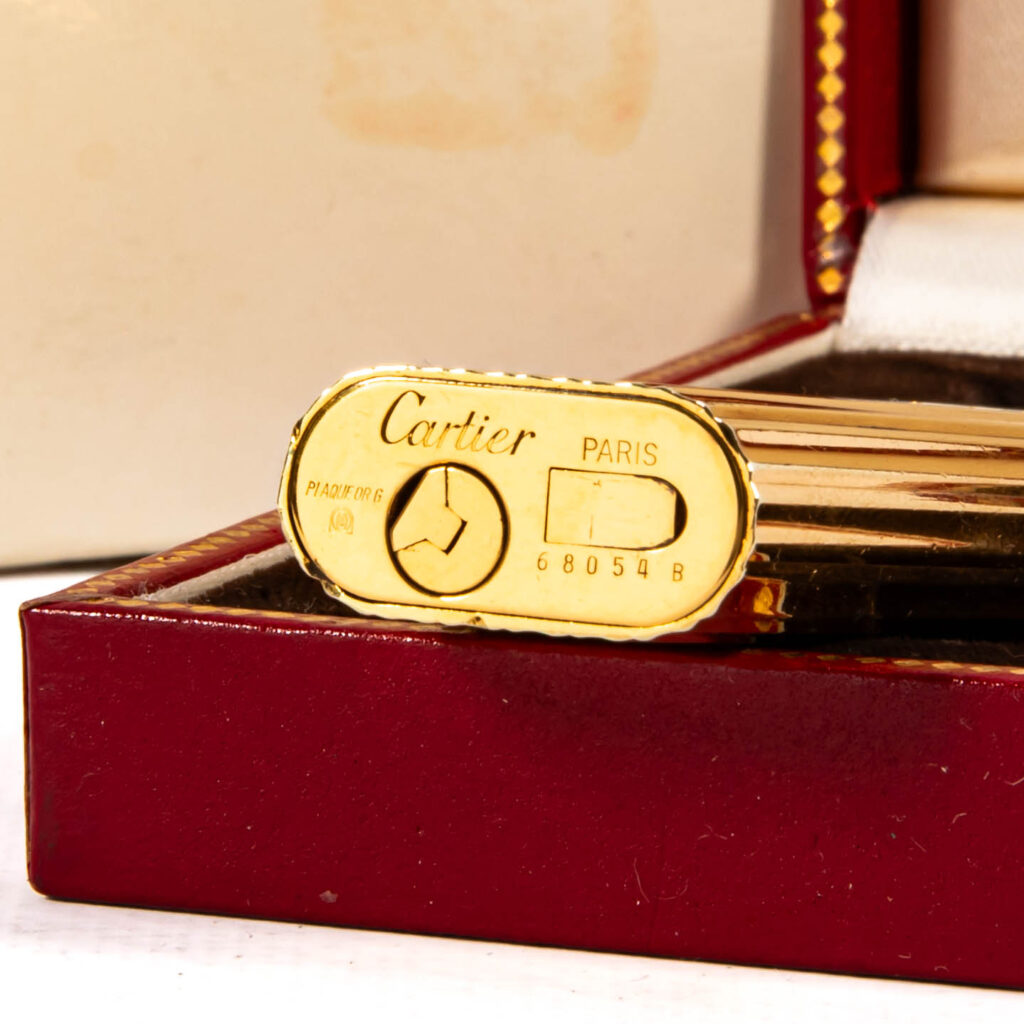
Les Must of the 1970s and 1980s: one screw, three jobs
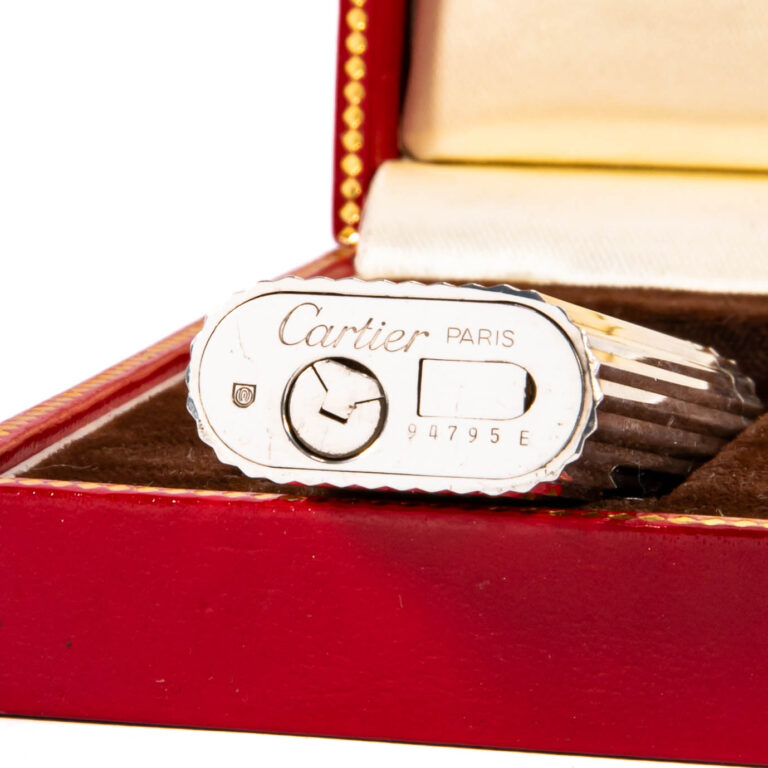
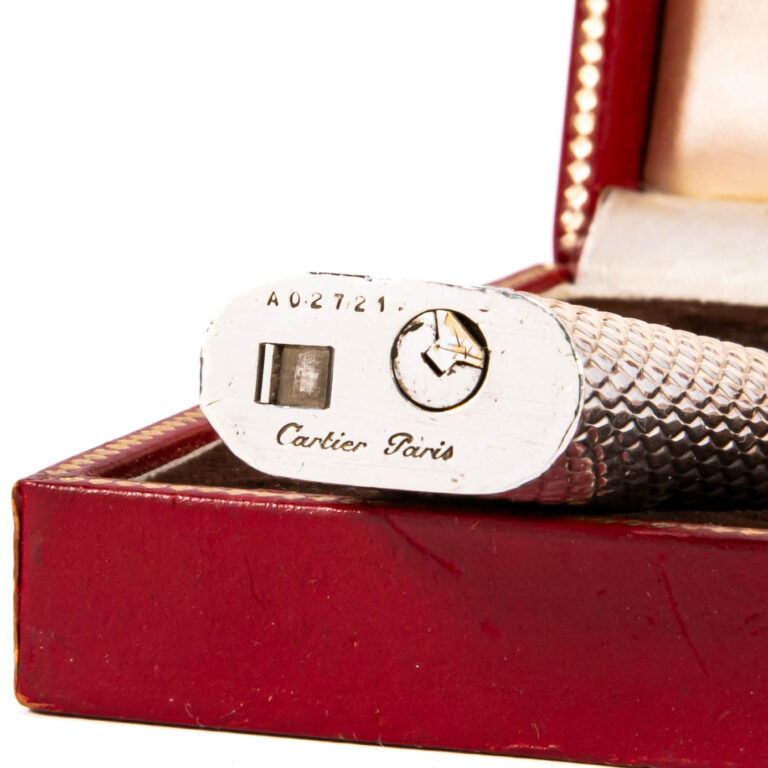
Look at the base and you see two things: a round screw with a small lever, which looks like three arms, and a D shaped part beside it.
- The three arm screw is Cartier’s clever patent: one screw does three jobs. It holds the lighter together (take it out and the base and gas tank come off), it holds the flint, with a spring that pushes the flint up against the wheel, and it sets the flame. Tighten it and the flame gets lower.
- The D shaped part is a small cover on a hinge. Lift it and it swings out, showing the filling valve of the gas tank. That is where the can goes when you refill.
To change the flint:
- Unscrew the three arm screw. Turn it anticlockwise by its small lever and take it out, with the spring attached. As this screw also holds the base and the gas tank, work over a table.
- Remove the old flint. Tip out what is left of it.
- Insert a new flint. Drop a fresh flint into the flint tube.
- Screw it back in. Put the screw with its spring back and turn it clockwise.
- Check the flame. Because the same screw sets the flame, light the lighter: tighten the screw a little for a lower flame, loosen it a little for a higher one.
Cartier lighters of the 1990s: a separate flame adjuster
In the 1990s Cartier changed the design of the gas tank. The base still has the three arm screw and the D shaped cover, but the screw now does two jobs instead of three: it holds the lighter together and holds the flint. The flame is set with a new, small round part next to it.
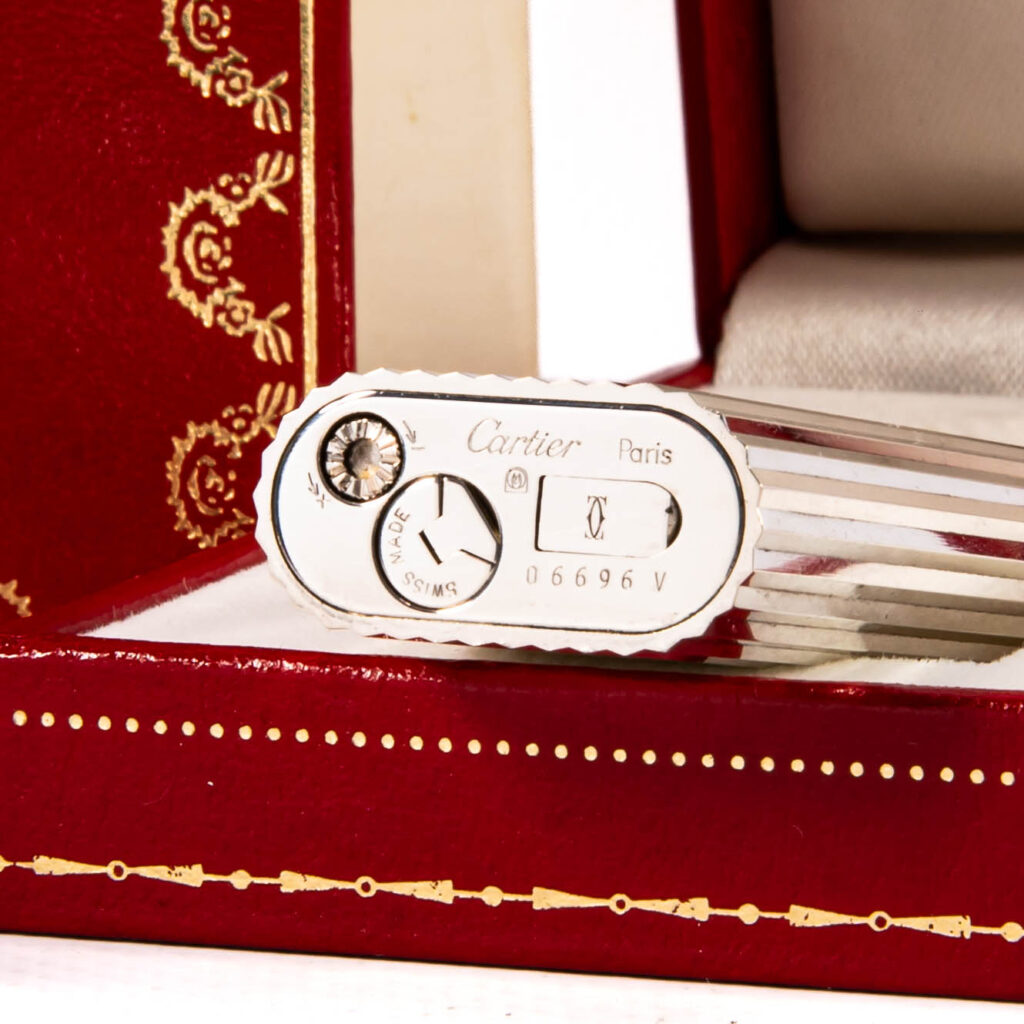
The flame adjuster is a tricky little part, because it locks. To set the flame:
- Unlock it. Press the small round adjuster in and turn it a little anticlockwise. It pops out.
- Set the flame. Turn the adjuster to change the flame height, a little at a time, and test the flame.
- Lock it again. Press it back in and turn it a little clockwise.
The flint is changed as on the older Les Must: unscrew the three arm screw, take it out with its spring, put in a new flint and screw it back. On this base that does not change the flame height.
The Oval: a different story
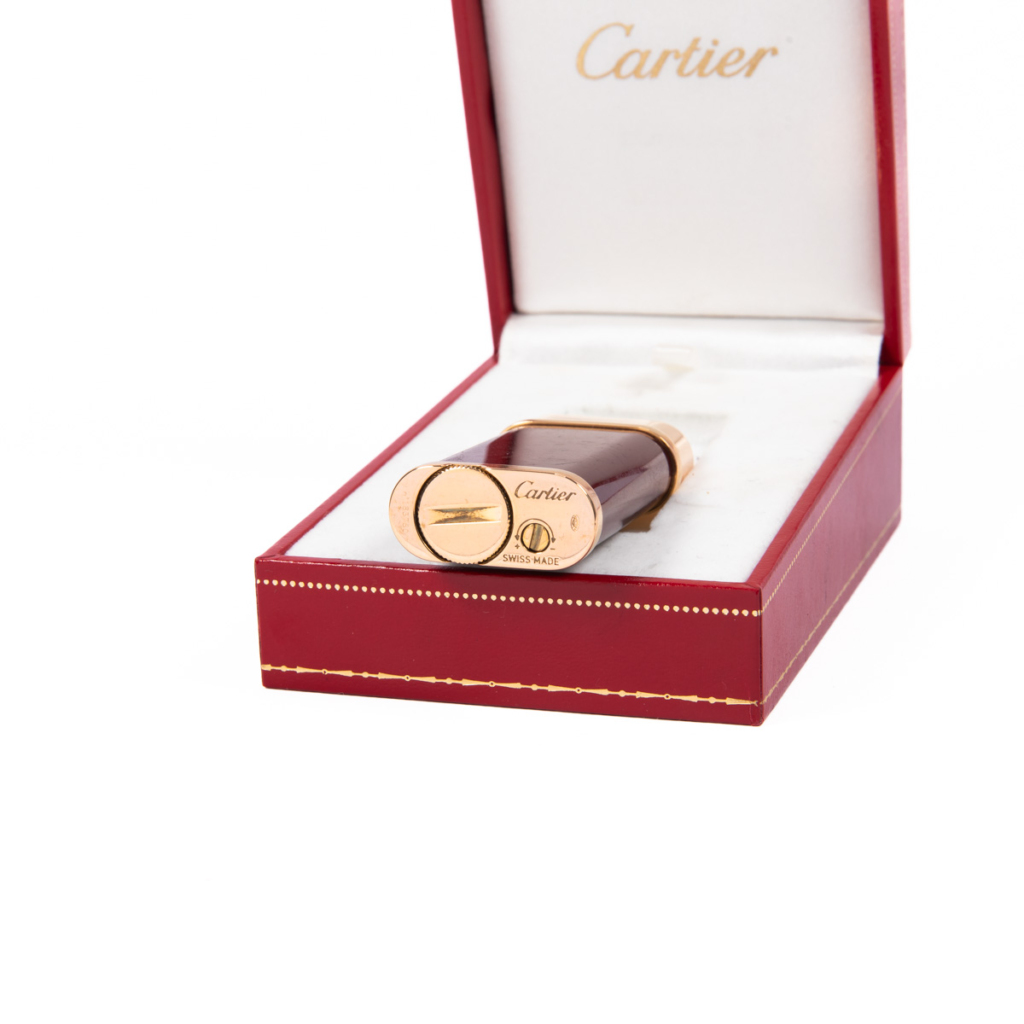
The Oval, Cartier’s newer line, works differently. The flint does not go in through the base but from the top, underneath the cap. On the base you find two screws: the large one is for the filling valve, the small one is the flame adjustment, which you turn to change the flame height. Cartier notes that half a turn of the flame screw is enough to change the height noticeably.
How to refill a Cartier lighter
Every Cartier gas lighter is filled through a valve on its base. Cartier itself sells its own gas refills, but for a vintage Cartier you do not need to pay for a brand name: any good quality, filtered butane works well. Cheap, impure gas is what clogs the small burner, so that is where it is worth spending a little more.
- Work somewhere safe. A well aired room, away from any flame, with lighter and can at room temperature.
- Bleed it if the flame was jumping. If the flame popped up and down or changed height, there is air in the tank. Hold the lighter upside down, pointed away from you, and press the valve with a small blunt tool until the hiss stops.
- Turn the lighter upside down. Cartier advises resting it on a firm, flat surface with the base up. On a Les Must, Santos, Trinity or Pentagon, lift the D shaped cover on its hinge to reach the valve. On the Oval, first turn the slotted cap off the valve.
- Fill in a straight line. Hold the can vertical with the nozzle straight on the valve and press firmly for about three seconds. Do not rock the can, or gas escapes around the nozzle.
- Let it rest. Wait a few minutes so the gas can settle and warm up to room temperature, then light it.
Lighters from The Lighterhouse are bled after their service and shipped empty, as the transport rules require, so the first fill is yours.
Lighter fluid or butane?
Butane. The Les Must and every model built on it are gas lighters, so liquid lighter fluid (the petrol type used in a Zippo) never goes into the tank. A can of butane with a straight nozzle is all you need.
Adjusting the flame
Cartier gives its burning times for a flame of 25 to 30 mm, a good everyday height. If the flame is too high, too low or the lighter has just been filled, adjust it in small steps and test after each one. Where you adjust it depends on the base (see above):
- Les Must family of the 1970s and 1980s: the three arm screw. Tighten it for a lower flame, loosen it for a higher one.
- Cartier lighters of the 1990s: the small round adjuster. Press it in and turn a little anticlockwise so it pops out, set the flame, then press it back and turn a little clockwise to lock.
- Oval: the small screw on the base; half a turn already makes a clear difference.
Never force an adjuster past its stop. If the flame stays weak at the highest setting, the tank is probably empty or the burner is clogged; see common problems below.
Changing the flint
The flint makes the spark, and it wears down with use. When the sparks become weak or the wheel spins without a proper spark, it is time for a new one. Replace it in good time: a flint worn right down lets the wheel run on the metal and wears the wheel.
Use premium standard lighter flints. The length does not matter. The one flint that does not fit is the S.T. Dupont flint: it is thicker than a standard flint. For its current lighters Cartier recommends its own flints; on those, a small flint pusher shows the wear, and the flint is due when the pusher reaches the small ball.
How you reach the flint depends on the base: on the Les Must family it sits under the three arm screw (steps above), on the Oval it goes in from the top, under the cap. While you are at it, a small, dry brush removes the grey flint dust that builds up around the wheel.
Cleaning by finish
Cartier advises cleaning its lighters with a dry, soft cloth only, never with alcohol, acetone or other solvents. Follow that rule. Keep water away as well: it can leave marks or cause rust. For corners and grooves, use dry cotton buds. Beyond that, the finish decides:
| Finish | How to clean it |
|---|---|
| Gold or silver plate (“Plaqué or G”, “Plaqué argent”) | Soft dry cloth; a jeweller’s polishing cloth for more shine. No liquid metal polish: it seeps into the seams, and every polish takes some plating with it. |
| Godron (fluted) | Dust and skin oil collect in the grooves. A dry cotton bud or a soft, dry brush along the flutes, then the cloth. |
| Lacquer | Dry soft cloth only. Never polish lacquer. Chips need a specialist. |
| Solid gold or silver | Soft dry cloth; a jeweller’s polishing cloth for stubborn marks. |
Inside the lid, a dry cotton bud reaches the corners around the burner without scratching anything.

Storing your Cartier
- Remove the flint for long storage. A flint can absorb moisture from the air and swell over time, so it gets stuck or, in the worst case, cracks the lighter.
- Keep it dry. Moisture causes corrosion and makes flints deteriorate.
- Use a soft pouch or the original box. It protects plating and lacquer from scratches.
- Room temperature. Do not leave it in a hot car or a cold shed; extremes are bad for the seals.
Common problems and quick fixes
| Problem | Likely cause | What to do |
|---|---|---|
| Flame pops up and down | Air in the tank | Bleed the lighter empty and refill it (steps above) |
| Weak flame | Nearly empty, or a clogged burner | Refill; clean the gas outlet gently with a dry cotton bud |
| Sparks but no flame | Empty tank or air in the tank | Bleed, refill and wait a few minutes |
| No spark, or the wheel slips | Worn flint, or dirt on the wheel | Replace the flint and brush the wheel clean |
| Gas smell or a hiss when closed | Leaking seal or valve | Stop using it and have it serviced |
| Will not hold gas at all | Dried out seals after years unused | Needs a service; refilling again will not help |
Cartier lighter repair and service
Seals dry out with age, especially in a lighter that sat in a drawer for years. When a Cartier leaks gas, will not hold a fill or the flame cannot be set, it needs opening up, and that is a job for a workshop rather than a kitchen table.
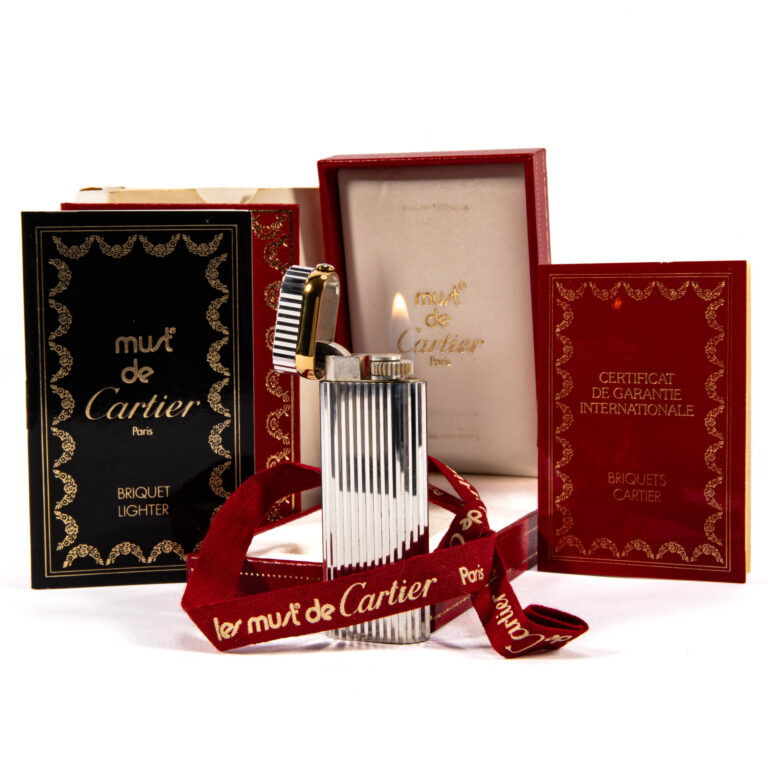
Cartier lighters came with a guarantee card promising a lifelong guarantee against manufacturing defects. As far as we know, though, Cartier no longer services vintage lighters, so for a Les Must, Santos, Trinity or Pentagon a specialist workshop is the way. Every Cartier we sell has been fully serviced in our workshop; for a lighter bought elsewhere, get in touch and we will tell you honestly whether it is worth it.

Own a Dunhill or S.T. Dupont as well? See our Dunhill maintenance guide and S.T. Dupont maintenance guide. Looking for a Cartier that is ready to use? See the vintage Cartier lighters we have now, each one serviced and tested.
Vintage Cartier Les Must lighters, serviced and ready
See all Les Must lighters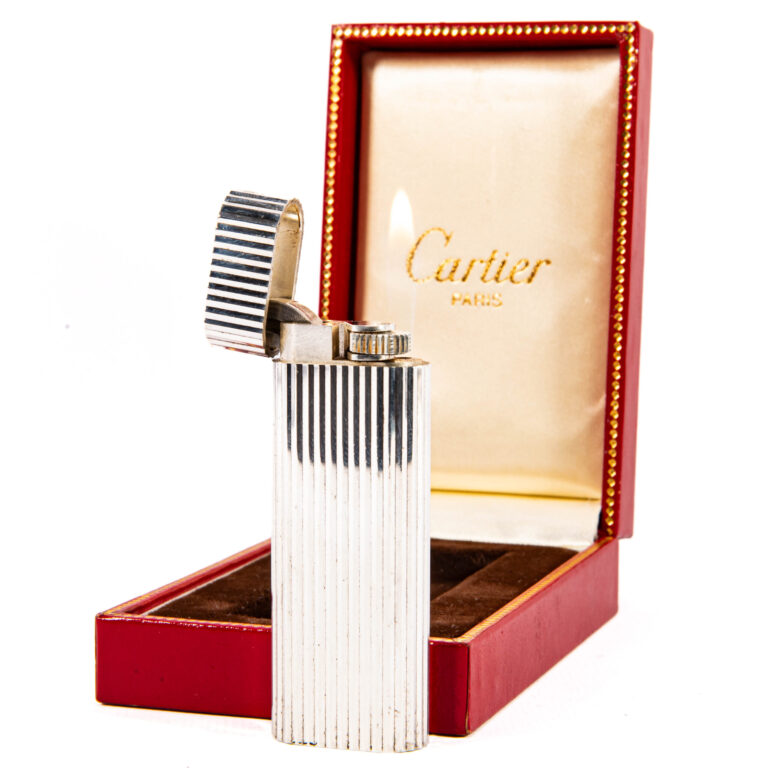

Questions collectors ask
How do you refill a Cartier lighter?
Turn it upside down on a firm surface, open the valve (on a Les Must lift the small D shaped cover on the base; on the Oval turn off the slotted cap), press a can of good butane straight onto the valve for about three seconds, then wait a few minutes before lighting.
What gas does a Cartier lighter use?
Butane. Cartier sells its own refills, but any good quality, filtered butane works in a vintage Cartier. Avoid cheap, impure gas, which can clog the burner.
Can I use lighter fluid in a Cartier lighter?
No. Cartier gas lighters take butane only. Liquid lighter fluid is for petrol lighters and must never go into the gas tank.
Which flint does a vintage Cartier lighter take?
A premium standard lighter flint; the length does not matter. S.T. Dupont flints do not fit, as they are thicker.
How do you adjust the flame on a Cartier lighter?
On a 1970s or 1980s Les Must, tighten the three arm screw on the base for a lower flame. On 1990s models, press the small round adjuster in, turn it slightly anticlockwise so it pops out, set the flame and lock it again. On the Oval, turn the small screw on the base.
Can Cartier lighters be repaired?
Yes, by a specialist. As far as we know Cartier no longer services vintage lighters. Every Cartier we sell is serviced first; contact us about yours.
Sources and further reading
- Cartier: lighters care official advice: dry soft cloth, no solvents; refilling upside down for 3 seconds; half a turn of the flame screw
- Cartier: refilling the gas valve cap with groove or notches, lighter upside down on a stable surface
- Cartier: changing the flint flint pusher and when to change the flint on current models
- WatchProSite: Cartier and Richemont, the lighter's legacy first Cartier lighter in 1968 by Silver Match, Les Must de Cartier in 1973