How to Spot a Fake S.T. Dupont Lighter: A Guide to Spotting the Counterfeit Dupont Lighter
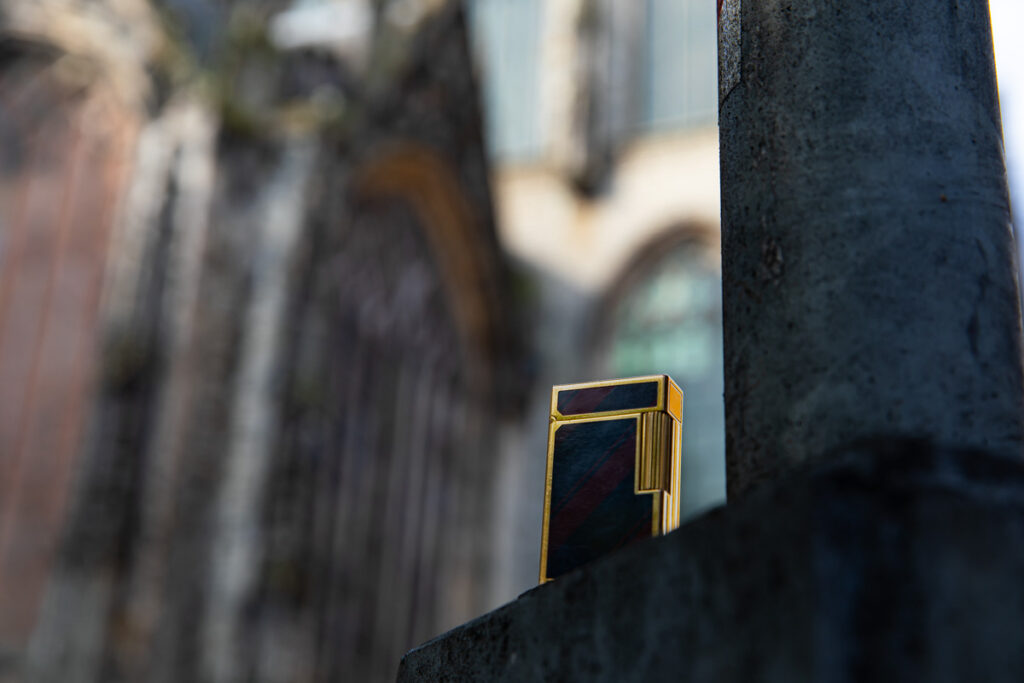
S.T. Dupont lighters, particularly the iconic Ligne 1 and Ligne 2 models, are admired for their craftsmanship, mechanical precision, and longstanding heritage. Unfortunately, their popularity has also resulted in a growing number of convincing counterfeits appearing on the market. In recent years, fake Dupont lighters have become increasingly common online, often offered at prices far below those of genuine examples.
Many of these imitations can appear convincing at first glance, which is why understanding the details of an authentic S.T. Dupont lighter is so important. In this guide, we will walk through the key characteristics used to identify a genuine Ligne 1 or Ligne 2 lighter, including serial numbers, engravings, dimensions, weight, lacquer quality, and the famous “cling” sound associated with authentic Ligne 2 models.
By learning to recognise these details, collectors can avoid counterfeit pieces, make more informed purchases, and better appreciate the quality and craftsmanship behind an authentic S.T. Dupont lighter.
Serial Numbers and Engravings: Authentic vs. Counterfeit
One of the first details to examine on a S.T. Dupont lighter is the serial number located on the underside of the piece. Every authentic Dupont lighter carries its own serial number, but on vintage Ligne 1 and Ligne 2 models these markings were stamped individually at the factory rather than perfectly machine engraved. As a result, genuine examples often show slight variations in spacing or alignment between characters. These small imperfections are completely normal and are often a positive sign of authenticity.
Counterfeit lighters, by contrast, frequently feature serial numbers that appear unnaturally perfect, with identical spacing, uniform depth, and flawless alignment. While this may initially seem more refined, it is often a strong indication that the lighter was mass-produced using modern engraving methods rather than traditional factory stamping.
It is also worth paying attention to the serial number itself. Over the years, collectors and enthusiast communities have identified a number of serial prefixes that regularly appear on counterfeit Dupont lighters. One of the most well-known examples is the “4FK” prefix, commonly seen on fake Ligne 2 models. Other suspicious combinations frequently reported include sequences such as 05D, 06D, 1AA, 1AB, 1GM, 2JN, and 2YJ. Although S.T. Dupont has never published an official serial database, these serials have repeatedly appeared on counterfeit examples documented by collectors.
Beyond the serial number, the overall engraving quality on the lighter is equally important. Authentic S.T. Dupont engravings are typically sharp, clean, and deeply defined. Markings such as “S.T. Dupont – Paris – Made in France” should appear balanced, correctly aligned, and executed in the proper typeface. On lacquer models, engravings such as “Laque de Chine” should also correspond with the actual finish of the lighter.
Counterfeit engravings often lack this level of precision. Lettering may appear shallow, uneven, overly thick, or poorly centred. In some fake examples, logos are slightly skewed or stamped with inconsistent depth, revealing inferior production quality.
Material consistency is another important clue. If a lighter is engraved with “Laque de Chine,” it should genuinely feature Chinese lacquer. Authentic lacquer finishes have a deep, smooth, glass-like appearance, whereas counterfeit examples are often simply painted metal without the depth or richness associated with true lacquer work.
Taken together, details such as natural serial stamping, correct engravings, proper materials, and overall finishing quality are among the clearest indicators of an authentic S.T. Dupont lighter. If a serial number appears overly perfect or the engravings feel crude or inconsistent, it is wise to proceed with caution.
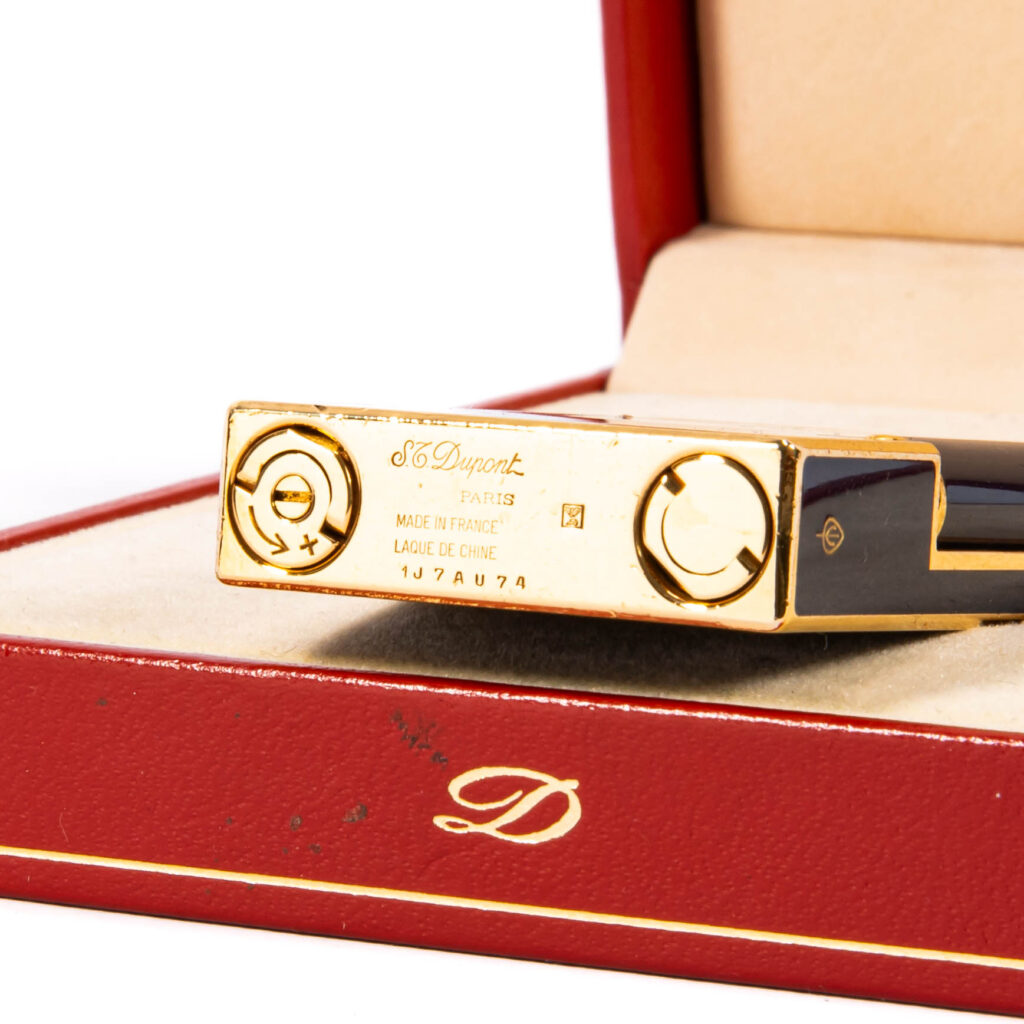
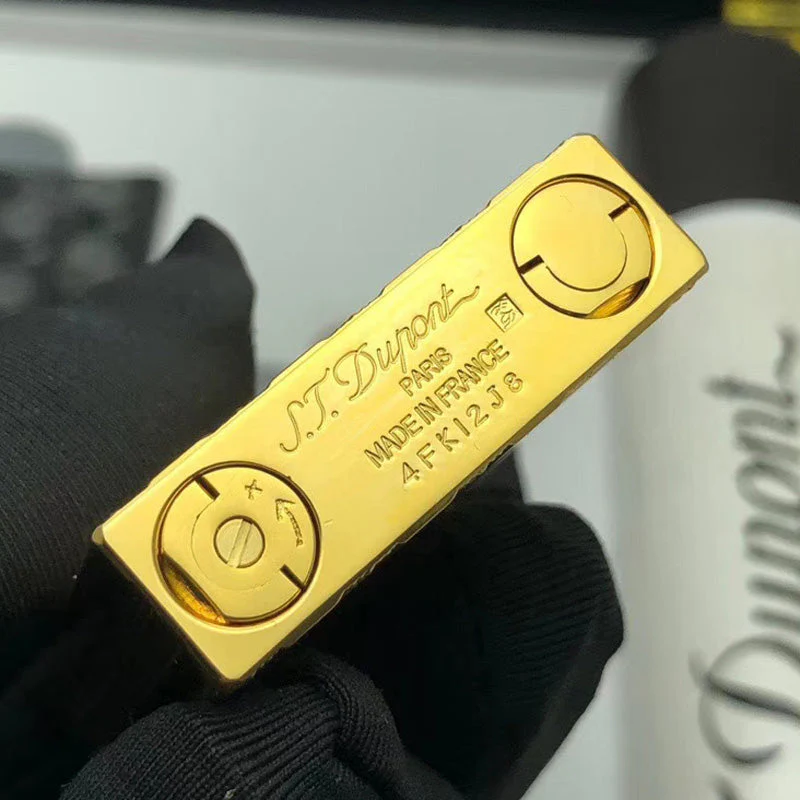
Above is a comparison between an authentic and a counterfeit S.T. Dupont Ligne 2 lighter.
On the left is the underside of a genuine S.T. Dupont Ligne 2 lighter. Notice the sharp and clearly defined “S.T. Dupont – Paris – Made in France – Laque de Chine” engraving, along with the serial number stamped individually at the factory. The spacing between the characters is slightly irregular, which is typical of authentic vintage Dupont production methods.
On the right is the base of a counterfeit Ligne 2 lighter carrying the serial number 4FKI2J8. While the general layout attempts to imitate an authentic Dupont engraving, the serial number begins with the well-known counterfeit prefix “4FK.” The characters are also perfectly aligned and evenly spaced, suggesting modern machine engraving rather than traditional hand-stamped production. This level of uniformity is one of the most common warning signs seen on fake Dupont lighters.
Correct Dimensions and Weight
If your lighter does not match these general specifications, it may be a sign that the piece is not an authentic S.T. Dupont. Keep in mind, however, that certain finishes and limited editions — particularly lacquer models or heavily plated variations — can slightly affect the overall weight of the lighter.
Counterfeit Dupont lighters are often noticeably heavier than genuine examples due to the use of cheaper and denser base materials. Authentic Ligne 1 and Ligne 2 models generally follow the dimensions and approximate weights listed below:
| Ligne 1 (Large) | Ligne 1 (Small) | Ligne 2 (Large) | Ligne 2 (Small) | |
|---|---|---|---|---|
| Height | 58 mm | 2.28 in | 47 mm | 1.85 in | 62 mm | 2.44 in | 56 mm | 2.20 in |
| Width | 35 mm | 1.38 in | 35 mm | 1.38 in | 37 mm | 1.46 in | 37 mm | 1.46 in |
| Thickness | 14 mm | 0.55 in | 14 mm | 0.55 in | 11 mm | 0.43 in | 11 mm | 0.43 in |
| Weight (empty) | ~95 g | 3.35 oz | ~80 g | 2.82 oz | ~100 g | 3.53 oz | ~85 g | 3.00 oz |
Filler Cap
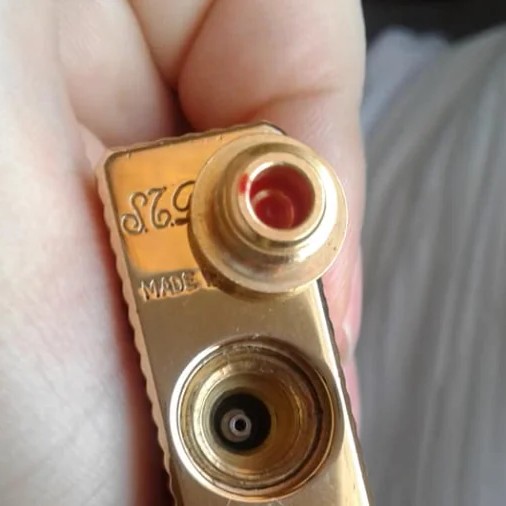
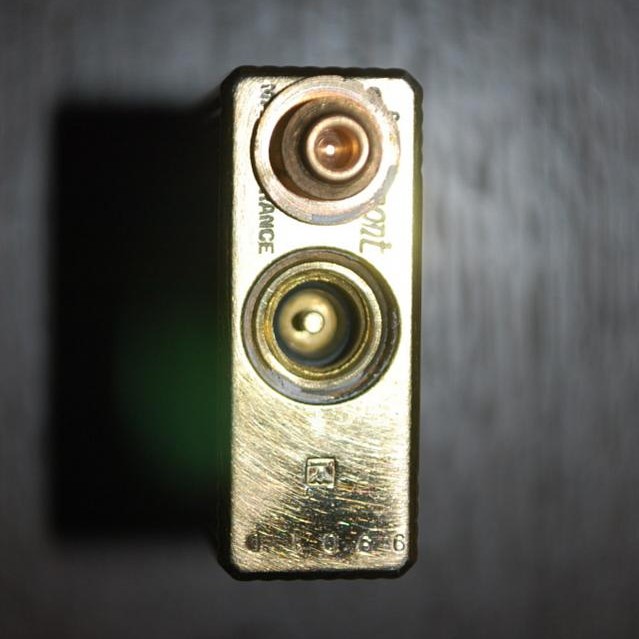
Inspect the fuel refill cap — authentic lighters have a colored paint dot inside (red, gold, green, blue) referring to the type of filling valve it has, a detail often missing in counterfeits. These caps are also circulating because they replaced original caps that are missing. So if your filler cap has no paint inside, it doesn’t mean the lighter is fake, but the cap is, by definition, not original.
The Signature “Cling” Sound: Listen for the Ping
One of the defining characteristics of an authentic S.T. Dupont Ligne 2 lighter is its distinctive “ping” or “cling” sound when opening the lid. This sound is the result of precise engineering and careful tuning during production, and has become one of the most recognisable features of the model among collectors.
Counterfeit lighters often fail to reproduce this sound accurately. Many produce only a dull click, while others make almost no sound at all. Ligne 1 models naturally have a softer opening sound, but they should still feel crisp and mechanically refined.
While the sound alone should never be used as the only method of authentication, the absence of a clear and resonant ping on a supposed Ligne 2 lighter can be a strong warning sign.
Lacquer Quality and Materials
Authentic S.T. Dupont lighters are known for their exceptional finishing quality, particularly the famous Chinese lacquer models. Genuine lacquer finishes have a deep, smooth, almost glass-like appearance created through multiple carefully applied layers.
Counterfeit examples often attempt to imitate this effect using ordinary paint or synthetic coatings, which can appear flat, uneven, or lacking in depth when examined closely.
If a lighter is engraved with “Laque de Chine,” the finish should genuinely correspond with that designation. An engraving alone does not guarantee authenticity.
The materials used in authentic Dupont lighters are also noticeably different. Genuine models are typically constructed from solid brass with high-quality precious metal plating, rather than lightweight steel or zinc alloys commonly found in counterfeit examples. As a general rule, a magnet should not strongly adhere to the body of an authentic S.T. Dupont lighter.
Conclusion: Insist on Authenticity
In the world of luxury lighters, knowledge remains one of the best protections against counterfeits. By carefully examining details such as serial numbers, engraving quality, dimensions, weight, lacquer finishes, and the famous Ligne 2 “cling” sound, it becomes far easier to distinguish an authentic S.T. Dupont lighter from an imitation.
While counterfeit pieces may appear convincing at first glance, they almost always fall short in craftsmanship, materials, mechanical quality, or finishing details once examined more closely. Genuine Dupont lighters possess a level of precision and refinement that is extremely difficult to replicate accurately.
Beyond the physical differences, an authentic S.T. Dupont lighter also carries the history, craftsmanship, and heritage of the brand itself. These are objects designed to last for decades, often becoming collectible pieces passed down over time.
For collectors and enthusiasts looking to purchase a vintage S.T. Dupont lighter, buying from a reputable and specialised source is always the safest approach. At The Lighterhouse, every lighter is carefully inspected for authenticity, professionally tested, and backed by our commitment to genuine vintage luxury lighters only.
When it comes to S.T. Dupont, authenticity is always worth insisting on.
Sources:
- Art Brown International – “How do I know if my S.T. Dupont Ligne 2 lighter is authentic?” (Guide 2023)
- Reddit r/STDupont – “S.T. Dupont Lighter Authentication Guide (With pictures!)” (Community-sourced fake serial list and ID tips, 2021)
And many thanks to all fellow collectors for fact-checking everything!